
AF / Easy-Clean Surface
Reduces visible fingerprints and changes cleaning behavior. Durability targets require a defined test method.
Specify contact-angle method and abrasion/cleaning validation when required.A capacitive touchscreen responds to the electrical field through the full front stack. Glass composition, thickness, air gap, adhesive, ink, coatings, glove use and controller tuning all influence the finished interface. The same nominal glass can therefore behave differently on two touch modules.
Our role is to manufacture the cover lens to the agreed mechanical and optical drawing while keeping the areas that affect touch and bonding visible in the review. Functional touch validation remains part of the customer module qualification.
| Substrate | Soda-lime, low-iron or chemically strengthenable aluminosilicate glass |
|---|---|
| Thickness | Selected around touch sensitivity, impact target, size, material and mounting |
| Viewing area | Clear, AR, AG or specified optical window with controlled print border |
| Printing | Black, white, color, translucent and registered touch icons or keys |
| Surface options | AG for glare control, AR for reflection reduction, AF for easier cleaning |
| Inspection | Flatness/bow, print registration, surface quality and coating tests by approved plan |
Values and acceptance methods are fixed during drawing, material and sample review.
Select a layer to see why glass specifications cannot be chosen independently from the module.
Reduces visible fingerprints and changes cleaning behavior. Durability targets require a defined test method.
Specify contact-angle method and abrasion/cleaning validation when required.AG redistributes reflected light; AR reduces reflection by interference. Each changes image appearance differently.
Specify haze/gloss for AG or wavelength/angle target for AR.Provides the visible, mechanical and dielectric front surface.
Specify material, thickness, geometry, strengthening, edge and cosmetic zones.Hides electronics and defines icons, windows and brand color.
Specify artwork revision, opacity, transmission windows and registration datums.Changes parallax, reflection, touch distance and assembly stress.
Identify OCA, LOCA, perimeter bond or air-gap construction.Determines controller tuning, optical output and final functional validation.
Share sensor type, display size/brightness and active-area coordinates.Projected capacitive systems sense changes through the complete dielectric stack. Glass thickness matters, but so do dielectric properties, adhesive thickness, air gaps, printed areas, glove use, moisture and controller tuning. A thinner cover may improve signal margin while reducing mechanical robustness; a thicker cover may work well with a properly designed sensor and controller. The module should be tuned and validated with the production-intent stack.
Each type represents a different engineering and purchasing route. Final dimensions, materials and validation requirements remain drawing-specific.
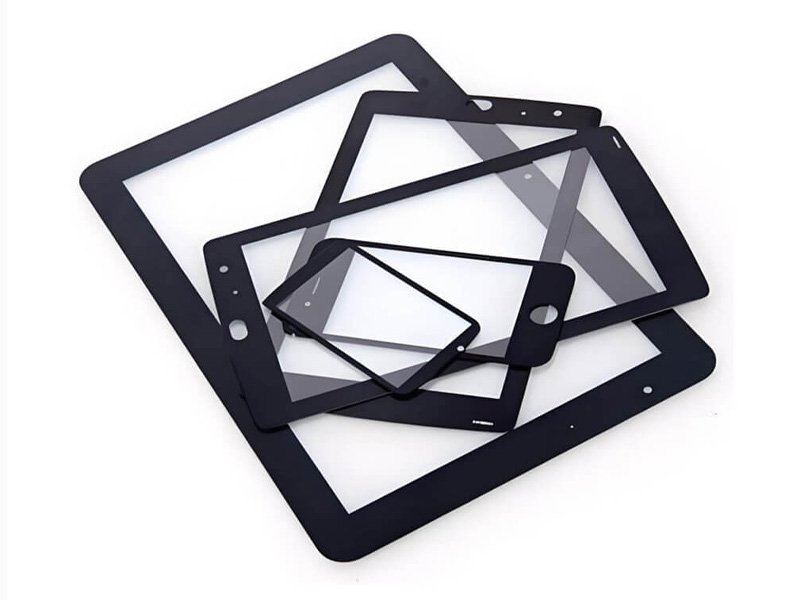
Printed and treated fronts for panel PCs, PLC terminals and machine controls.
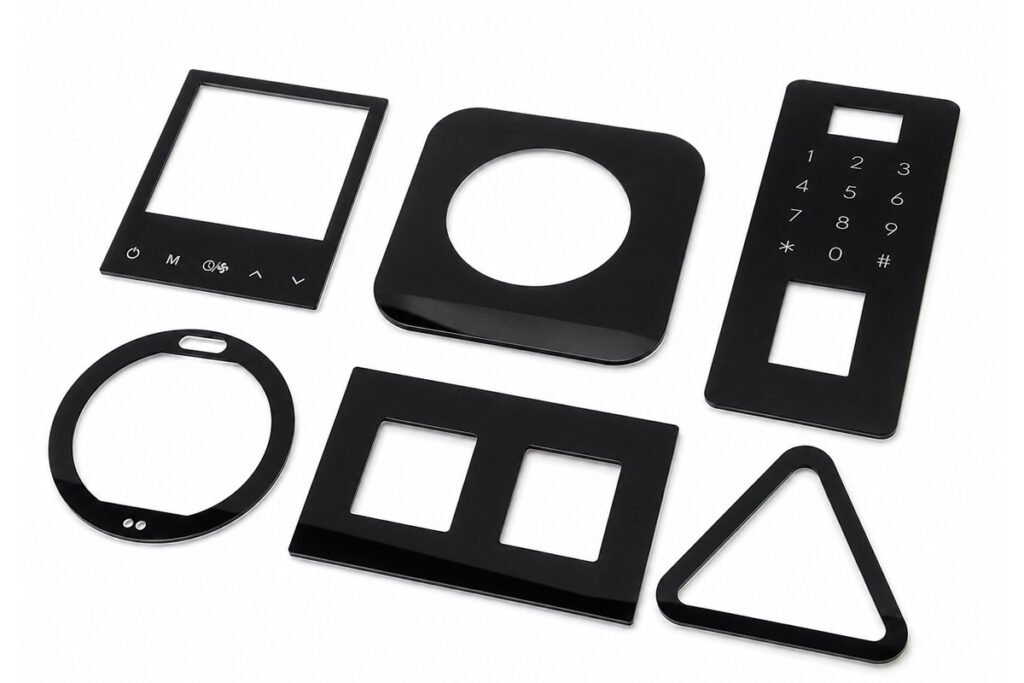
Cover panels for repeated touch, cleaning and public-use mechanical exposure.
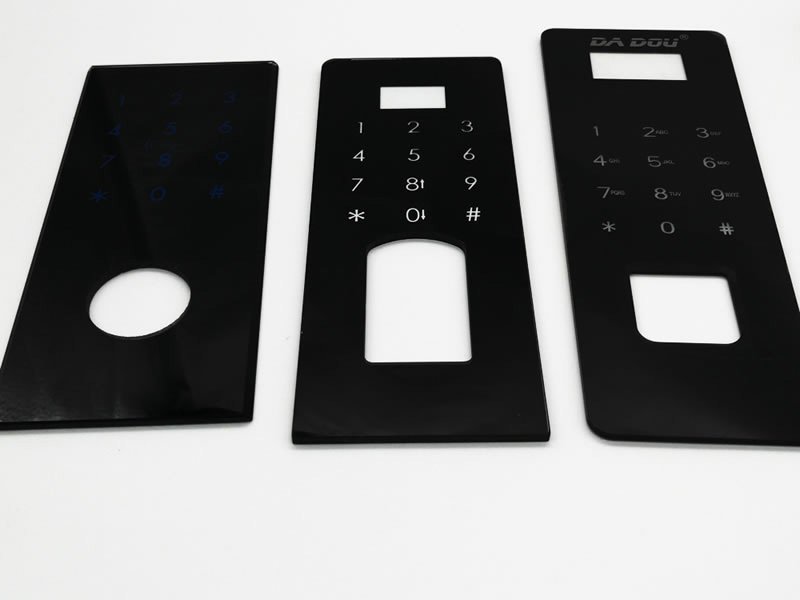
Cleanable interface glass with coating and chemical exposure reviewed by project.
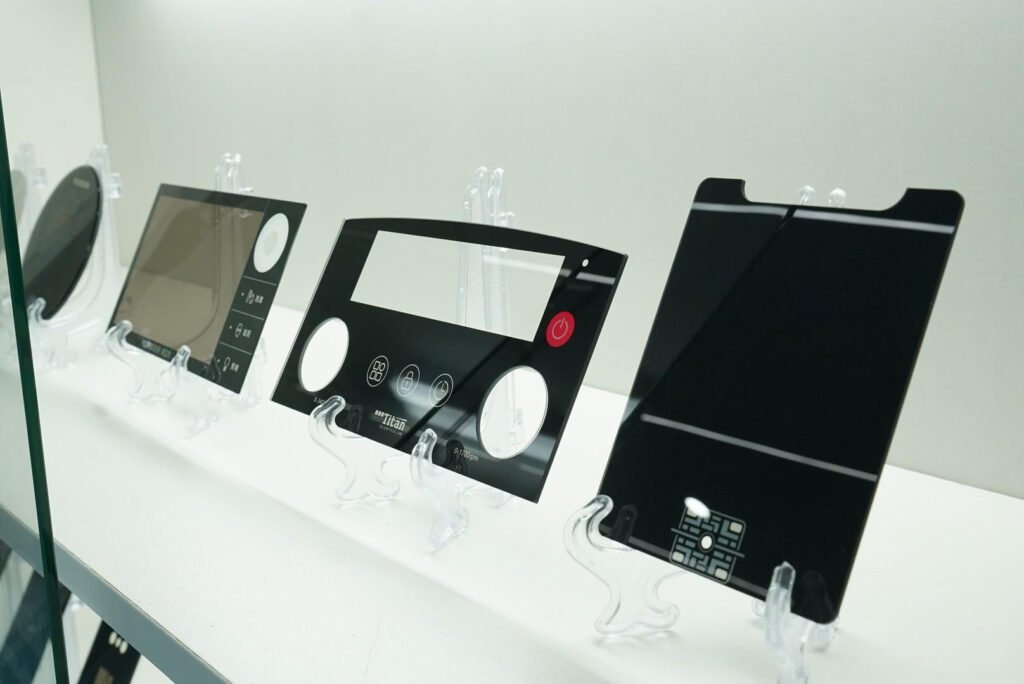
AG or AR routes reviewed with display brightness, ambient light and viewing angle.
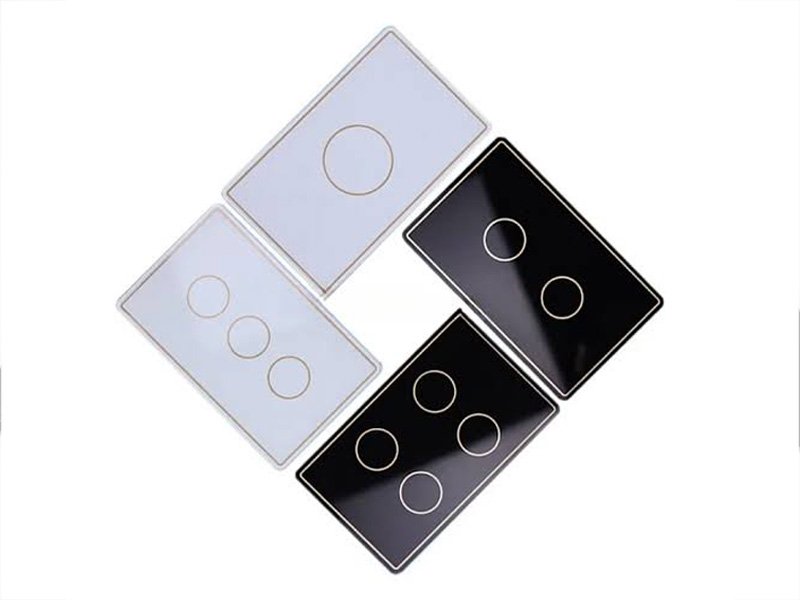
Flatness, cleanliness, surface orientation and active area coordinated with the bonding process.
Touch glass requires clean handling, controlled flatness and traceable surface orientation in addition to dimensional accuracy.
Lock the drawing revision, substrate, visual zones, test plan and sample quantities.
Machine the outline, holes, slots and edge profiles with the correct process allowance.
Remove particles and residues before printing, strengthening, coating or bonding.
Apply the approved printing, strengthening, surface treatment or forming sequence.
Inspect controlled characteristics and protect cosmetic surfaces for shipment.
Inspection frequency, method and acceptance limits follow the approved control plan.
These are the questions touch-module buyers most often need to settle before sampling.
AG can reduce sharp reflected images, but it also scatters display light. Haze, gloss, display brightness and pixel density should be evaluated together.
No. AR reduces surface reflection within a designed spectral and angular range; AG diffuses glare. The better choice depends on lighting, viewing angle and image-quality priorities.
Compatible stacks are possible, but adhesion, optical change and durability must be verified for the selected processes.
It may, but the sensor pattern, controller, adhesive/air gap and intended input condition must be validated as a system.
Use common datums for the glass profile, sensor active area and artwork. Define print-to-feature tolerances separately from outer dimensions.
Depending on material, thickness and geometry. Thin interfaces often use chemical strengthening; thicker soda-lime parts may use thermal tempering. The route is selected per project.
Include: Cover-glass drawing and artwork | PCAP/resistive sensor information | Air-gap or bonding stack | Display active area and brightness | Glove, wet-touch and cleaning requirements | Optical treatment target | Prototype validation quantity.
The cover drawing is necessary, but the touch and display context prevents late-stage incompatibility. Our review identifies the proposed substrate, process sequence, open technical points and the characteristics that need sample approval.
Tell us the material, size, thickness, tolerance, quantity, application, and any holes, slots, edges, coating, printing, or polishing requirements. We can manufacture custom glass components from your drawing, CAD file, sketch, or sample.