

Flat Component
Borosilicate Plates & Windows
Rectangular or shaped panes for equipment, instruments, heaters and protective viewing.
Borosilicate glass combines lower thermal expansion than soda-lime glass with useful visible transmission and chemical durability. Borosilicate 3.3 is the main international flat-sheet reference, but other borosilicate compositions are not automatically equivalent.
We review the named grade, thickness, temperature cycle, clear aperture, chemical medium and processing features before quoting. For pressure-bearing use, review the aperture, support, edge condition, seal and safety factor as part of the complete sight-glass assembly.
| Reference family | Borosilicate 3.3 flat glass or agreed equivalent data sheet |
|---|---|
| Reference CTE | About 3.3 x 10^-6/K from 20-300 C |
| Reference temperature | Grade data distinguishes continuous and short-duration exposure |
| Thickness | Thin plates through thicker technical windows by stock and drawing |
| Forms | Sheets, rectangles, discs, rings, windows and machined components |
| Features | Holes, slots, notches, steps and custom contours subject to geometry review |
| Inspection | Material identity, dimensions, chips, surface and functional tests by plan |
Reference framework for quotation. Controlled values and test methods are stated in the approved specification.
Format changes the manufacturing route, inspection method and risk points.
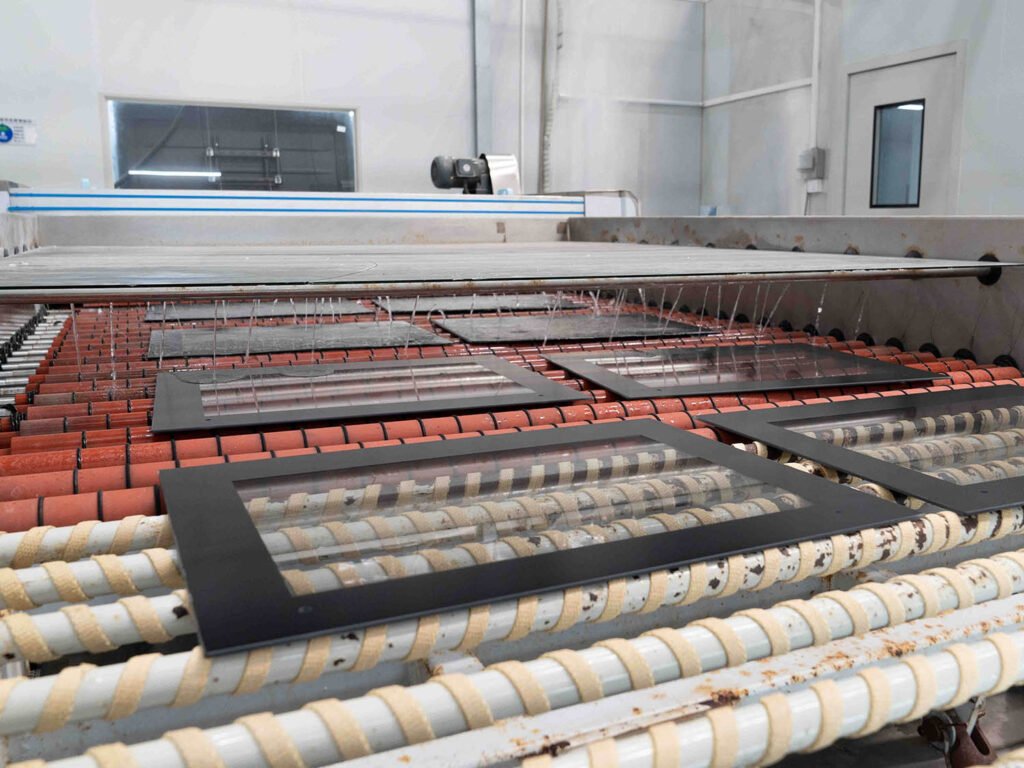
Rectangular or shaped panes for equipment, instruments, heaters and protective viewing.
Round windows with controlled diameter, thickness, edge, aperture and gasket contact.
Parts with holes, slots, notches, pockets or datum-critical profiles reviewed for edge risk.
Surface quality, flatness, parallelism and coating defined for imaging or sensing tasks.
Technical tubing and rods selected by OD, ID, wall, straightness and end finish.
Compare borosilicate with soda-lime, glass-ceramic and fused silica against the actual thermal, optical and cost priorities.
| Decision | Soda-Lime | Borosilicate 3.3 | Glass-Ceramic | Fused Silica |
|---|---|---|---|---|
| Thermal expansion | Higher | Low | Near zero | Very low |
| Visible clarity | Good | Good | Variant dependent | Good; grade dependent |
| Best use | General tempered parts | Moderate heat / chemical duty | Severe gradient | UV / purity / extreme optics |
| Cost position | Lowest typical | Balanced | Higher specialized | Highest specialized |
| Critical question | Can the heat be managed? | Which grade and cycle? | Which transmission variant? | Which spectral/purity grade? |
Typical family-level data for initial selection. Use the named grade data sheet and project conditions for final design.
Choose the primary duty and review the specification points that change with it.
Confirm continuous temperature, gradient, clear aperture, edge support and any pressure differential.
Borosilicate has broad chemical durability, but hydrofluoric acid, hot strong alkali and specific process media require separate review.
Material choice remains important, but surface quality, flatness, wedge, parallelism and coating can dominate the finished part.
When a panel has a very hot center and cold edge, glass-ceramic may offer a better expansion match than borosilicate.
Fused silica may be preferred where UVC transmission, very low CTE, high purity or optical homogeneity is decisive.
A borosilicate panel can be within a published material temperature and still fail if its center expands against a much colder edge. The risk increases with larger spans, hard frame contact, damaged edges and concentrated heating.
Show the heated area and frame contact on the drawing. This lets the review consider panel proportions, edge finish, clearance, gasket compliance and whether a lower-CTE material should be used.
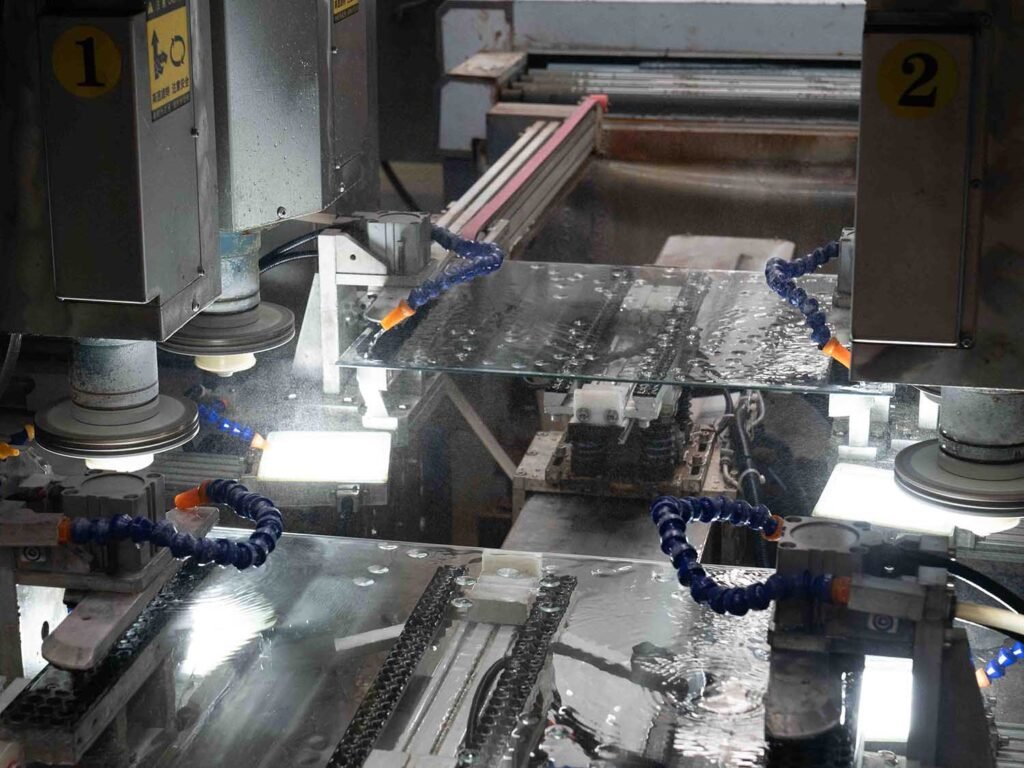
The hole diameter alone does not define manufacturability. Thickness, edge distance, corner radius, hole spacing, edge finish and the fastener contact all influence chipping and in-service stress.
Use a drawing with datums and tolerances. For pressure or safety-critical service, the complete assembly and applicable standard require engineering approval beyond glass fabrication.
Material traceability, edge quality, chips, surface condition and dimensional datums are linked to the installed function.
Confirm material grade, thermal profile, atmosphere, optical task, geometry and assembly constraints.
Lock datums, edge profiles, holes, critical zones and the named substrate before fabrication.
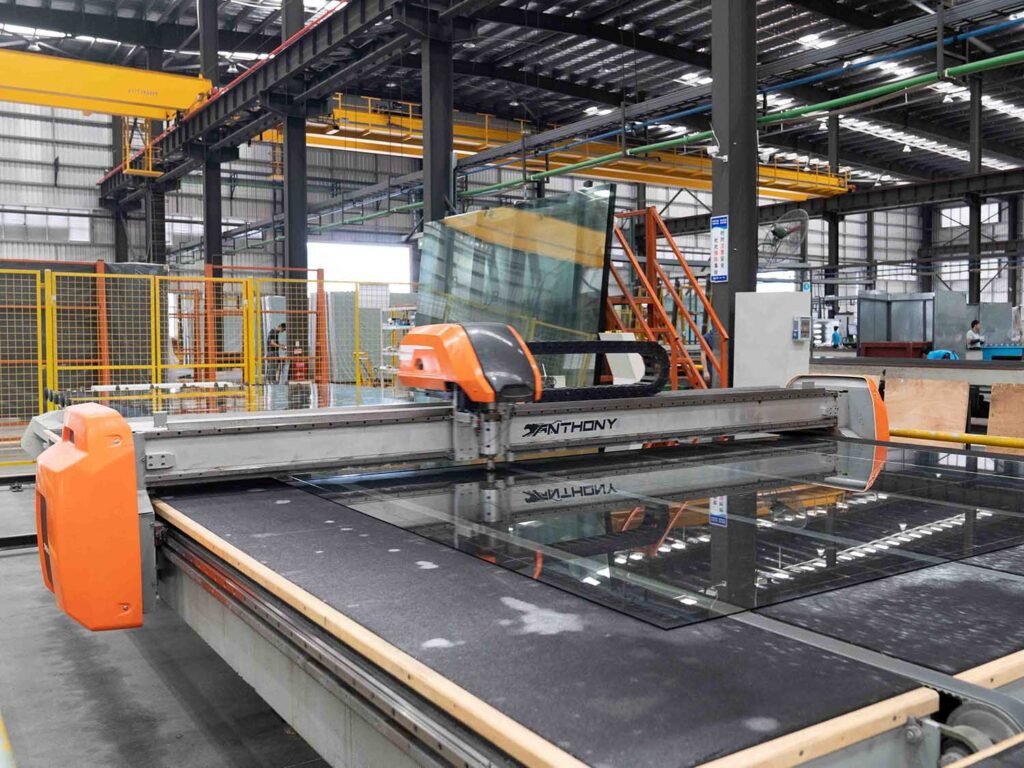
Cut or CNC the part, grind edges and complete holes or slots before any incompatible downstream process.
Apply printing, strengthening, coating, polishing or cleaning in the validated sequence.
Release dimensions, surface quality and functional tests, then protect critical faces for shipment.
Inspection conditions and acceptance limits follow the approved drawing, material grade and validation plan.
These answers keep material data separate from assembly ratings.
It identifies a low-expansion borosilicate family with a nominal CTE near 3.3 x 10^-6/K. Use the exact manufacturer data sheet for controlled values.
It depends on the named grade, duration, heating uniformity, geometry and installation. For example, BOROFLOAT 33 publishes different long- and short-duration limits.
Selected thicknesses and grades can be thermally strengthened or tempered, but the achievable result and optical change must be reviewed by process.
Yes, subject to thickness, tool access, hole diameter, edge distance, corner radii and tolerance review.
No. Pressure capacity is an assembly calculation involving diameter, unsupported span, support, seal, edge condition, flaws and safety factor.
Review fused silica when UV transmission, very low CTE, high purity, optical homogeneity or a more severe thermal condition controls the part.
Include: Named borosilicate grade or reference | Outline, thickness and tolerances | Holes, slots, edge and datums | Temperature profile and cycle | Chemical medium and cleaning | Aperture, support and pressure differential | Optical/surface requirements and quantity.
A drawing plus the application data prevents a generic sheet quotation from becoming the wrong finished part. We return a proposed material and process route, open technical questions, sample plan and inspection points for approval.
Tell us the material, size, thickness, tolerance, quantity, application, and any holes, slots, edges, coating, printing, or polishing requirements. We can manufacture custom glass components from your drawing, CAD file, sketch, or sample.