
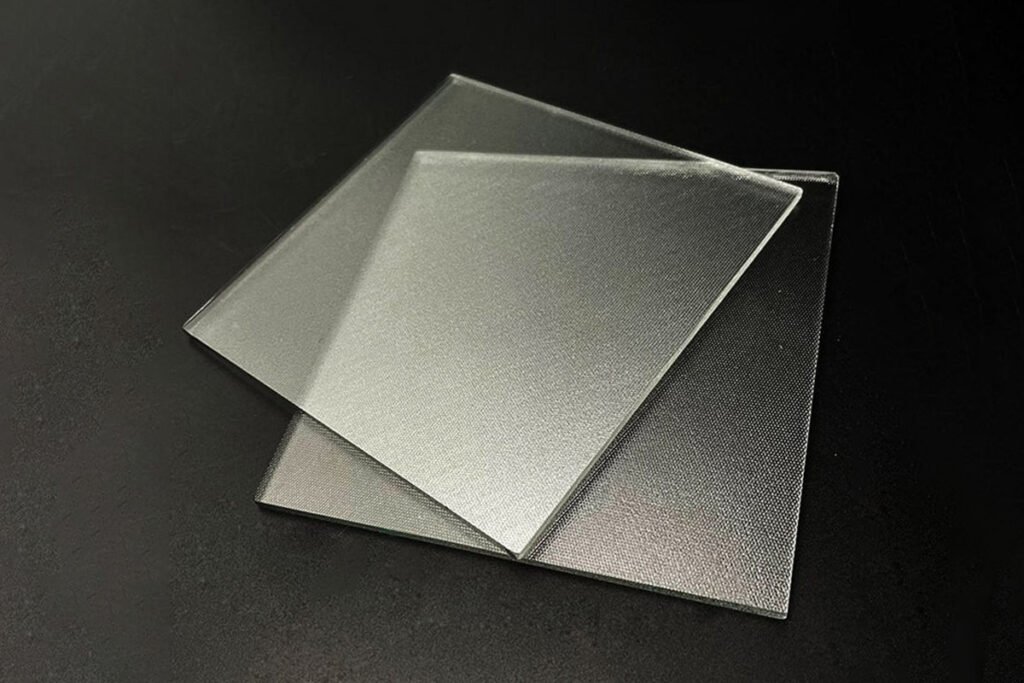
Daylight + Generation
Transparent & Semi-Transparent BIPV
Controlled cell spacing leaves open glass areas for daylight in vision facades, skylights and canopies.
BIPV glass combines weather protection, architectural appearance and photovoltaic generation in one building element. Glass dimensions, cell spacing, transparency, color and electrical connection are coordinated with the facade or roof system.
Available constructions include laminated glass-glass modules, semi-transparent photovoltaic glazing, colored opaque facade panels and double- or triple-glazed insulated units.
| Product form | Building-integrated photovoltaic glazing |
|---|---|
| Construction | Glass-glass laminate / laminated safety glass / IGU |
| PV technology | Crystalline silicon or project-specific thin-film route |
| Transparency | Opaque to semi-transparent; controlled by cell layout |
| Visible light transmission | Project-specific; up to approx. 75% in open layouts |
| Appearance | Clear / colored / printed / matt / patterned |
| Glass | Clear, low-iron or architectural safety glass |
| Shape | Rectangle / triangle / trapezoid / custom profile |
| Heat treatment | Heat-strengthened or fully tempered as specified |
| Insulated glazing | Double or triple unit with suitable Low-E option |
| Connections | Junction box, cable route and edge zone to module design |
| Dimensions | Custom to facade grid and structural review |
Unless stated otherwise, numerical values are typical industry references. Final capability and acceptance limits are confirmed against the ordered construction, test method and approved specification.
The categories reflect daylight, energy, appearance and envelope-performance decisions.
Controlled cell spacing leaves open glass areas for daylight in vision facades, skylights and canopies.
Color, frit or optical surface treatments coordinate active glass with the building palette while accounting for power loss.
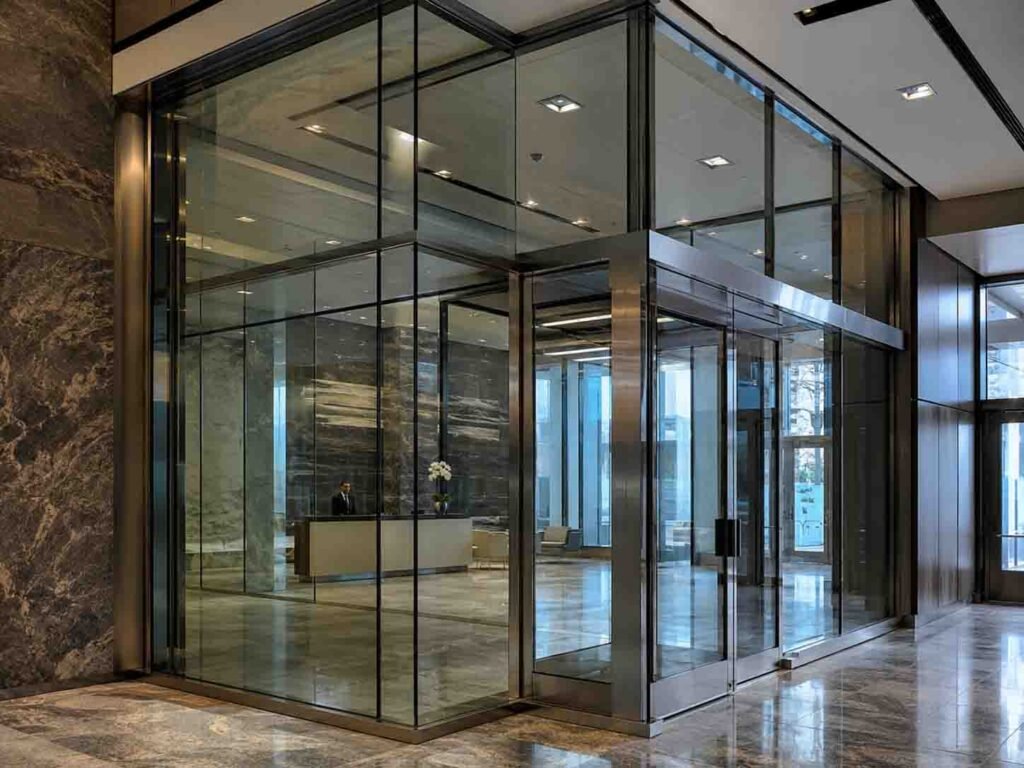
High cell coverage for spandrels, rainscreens and solid envelope zones where daylight transmission is not required.
Photovoltaic cells encapsulated between safety-glass layers for facade, overhead and barrier applications.
The photovoltaic outer pane is combined with a sealed cavity, inner glass and optional Low-E coating.
Select each layer to review its function in the combined photovoltaic and glazing system.
Controls impact exposure, color, surface finish and the amount of solar energy reaching the cells.
Define glass, thickness, heat treatment, color and exposed-surface treatment.EVA, PVB or a project-specific system bonds the photovoltaic structure and influences durability and appearance.
Confirm compatibility with cells, glass, edge system and building use.Cell technology, spacing, busbars and circuit routing set the balance between output and transparency.
Approve cell layout and electrical design before glazing production.Completes the glass-glass module and can carry print, tint or another architectural finish.
Coordinate thickness and breakage behavior with the facade engineer.An air- or gas-filled sealed cavity adds thermal performance when the BIPV laminate forms the outer lite.
Define spacer, seal, cavity width and environmental loads.A clear, laminated or Low-E inner pane completes double- or triple-glazed construction.
Check coating surface and compatibility with the photovoltaic outer lite.This planning tool frames the trade-off. Final power, VLT and appearance require the approved cell technology, glass make-up and project geometry.
Closer cell spacing increases active photovoltaic area and reduces daylight.
Moderate spacing creates a visible rhythm while allowing controlled daylight between cells.
Wider cell gaps increase open glass area but reduce power density per square meter.
Colored coatings, ceramic frits and interlayers absorb or reflect part of the incoming solar spectrum. The visual target and electrical target must therefore be developed together. A color sample alone cannot prove photovoltaic performance, and a power model alone cannot approve facade appearance.
Safety, thermal and structural requirements determine whether the photovoltaic laminate stands alone or becomes the outer lite of an IGU.
| Construction | Typical Layers | Building Role |
|---|---|---|
| Glass-glass laminate | Front glass / encapsulant / cells / rear glass | Basic active module |
| Laminated safety BIPV | Heat-treated glass and approved interlayer build | Canopy, barrier or overhead use |
| Double-glazed BIPV | PV outer lite / cavity / inner lite | Curtain wall and roof envelope |
| Triple-glazed BIPV | PV outer lite / dual cavities / inner lites | Higher thermal-performance envelope |
| Low-E BIPV IGU | PV outer lite / cavity / suitable Low-E inner lite | Power generation plus controlled U-value |
BIPV quality control crosses conventional glass, laminated safety glazing, insulated units and photovoltaic electrical performance.
Freeze panel geometry, support, edge cover and visual alignment.
Cut, edge, drill, print and heat treat before assembly.
Control spacing, busbars, junction-box zone and cable route.
Encapsulate the photovoltaic stack and build the IGU where required.
Inspect visual, dimensional, laminate, electrical and sealed-unit requirements.
Inspection limits and reporting level follow the drawing, purchase specification and approved sample.
Each location creates a different combination of load, safety, daylight, drainage, wiring and maintenance requirements.
Semi-transparent or insulated BIPV units coordinated with mullions, sightlines and facade drainage.
Colored or high-coverage modules for spandrel, rainscreen and ventilated facade zones.
Laminated safety constructions balancing daylight, shading, drainage and electrical output.
Custom modules developed around support, wind and snow loads, transparency and cable access.
The final glass and module specification should be coordinated with the facade, structural and electrical teams.
It is photovoltaic glazing designed to function as part of the building envelope while generating electricity.
Its dimensions, safety build-up, transparency, appearance, support and weathering interfaces are developed as architectural glazing rather than a framed rooftop module.
Yes. Semi-transparency is created through cell spacing or selected thin-film constructions. More open area generally means lower power density.
Yes. Color can be introduced through treated glass, ceramic printing or compatible layer systems, but its impact on photovoltaic output must be reviewed.
Options include glass-glass laminates, laminated safety constructions, and double- or triple-glazed insulated units.
Yes, in a compatible insulated construction with the coating surface and electrical module design coordinated.
Rectangular, triangular, trapezoidal and selected custom profiles can be reviewed from the facade drawing.
Requirements depend on country, building use, safety glazing, laminated or insulating construction, facade system and photovoltaic certification route. The project specification should identify all applicable standards.
Inspection can include dimensions, cell layout, appearance, lamination, safety glass, electrical output, insulation, connections and IGU seal quality.
BIPV quotation needs the facade module and electrical intent, not only a glass size.
Share the application, drawing, performance target and quantity. We will review the glass construction and processing route before quotation.
Tell us the material, size, thickness, tolerance, quantity, application, and any holes, slots, edges, coating, printing, or polishing requirements. We can manufacture custom glass components from your drawing, CAD file, sketch, or sample.