
Readability
Evaluate reflection, haze, contrast and viewing angle with the real display.
Use approved samples under intended lighting.Industrial interfaces face combinations of oil, dust, metal chips, vibration, cleaning chemicals, gloves, sunlight and accidental impact. A successful front glass does more than protect the LCD: it must stay readable, keep the touch area aligned and avoid transferring concentrated loads from the enclosure.
We organize the engineering review around environment, optical need, edge support, mounting and maintenance. Impact ratings or environmental claims are only attached to the tested final assembly, not assumed from the glass sheet alone.
| Substrates | Soda-lime, low-iron and aluminosilicate; other technical glass by environment |
|---|---|
| Thickness direction | Selected by size, support, impact target, touch stack and enclosure design |
| Optical surface | Gloss, AG, AR or AF based on lighting, image clarity and cleaning |
| Printing | Opaque bezels, indicator windows, legends, scales and branding |
| Mechanical features | CNC profiles, mounting holes, slots, connector clearances and protected edges |
| Verification | Drawing inspection plus project-defined impact, chemical, thermal and coating tests |
Values and acceptance methods are fixed during drawing, material and sample review.
Select the dominant service condition. Multiple conditions can apply; the output identifies the first design risk to resolve.
Evaluate reflection, haze, contrast and viewing angle with the real display.
Use approved samples under intended lighting.Review unsupported span, edge clearance, gasket/bond and target assembly test.
Do not assign an enclosure IK rating to glass alone.Define detergent, solvent, concentration, temperature and wipe cycles.
Test printing and coatings, not only bare glass.Coordinate glass, adhesive, sensor and enclosure expansion over the operating range.
Validate the production-intent stack.Set viewing zone, lighting, distance and allowable defects.
Use a signed golden sample where appearance matters.Confirm sensor, controller, grounding and wet/glove conditions.
Touch approval belongs to the assembled HMI.Glass is strongest when its surfaces and edges are undamaged and loads are distributed. A rigid metal corner, a missing gasket, an over-tightened fastener or a chip at a hole can create a local tensile stress that defeats the benefit of added thickness. HMI design should protect edges, avoid hard point contact and give the frame enough tolerance for flatness and thermal movement.
Each type represents a different engineering and purchasing route. Final dimensions, materials and validation requirements remain drawing-specific.
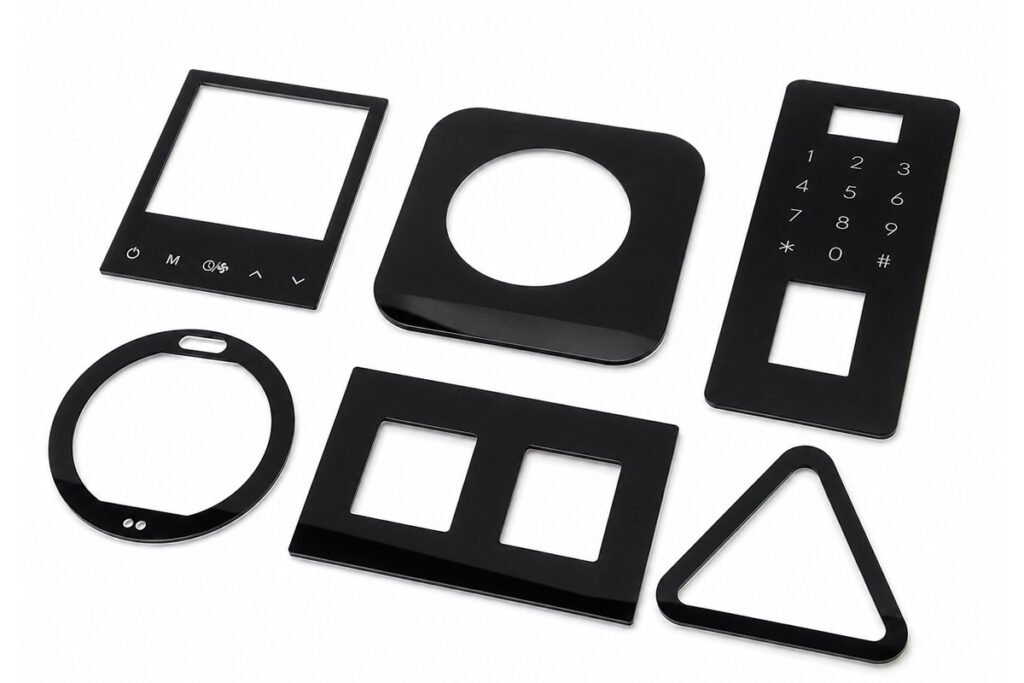
Operator panels with registered touch/view areas and industrial cleaning requirements.
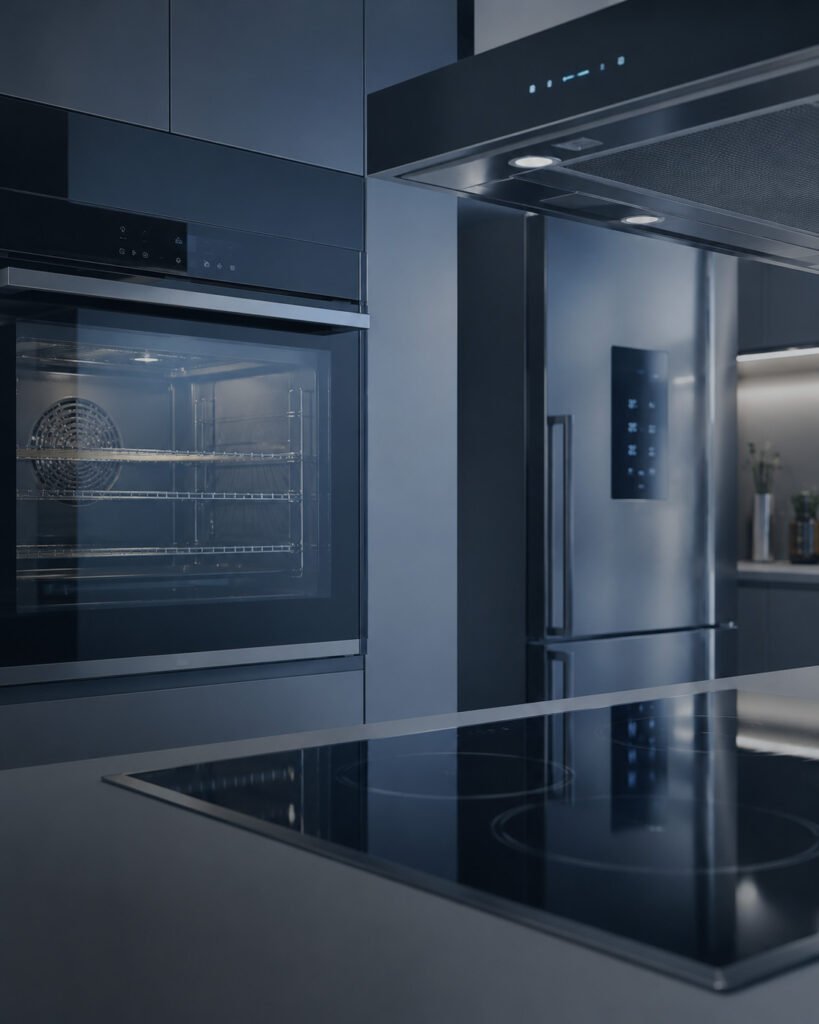
Large-format covers coordinated with bezel support, touch stack and optical treatment.
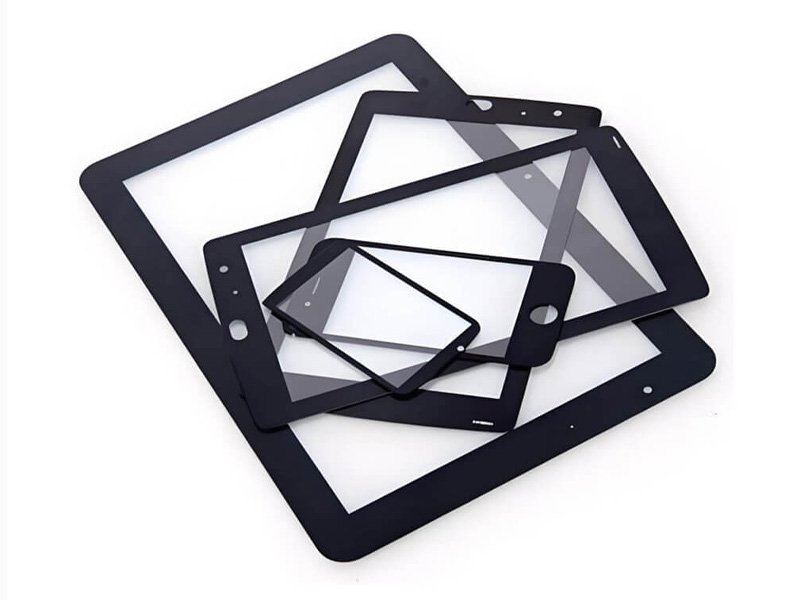
Printed or clear panels with holes, windows and gasket/bonding zones.
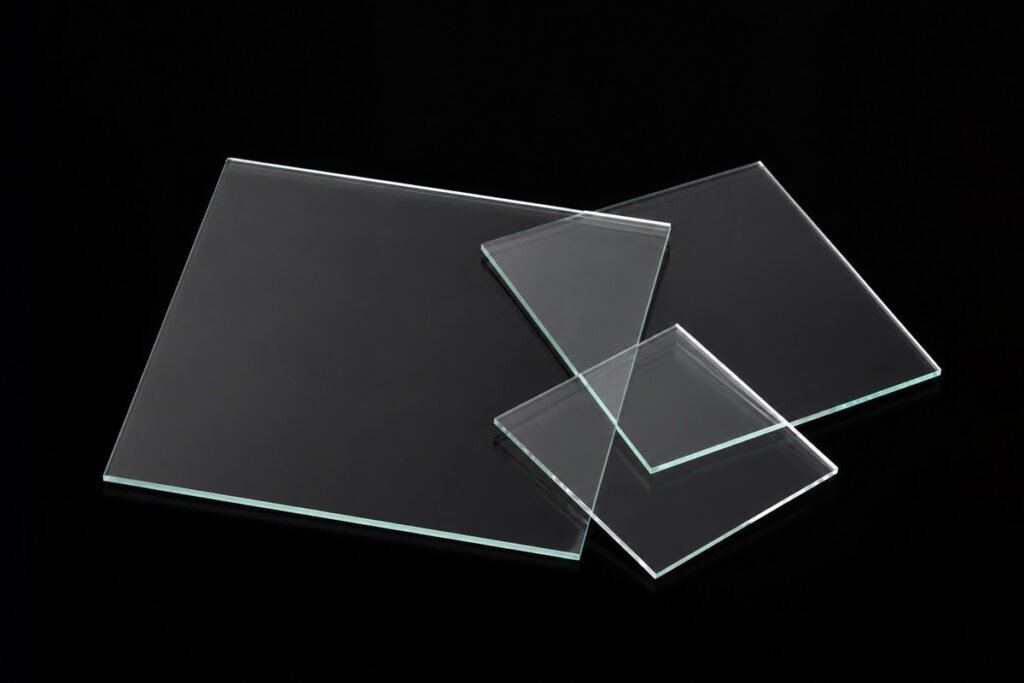
Interfaces for logistics, terminals and self-service equipment with repeated touch.
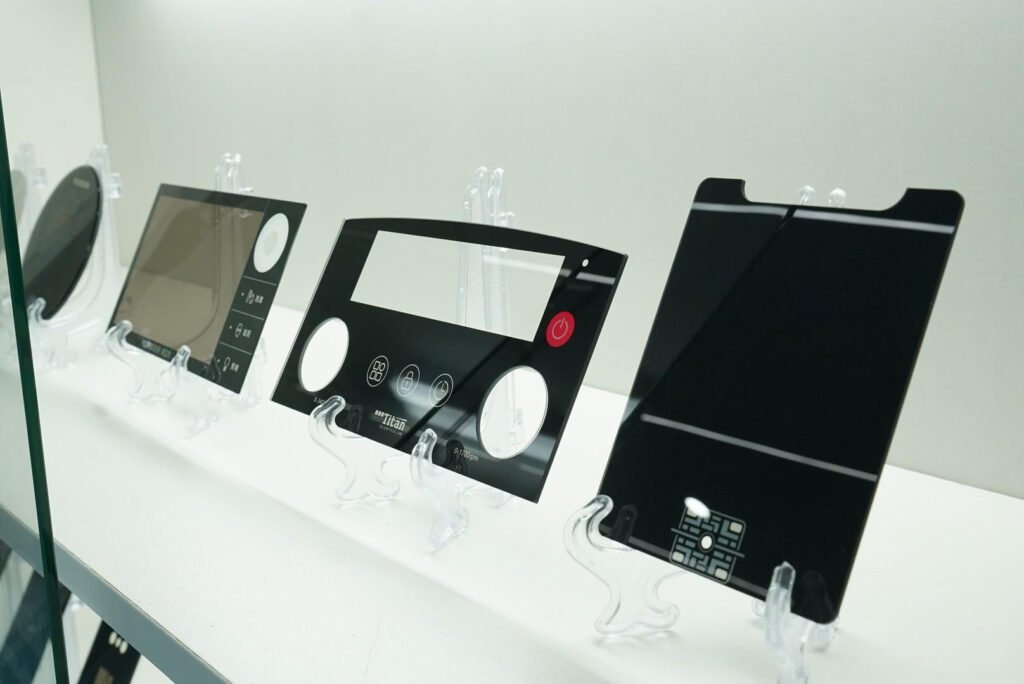
Optical treatment selected against ambient light, display brightness and viewing angle.
The drawing controls fit; the validation matrix controls service performance.
Lock the drawing revision, substrate, visual zones, test plan and sample quantities.
Machine the outline, holes, slots and edge profiles with the correct process allowance.
Remove particles and residues before printing, strengthening, coating or bonding.
Apply the approved printing, strengthening, surface treatment or forming sequence.
Inspect controlled characteristics and protect cosmetic surfaces for shipment.
Inspection frequency, method and acceptance limits follow the approved control plan.
Industrial HMI projects are won or lost at the interface between glass, enclosure and touch module.
An IK classification applies to the tested product or enclosure configuration. We can manufacture glass for a target test plan, but the rating must be validated on the final assembly.
There is no universal value. Higher haze reduces distinct reflections but can reduce image sharpness and add sparkle. Compare samples with the intended display.
Compatibility depends on the cleaner, ink, coating and exposure cycle. Provide the chemical and test method so coupons or samples can be evaluated.
The choice depends on material, thickness, size, edge features and design loads. Thin touch covers often favor chemical strengthening; thicker panels may suit thermal tempering.
Use continuous, compliant support without hard point contact. Final compression, material compatibility and sealing belong to the enclosure design.
Yes, if opacity, bond width, adhesive compatibility and print position are defined. A physical assembly sample is recommended.
Include: Glass and enclosure drawings | Display and touch stack | Indoor/outdoor lighting | Oil, dust, chemicals and cleaning method | Operating temperature/humidity | Impact or ingress targets for the assembly | Prototype and annual demand.
Environmental context lets us recommend the correct substrate, surface and mounting review. Our review identifies the proposed substrate, process sequence, open technical points and the characteristics that need sample approval.
Tell us the material, size, thickness, tolerance, quantity, application, and any holes, slots, edges, coating, printing, or polishing requirements. We can manufacture custom glass components from your drawing, CAD file, sketch, or sample.