
Display Interface
Printed Display Cover Glass
Clear viewing windows, opaque borders and registered logos or legends for LCD, LED and OLED assemblies.
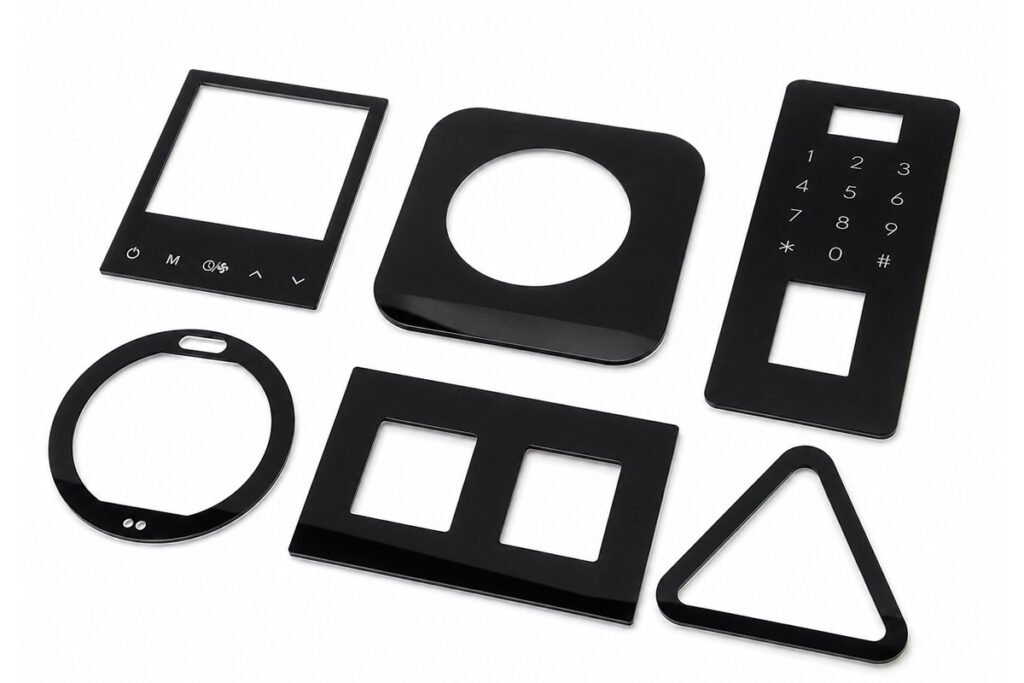
Custom cover glass is supplied as a finished component rather than a cut sheet. The part can combine an irregular outline, holes and slots, polished edges, an opaque printed bezel, clear or translucent windows, chemical or thermal strengthening, and functional surface treatment.
Production is controlled from the customer drawing and artwork. Mechanical datums, the active viewing area, cosmetic zones and coating orientation are reviewed together so the finished glass fits the housing and aligns with the display, sensor or backlight.
| Parameter | Standard Capability | Available Options |
|---|---|---|
| Glass materials | Soda-lime, low-iron and aluminosilicate | Selected borosilicate or customer-nominated substrate |
| Thickness | 0.1-6.0 mm | Thin cover lenses through thicker protective panels |
| Finished size | Up to 1200 x 1200 mm for flat panels | Small-format lenses and irregular profiles to drawing |
| Outline tolerance | +/-0.10 mm | Down to +/-0.05 mm on controlled small and medium parts |
| Surface treatment | AG, AR or AF | Combined treatment after substrate and process compatibility review |
| Inspection | Dimensions, cosmetic zones, edges and print registration | Haze, gloss, transmission, reflection, contact angle and strengthening data by plan |
Precision values apply to compatible geometry and size. The approved drawing and production sample define the final acceptance limits.
Each configuration is supplied as an assembly-ready glass part with the machining, decoration and surface function required by the device.
Clear viewing windows, opaque borders and registered logos or legends for LCD, LED and OLED assemblies.
Thin strengthened glass with controlled print position, active touch area, edge finish and optional AG or AF surface.
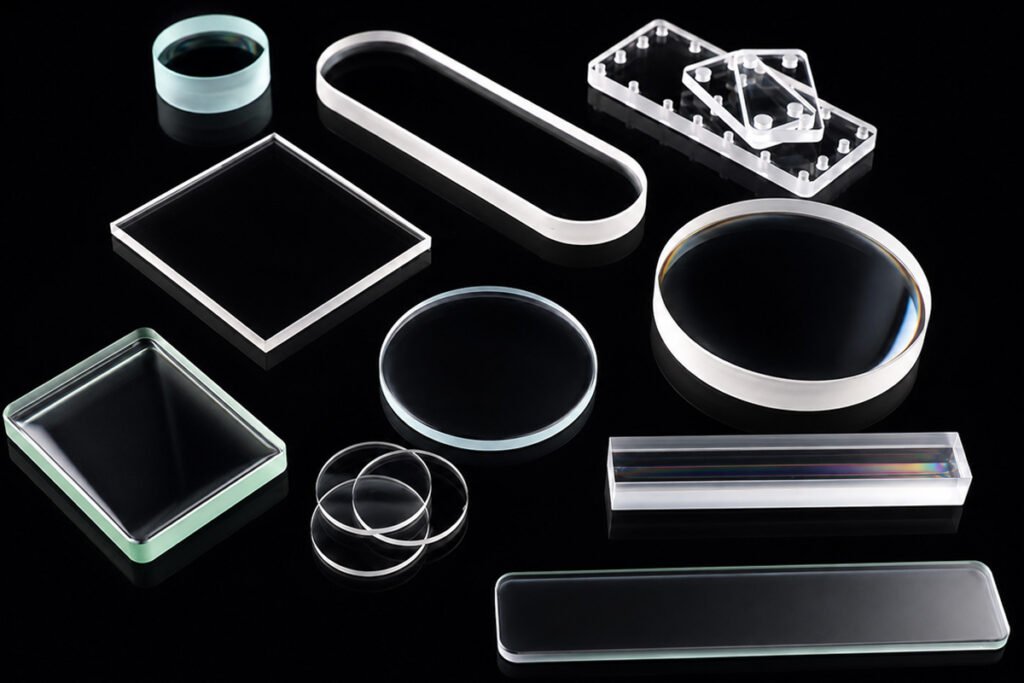
Robust front glass for machine controls, panel PCs and instruments, including gasket lands, holes and readable display windows.
Printed black-panel glass that conceals electronics when off and reveals selected icons or displays when illuminated.
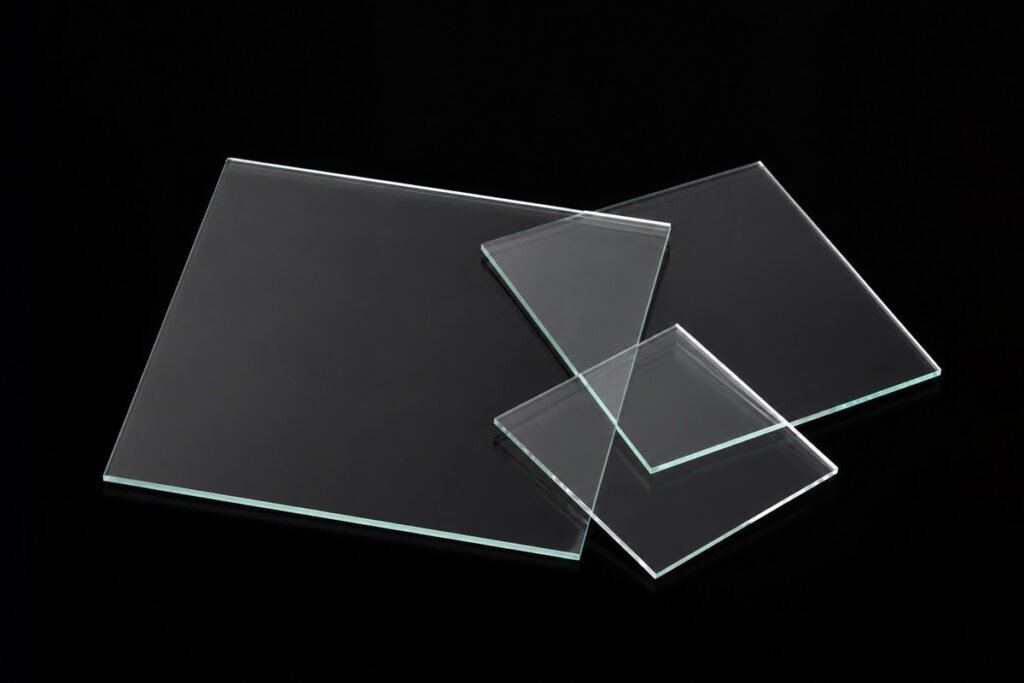
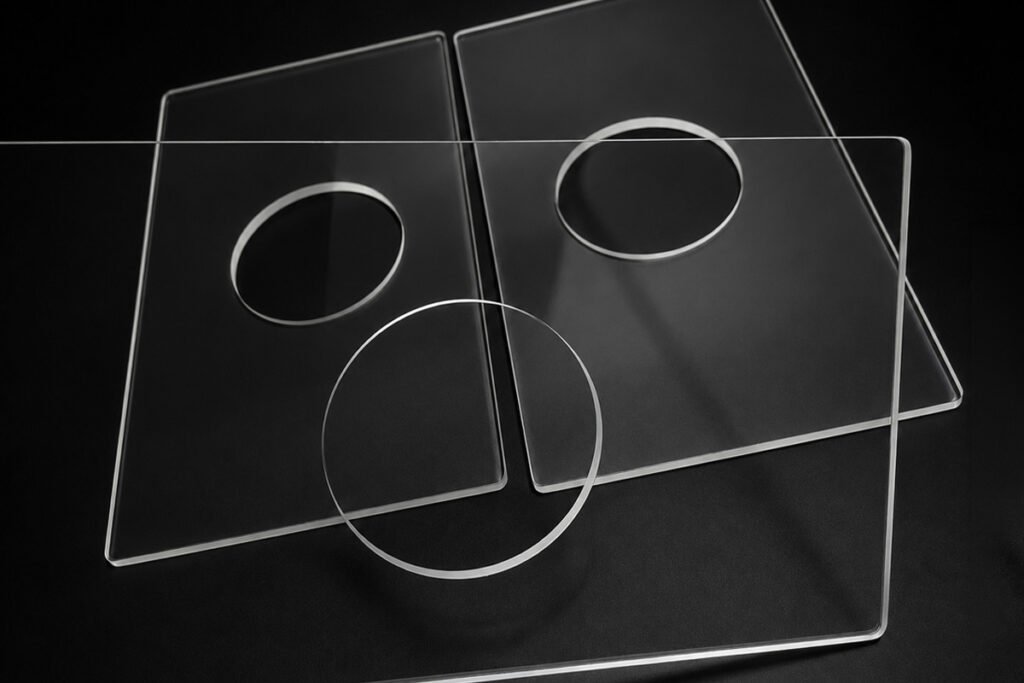
Round, rectangular or irregular glass parts with holes, slots, notches, steps, corner radii and finished edges.
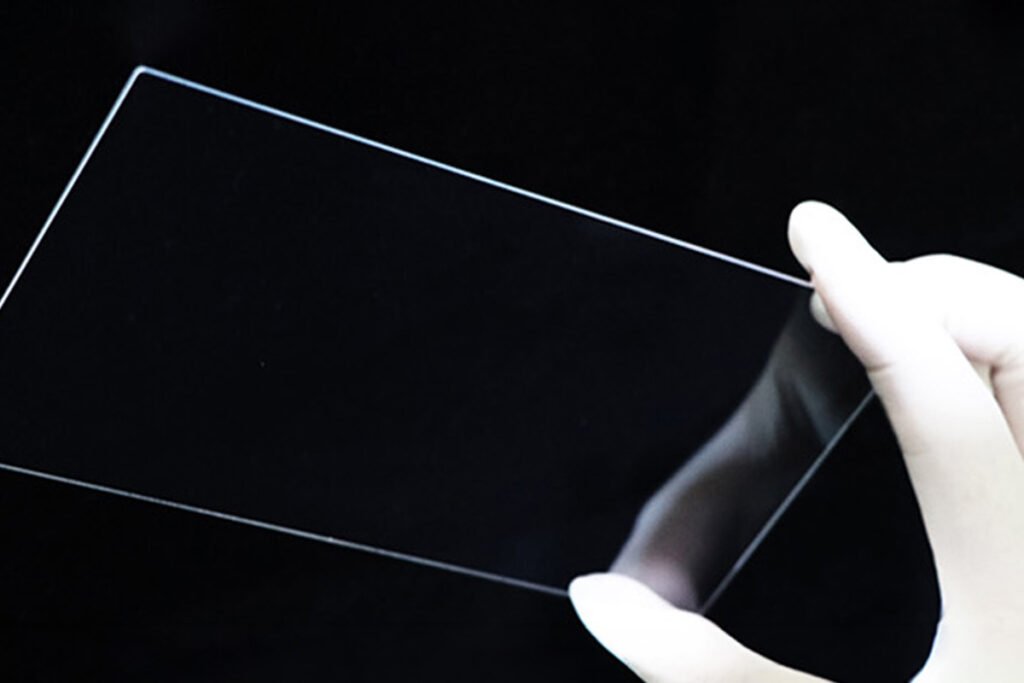
Surface-treated cover glass for glare control, lower reflection, improved image contrast or easier cleaning on frequently touched equipment.
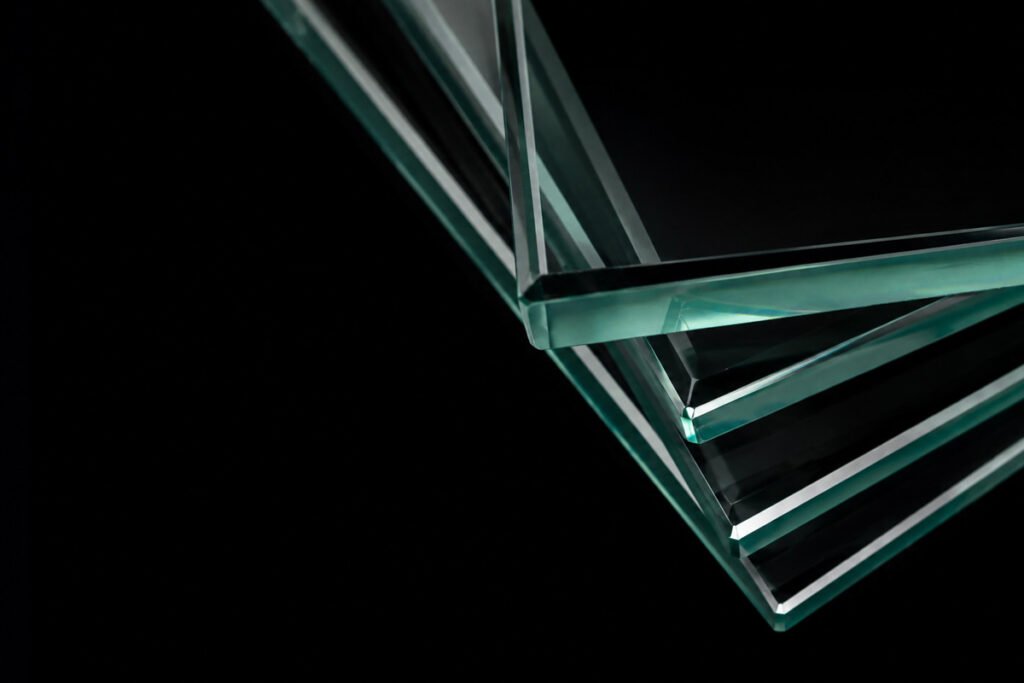
The substrate affects edge color, touch distance, retained strength, thermal behavior and the surface processes available on the finished part.
| Material | Primary Reason to Select | Compatible Processing | Common Finished Products |
|---|---|---|---|
| Soda-Lime Glass | Cost-controlled material for medium-thickness control and equipment panels | CNC, thermal strengthening, screen printing, AG, AR and AF | HMI panels, appliance controls, kiosks and protective windows |
| Low-Iron Glass | Reduced green tint where edge color and transmitted color are visible | CNC, thermal strengthening, printing and optical coatings | White interfaces, thick display covers and color-sensitive panels |
| Aluminosilicate Glass | Thin cover lenses requiring chemical strengthening and low touch distance | Precision CNC, chemical strengthening, printing, AG, AR and AF | Touch displays, medical monitors, instruments and compact controls |
| Borosilicate Glass | Lower thermal expansion and improved thermal-shock behavior | CNC, edge polishing, printing and selected coatings | Heated instruments, laboratory equipment and technical viewing panels |
Mechanical features are completed before strengthening. Printing and coatings are sequenced according to adhesion, temperature and surface-orientation requirements.
The outline, display window, holes, slots and printing are related to the same drawing origin so the glass can be inspected in the way it is assembled.
Overall dimensions and key edges are controlled from the assembly datums.
Position, edge distance and corner radius are reviewed before strengthening.
Artwork and surface orientation identify clear, opaque, functional and hidden areas.
Holes, slots, shaped edges and cut-outs are produced while the glass is still machinable. Cutting a thermally tempered part causes immediate breakage, while machining chemically strengthened glass removes the compressive surface layer and creates a new flaw at the feature edge. The finished geometry is therefore completed and inspected before the selected strengthening process.
The control plan follows the features that determine assembly fit, display quality and cosmetic acceptance on the finished cover glass.
Freeze material, revision, datums, cosmetic zones, print file and surface orientation.
Cut the profile, holes, slots and edges with allowances for the selected downstream process.
Run the approved sequence for decoration, strengthening and functional treatment.
Verify controlled characteristics and protect the visible surfaces for shipment and assembly.
Measurement method, inspection lighting, sampling level and acceptance criteria are fixed with the approved drawing and sample.
Each application uses a different combination of material, thickness, printing, strengthening and surface treatment.
Printed strengthened glass with display windows, mounting features and AG treatment for repeated operation under factory lighting.
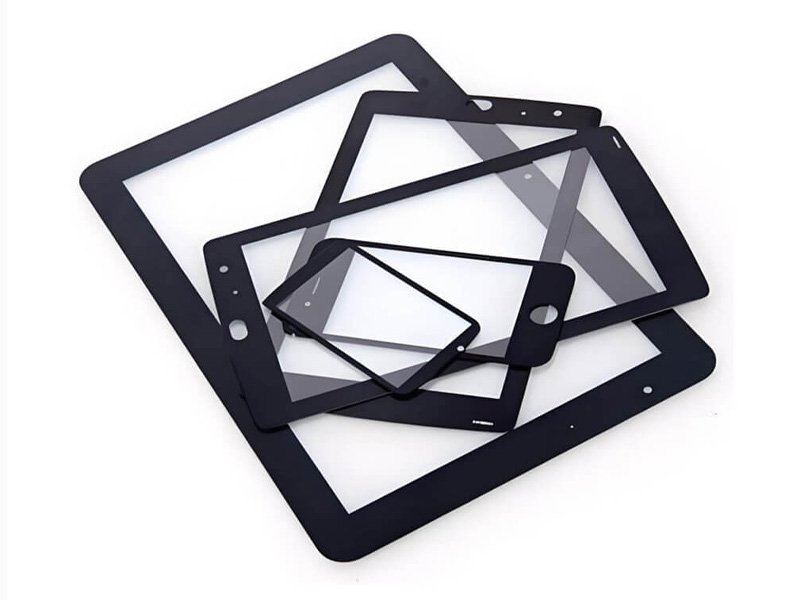
Thin chemically strengthened cover lenses with clear viewing areas, sealed interfaces and cleanable AF surfaces.
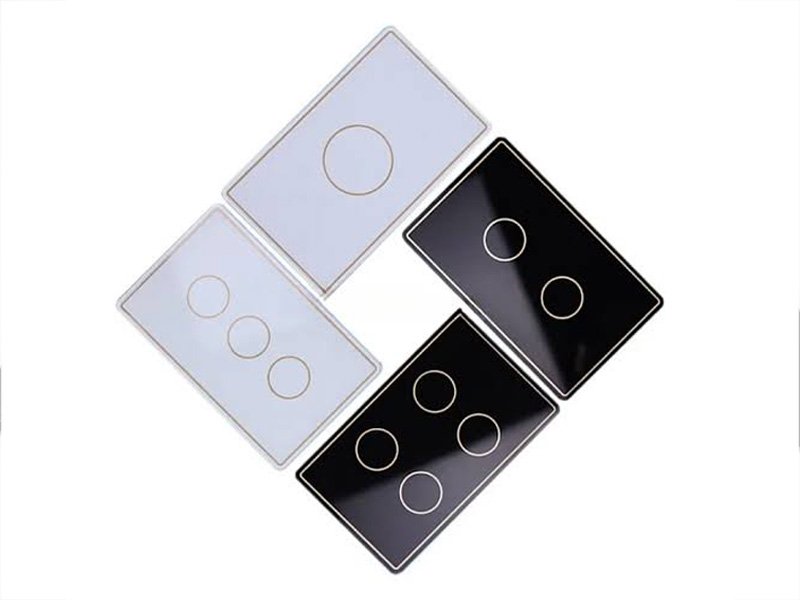
Dead-front printed glass with translucent icons, capacitive key alignment and color controlled against the housing and backlight.
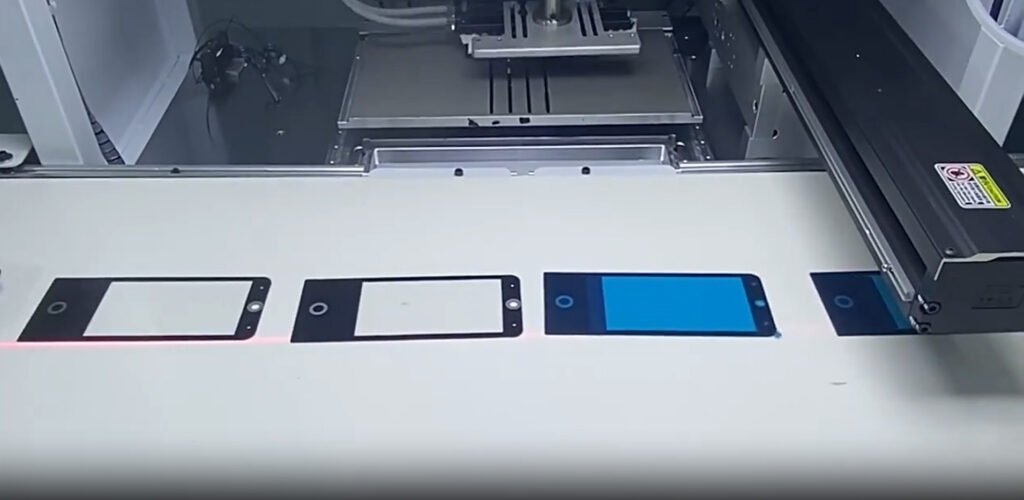
Thicker thermally strengthened front glass with polished edges, printed bezels and optional AG or AF treatment.
Small or irregular CNC components with controlled clear apertures, holes, edge profiles and optical surface requirements.
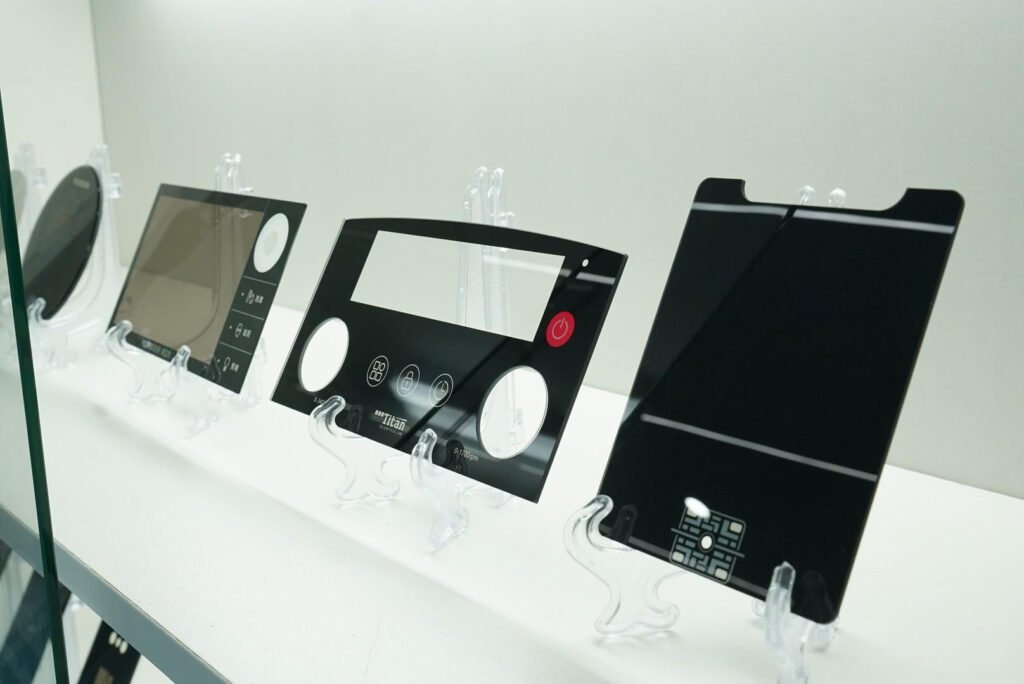
Strengthened cover glass with readable display windows, weather-facing print systems and coatings selected for sunlight and frequent cleaning.
Answers focus on finished-part manufacturing, not generic glass properties.
Finished cover glass is produced from 0.1 to 6.0 mm. Thin 0.4-2.0 mm aluminosilicate is commonly selected for chemically strengthened touch and display covers, while thicker soda-lime or low-iron glass is used for HMI, kiosk and equipment panels.
Standard outline tolerance is +/-0.10 mm. Compatible small and medium parts can be controlled to +/-0.05 mm on defined critical dimensions. Part size, thickness, edge profile and strengthening route determine the final tolerance plan.
Yes. CNC processing covers external profiles, holes, slots, notches, display openings and stepped features. The feature size, corner radius and edge distance are reviewed before the drawing is released.
Compatible combinations are available. Surface orientation, process temperature, adhesion and the optical target determine the sequence. The build is validated on production-intent samples before volume release.
Chemical strengthening suits thin compatible substrates and maintains the original geometry through ion exchange. Thermal tempering is used on suitable thicker glass and produces a safety break pattern. Material, thickness, part size and feature geometry determine the route.
The drawing divides the part into active viewing, visible border, hidden bonding and non-cosmetic zones. Each zone receives its own defect limits and inspection conditions, supported by an approved physical sample where appearance is critical.
Prototype parts can be produced with the intended material, machining, printing and surface treatment. Tooling, inspection sampling and process controls are then adjusted for the production quantity without changing the approved functional surfaces.
Include: material and thickness | 2D drawing and outline file | cosmetic zones | print artwork and color reference | strengthening or coating target | prototype and annual quantity.
We review the finished part, confirm the proposed manufacturing sequence and identify the dimensions, appearance limits and functional values that require sample approval.
Tell us the material, size, thickness, tolerance, quantity, application, and any holes, slots, edges, coating, printing, or polishing requirements. We can manufacture custom glass components from your drawing, CAD file, sketch, or sample.