
Touch Screen Cover Glass
Review the full dielectric and optical stack before fixing thickness or coating.
- PCAP or resistive sensor
- Air gap, OCA or optical bonding
- Display-window and print datums
Cover glass is not selected by appearance alone. The finished part must coordinate with the display, touch sensor, backlight, housing, gasket or adhesive, and the environment in which the interface will be used.
This collection separates the main purchasing routes so that material, geometry, printing, treatment and validation are reviewed against the actual assembly rather than forced into one general specification.
| Standard printed panels | Soda-lime or low-iron substrates with CNC, edge finishing, printing and thermal strengthening where suitable |
|---|---|
| Thin touch interfaces | Chemically strengthenable aluminosilicate or selected thin glass with stack validation |
| Industrial HMI | Readability, cleaning, impact, mounting and environmental exposure drive the design |
| Smart switches | Dead-front opacity, icon registration, touch response and color approval are central |
| Appliance controls | Printing, display windows, heat position and repeated cleaning are reviewed together |
| Automotive interiors | Curvature, optics, coatings and customer validation plans require tighter process control |
| Curved interfaces | Radius, sag, tangent zones, profile deviation and optical distortion must be specified |
Values and acceptance methods are fixed during drawing, material and sample review.
Each type represents a different engineering and purchasing route. Final dimensions, materials and validation requirements remain drawing-specific.
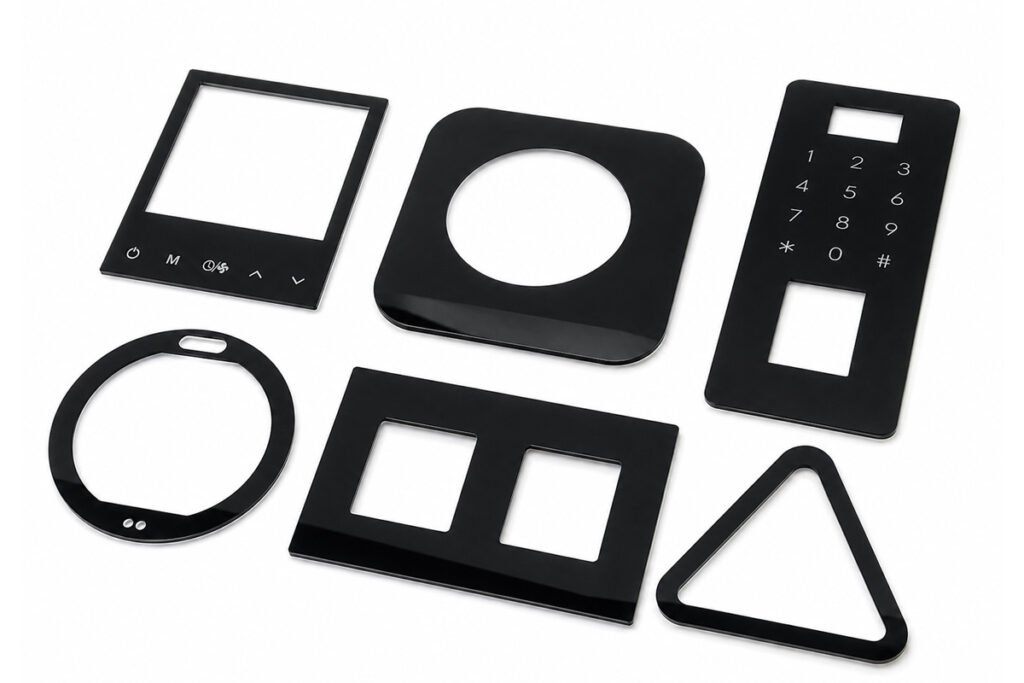
Finished cover lenses with outlines, holes, slots, printing, strengthening and surface options.
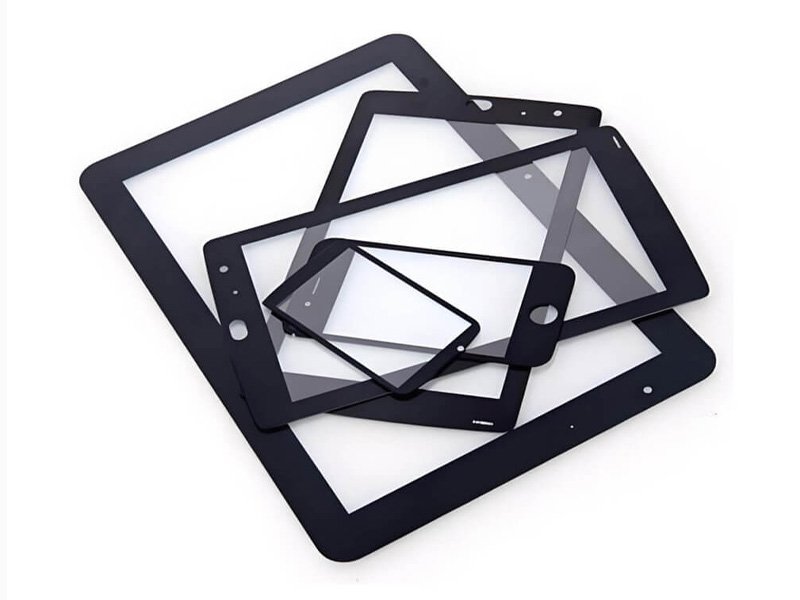
PCAP and display cover glass reviewed with sensor, bonding and optical stack requirements.
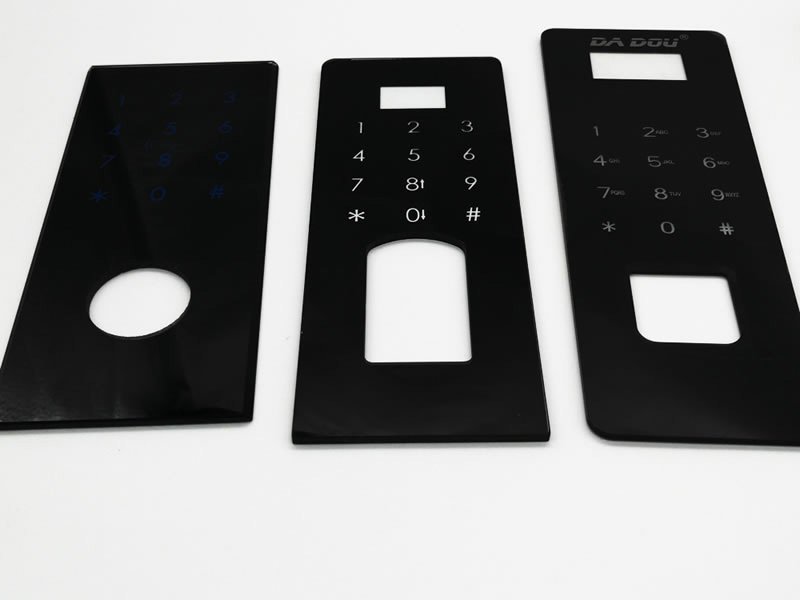
Rugged interface glass for machine controls, panel PCs, kiosks and automation equipment.
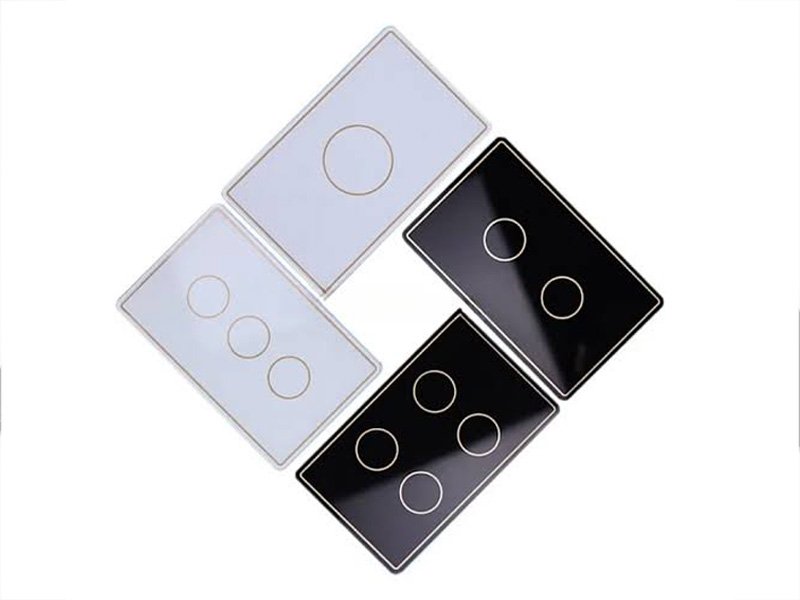
Printed and dead-front panels for capacitive controls, icons, displays and wall-switch assemblies.
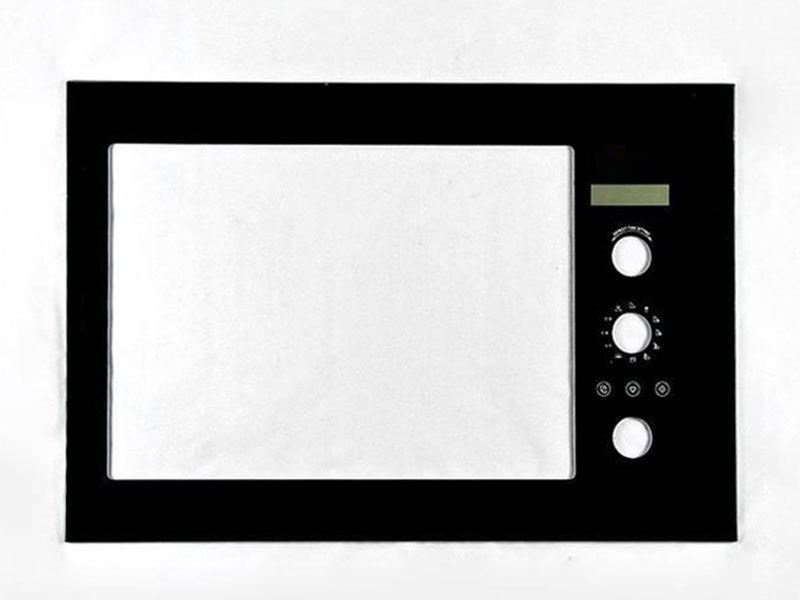
OEM control fascias for ovens, range hoods, refrigerators, laundry and countertop equipment.
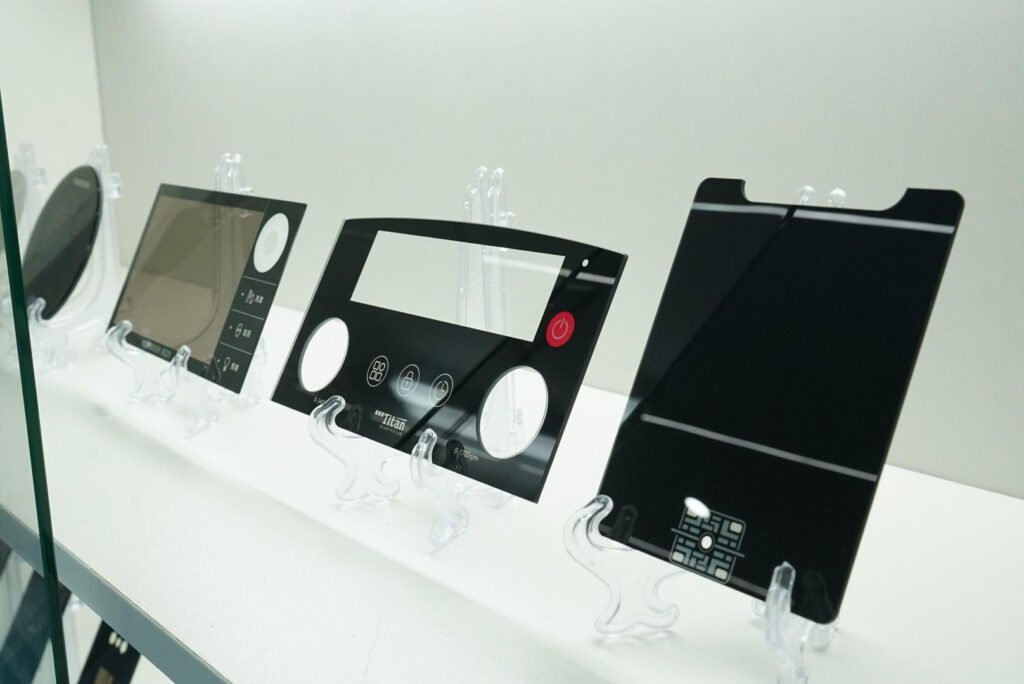
Flat or formed glass for clusters, center displays, controls and decorative functional surfaces.

Hot-formed cover glass developed around radius, profile, tooling and optical requirements.
Select the condition that most strongly affects the project. The result identifies the first design review, not a final material specification.
Review the full dielectric and optical stack before fixing thickness or coating.
Start with use environment, cleaning agents, edge protection and readability.
Coordinate opacity, color, icon position and actual LED/display brightness.
Lock the coordinate model, radius convention and optical inspection method before tooling.
The same glass sheet can perform very differently when thickness, edge support, touch sensor, air gap, display brightness, surface treatment and mounting change. Treating the part as an isolated cosmetic panel often moves problems downstream into touch tuning, light leakage or mechanical fit. A useful RFQ therefore includes the assembly section and validation conditions, not only the outer length and width.
The core process chain is consistent, while controlled parameters change with the interface family.
Lock the drawing revision, substrate, visual zones, test plan and sample quantities.
Machine the outline, holes, slots and edge profiles with the correct process allowance.
Remove particles and residues before printing, strengthening, coating or bonding.
Apply the approved printing, strengthening, surface treatment or forming sequence.
Inspect controlled characteristics and protect cosmetic surfaces for shipment.
Inspection frequency, method and acceptance limits follow the approved control plan.
These questions define which child collection page and engineering route should handle the project.
No. Cover glass is normally the protective and cosmetic front layer. A touch sensor may be laminated or bonded behind it, or supplied as a separate module.
If the material is not fixed, send thickness, impact, temperature, optical and chemical requirements. Material selection can follow the application review.
Some treatment stacks can be combined, but sequence, optical trade-offs, durability and sample validation must be reviewed for the chosen substrate and application.
Yes, subject to material, thickness, edge distance, strengthening route and tolerance review.
No. Tolerance depends on part size, thickness, process route, feature geometry and inspection method.
Appearance, color, transmission windows, print registration, surface treatment, edge quality, fit and any agreed functional tests.
Include: Dimensioned glass drawing or 3D model | Assembly section showing display, sensor and housing | Operating and cleaning environment | Optical, touch and cosmetic targets | Prototype and production quantities.
A complete request lets engineering identify the correct product route without forcing the buyer to know the glass material in advance. Our review identifies the proposed substrate, process sequence, open technical points and the characteristics that need sample approval.
Tell us the material, size, thickness, tolerance, quantity, application, and any holes, slots, edges, coating, printing, or polishing requirements. We can manufacture custom glass components from your drawing, CAD file, sketch, or sample.