
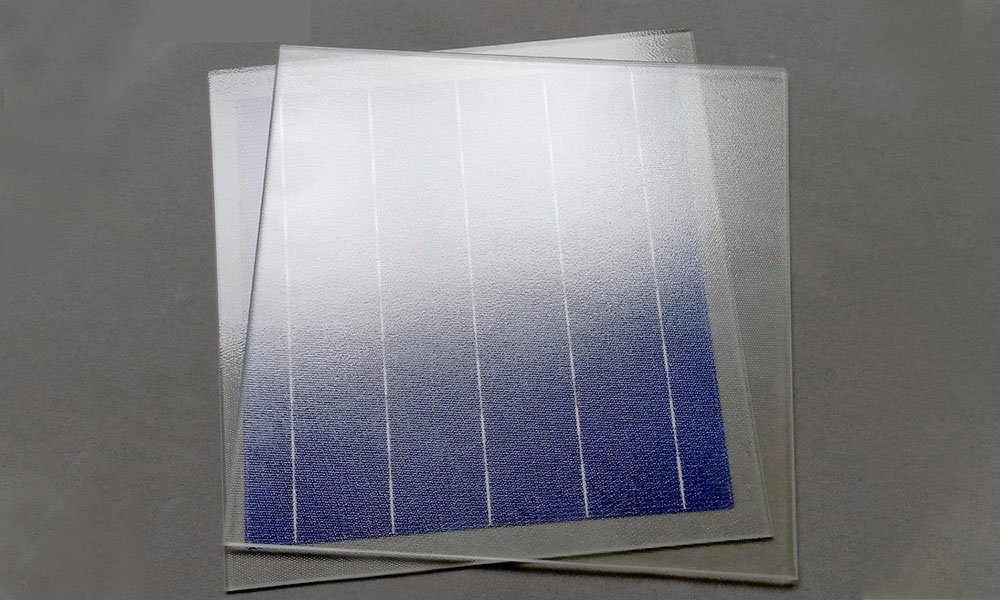
Textured Front Cover
Low-Iron Patterned Solar Glass
Matt and prismatic surfaces for crystalline PV module covers, available cut to size with tempering and optional AR treatment.
Reducing iron content lowers absorption and the green coloration associated with conventional clear soda-lime glass. The result is a transparent substrate that allows more solar radiation to reach the photovoltaic cell or thermal absorber.
The final result also depends on thickness, surface texture, coating, heat treatment and module construction. We review these variables together so the delivered glass matches the front-cover, rear-glass or architectural function.
| Glass | Low-iron soda-lime float or patterned solar glass |
|---|---|
| Common thicknesses | 2.0 / 2.5 / 2.8 / 3.2 / 4.0 mm |
| Surface | Smooth float, matt, prismatic or patterned |
| Iron oxide reference | Fe2O3 up to 0.012% for the specified low-iron grade |
| Uncoated transmission | Typical solar-glass reference of 91.5% or higher |
| AR-coated option | Typical reference of 94% or higher on common thin-glass configurations |
| Heat treatment | Annealed, heat strengthened or fully tempered |
| Finished processing | Cutting, seaming, grinding, holes, notches, corner treatment and ceramic printing |
| Dimensions | Cut to module drawing and custom rectangular formats |
| Inspection | Dimensions, edge condition, bow, appearance, transmission and coating quality as specified |
Values are typical industry references, not guaranteed production data. Final limits are confirmed by glass configuration, test method and approved specification.
Select the surface and processing route according to the module architecture, optical target and required breakage behavior.
Matt and prismatic surfaces for crystalline PV module covers, available cut to size with tempering and optional AR treatment.
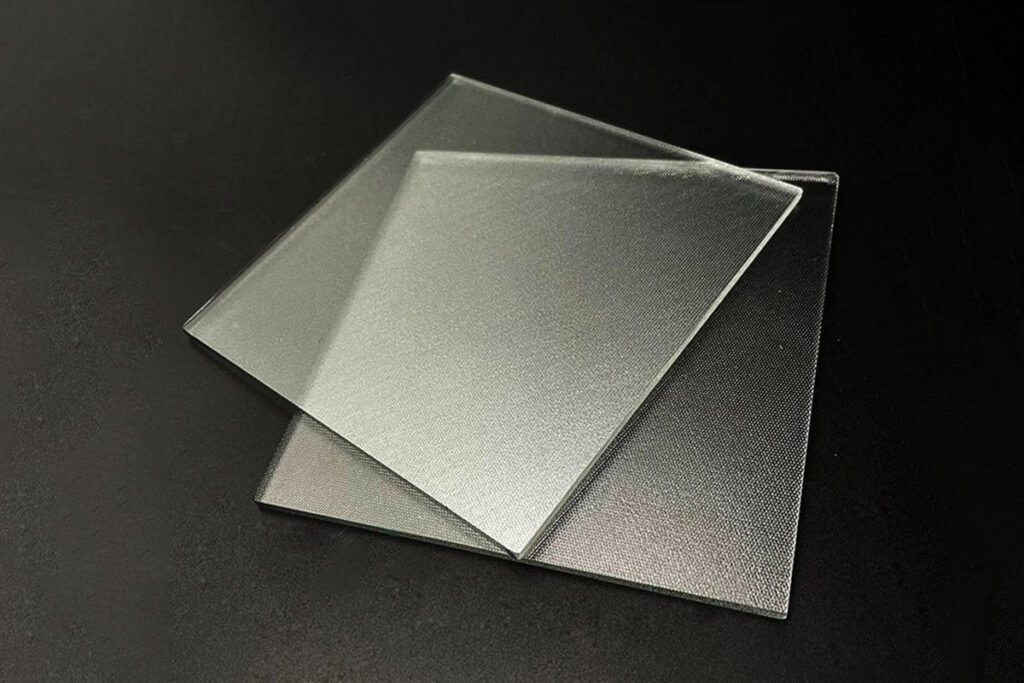
Flat, smooth glass with reduced green coloration for BIPV, solar thermal equipment, thin-film structures and specialty assemblies.
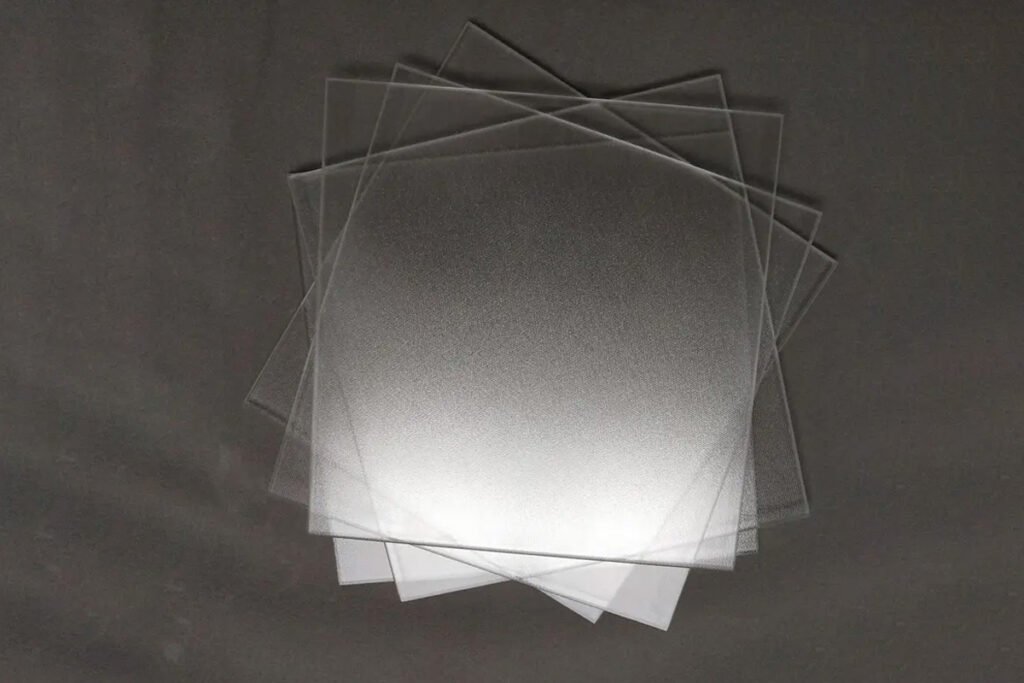
Application-specific anti-reflective treatment used where reduced surface reflection and higher transmission are required.
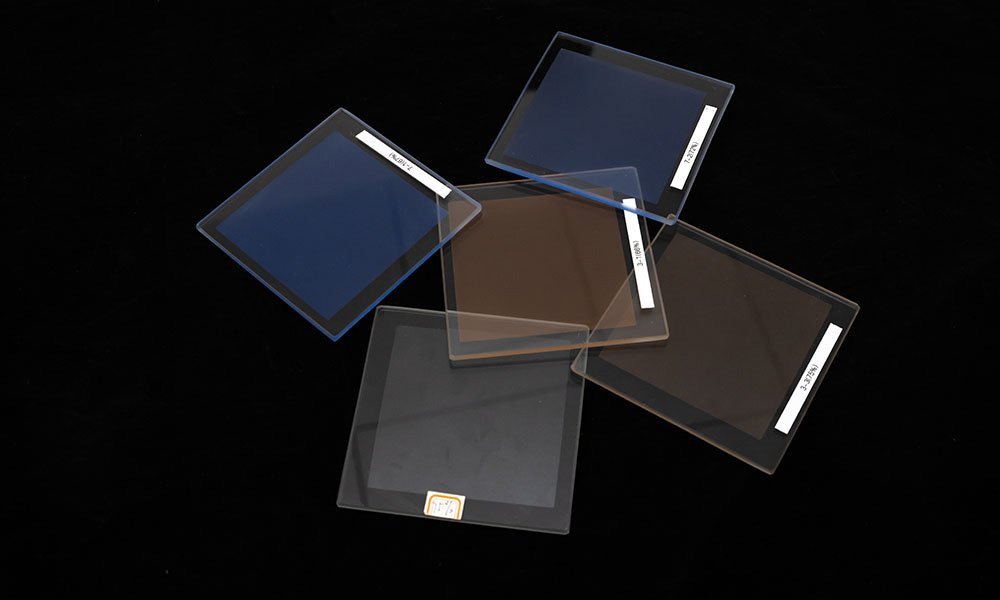
Thermal processing is completed after cutting, edge preparation and drilling. The route is selected according to glass thickness, module build-up and the required strength and breakage behavior.
This comparison communicates the normal industry range used during early design review. It is not measured SpecialGlass production data.
Thickness, texture, wavelength range, incidence angle and measurement method can change the reported value.
Iron-bearing compounds absorb part of the incoming solar spectrum and create the familiar green edge color of standard clear glass. A lower-iron composition reduces this internal absorption. Surface texture and AR coating address a different loss mechanism at the air/glass interface, so substrate composition and surface treatment should be specified separately.
Panel dimensions, hole locations, corners, pattern direction and coated or printed faces are controlled from the finished module drawing.
All mechanical processing is completed before heat strengthening or full tempering. Tempered glass cannot be cut or drilled afterward.
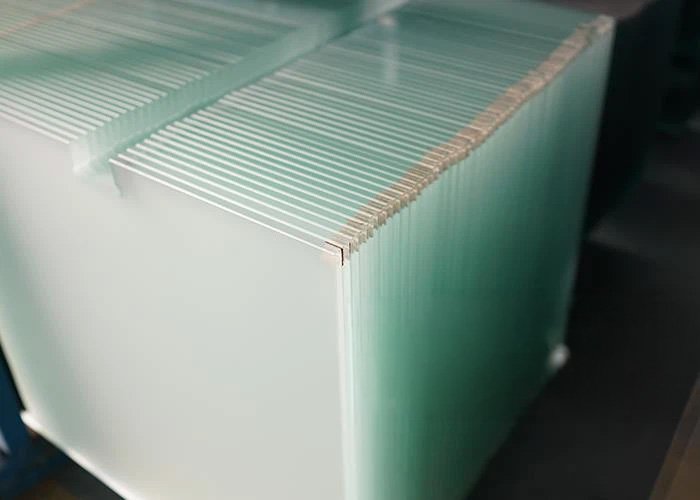
The base material remains low-iron glass, while the surface determines reflection, light distribution, appearance and compatibility with the module beneath it.
Production sequence and inspection are arranged around the finished module specification, including surface orientation and coating protection.
Rectangular formats and custom outlines produced from the approved drawing.
Seaming, grinding, corners, holes and notches completed before thermal processing.
Ceramic printing and compatible AR processing follow the defined face orientation.
Heat strengthening or full tempering selected for thickness and module construction.
Finished surfaces are cleaned, released and protected for module assembly.
Inspection limits and reporting level are defined by drawing, approved sample and purchase specification.
Front-cover, rear-glass and architectural uses place different priorities on light transmission, weight, safety, appearance and lamination compatibility.
For quotation, identify whether the glass is used on the light-entry side, the rear side or as part of a building glazing assembly.
| Application | Typical Configuration | Primary Function |
|---|---|---|
| Crystalline Silicon PV | 3.2 mm patterned tempered glass, optional AR | High-transmission front cover |
| Glass-Glass PV | 2.0-2.5 mm low-iron front and rear glass | Lower module weight with dual-glass protection |
| Bifacial PV | Low-iron front and rear glass | Permit rear-side light utilization |
| Solar Thermal Collector | 3.2-4.0 mm low-iron glass, optional AR | Transmit solar radiation to the absorber |
| BIPV Module | Smooth or patterned, printed or laminated glass | Combine energy generation with building integration |
| Specialty Solar Equipment | Processed low-iron float glass | Optical cover or transmission panel |
Smooth float glass maintains a flat optical surface and controlled appearance. It is suitable for BIPV, thin-film systems, solar thermal equipment and specialty assemblies. Patterned solar glass introduces a matt or prismatic texture and is commonly selected for crystalline PV front covers. AR treatment can be developed for either route, but the coating process and reported transmission must be matched to the actual surface.
These details affect the product route, quotation and inspection plan.
Common thicknesses include 2.0, 2.5, 2.8, 3.2 and 4.0 mm. Thin glass is often selected for glass-glass modules, while 3.2 mm is a common front-cover specification. Final availability depends on surface and processing route.
It contains less iron oxide, reducing internal absorption and the green coloration associated with conventional clear soda-lime glass.
Uncoated low-iron solar glass commonly uses a reference of 91.5% or higher. AR-coated configurations may use 94% or higher, depending on thickness, surface, coating and test method. The controlled value must be confirmed for the ordered construction.
Yes, subject to the selected texture and coating process. The actual surface, coating side, target spectrum and inspection method should be agreed before production.
Yes. Cutting, edge work, holes and notches are completed before heat strengthening or full tempering. The glass cannot be mechanically processed afterward.
White, black and project-specific ceramic patterns can be reviewed for back glass, BIPV and defined opaque or reflective areas.
Inspection can cover dimensions, diagonals, holes, edges, surface appearance, transmission, coating condition, bow and the applicable heat-treatment requirements.
Send the module drawing, glass thickness, surface, dimensions, quantity, heat treatment, coating or printing side, transmission requirement, packing method and application.
We review the finished glass configuration rather than quoting only a raw sheet size.
Cutting, edge processing, holes, printing, coating, heat treatment, cleaning and inspection can be coordinated as one production route.
Send Your SpecificationSend your drawing, module structure, optical target, thickness, quantity and processing requirements for review.
Tell us the material, size, thickness, tolerance, quantity, application, and any holes, slots, edges, coating, printing, or polishing requirements. We can manufacture custom glass components from your drawing, CAD file, sketch, or sample.