
Wall Control
Capacitive Touch Switch Glass
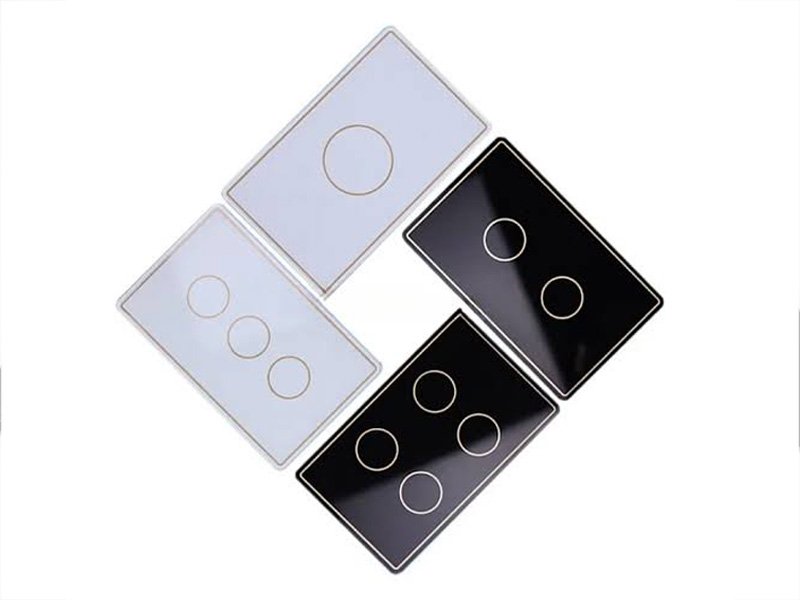
Printed key icons and hidden electronics for single or multi-gang touch controls.
Smart switch glass combines a visible interior product surface with hidden electronics. The same printed layer must mask the PCB when idle, reveal icons when illuminated and remain compatible with capacitive keys behind the glass.
A stable result starts with controlled artwork, glass and sensor datums, defined light sources and a physical color/opacity approval. Quoting only by outside size leaves the most important interface conditions undefined.
| Substrates | Clear, tinted or low-iron soda-lime; aluminosilicate for selected thin designs |
|---|---|
| Printing | Opaque backgrounds, translucent icons, logos, labels and display windows |
| Touch zones | Capacitive keys, sliders and proximity areas coordinated with controller design |
| Openings | Button, socket, sensor and mounting features completed before strengthening |
| Surface | Gloss, matte or easy-clean treatment after optical and touch review |
| Approval | Color, opacity, transmission, registration, surface quality and fit by sample |
Values and acceptance methods are fixed during drawing, material and sample review.
The reference viewer demonstrates the design trade-off. Production transmission and color require physical samples with the actual light source.
Backlight off: the electronics and icons merge into the dark front.
Visual reference only. This is not measured production data.
The off-state color depends on glass tint, ink formulation, print thickness and surrounding housing. The lit-state result also depends on LED wavelength, brightness, diffuser, air gap and viewing angle. Increasing opacity can hide electronics but starve the icons of light; reducing opacity can expose the display or create patchiness. A signed golden sample under defined lighting is more reliable than approving a digital rendering.
Each type represents a different engineering and purchasing route. Final dimensions, materials and validation requirements remain drawing-specific.
Printed key icons and hidden electronics for single or multi-gang touch controls.
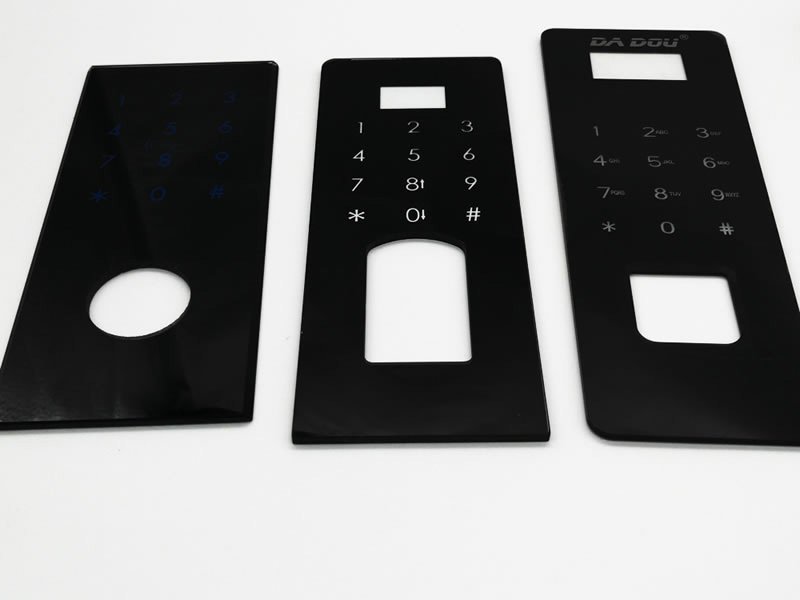
Display windows, touch zones and brand graphics for thermostats and room controllers.
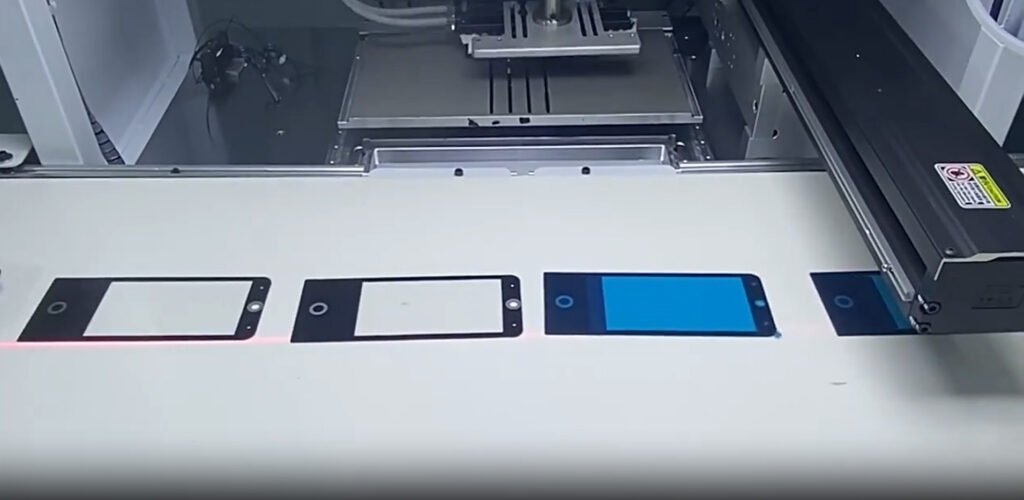
CNC openings and alignment features for combined electrical accessories.
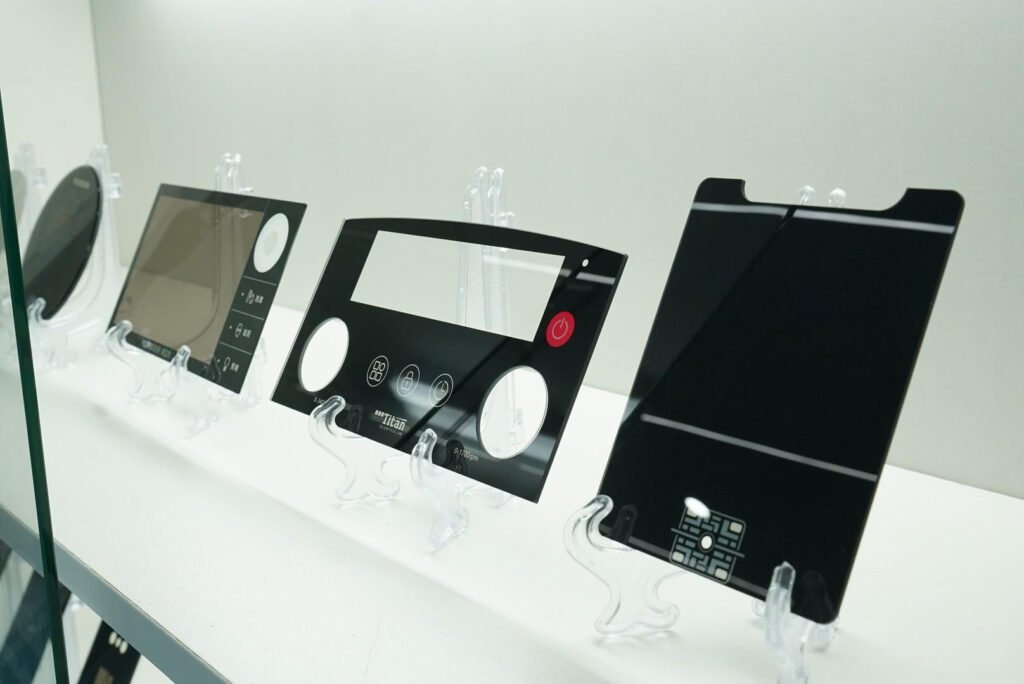
Backlit scenes, room functions and durable printed interfaces for repeated use.
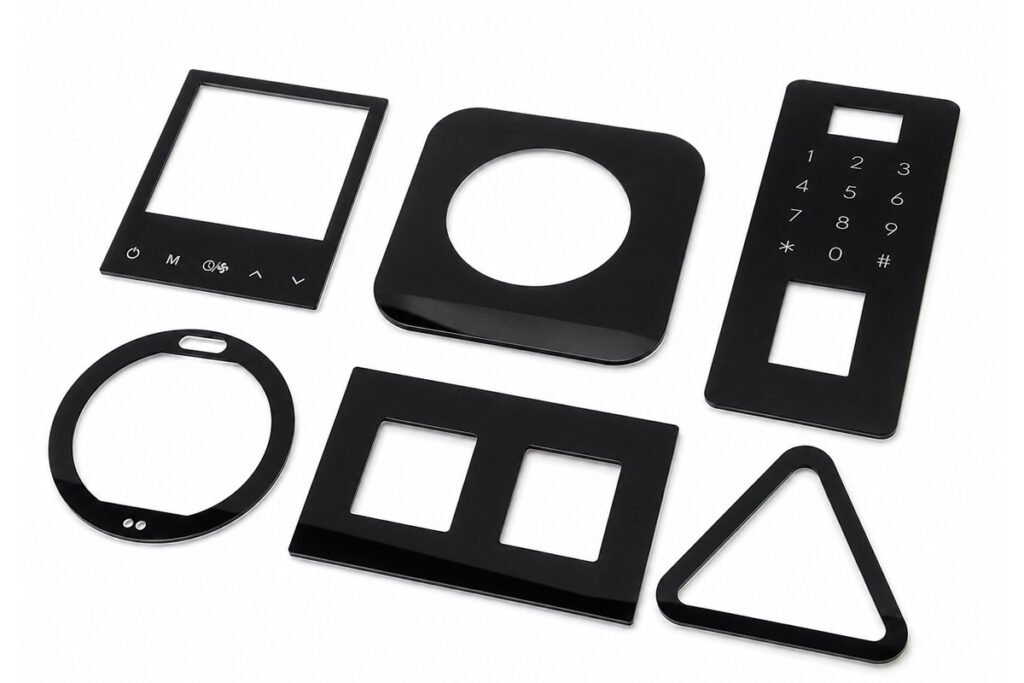
Sensor, camera, keypad and display windows coordinated with the enclosure.
Switch glass requires revision discipline because a small graphics change can affect light, touch and assembly alignment.
Lock the drawing revision, substrate, visual zones, test plan and sample quantities.
Machine the outline, holes, slots and edge profiles with the correct process allowance.
Remove particles and residues before printing, strengthening, coating or bonding.
Apply the approved printing, strengthening, surface treatment or forming sequence.
Inspect controlled characteristics and protect cosmetic surfaces for shipment.
Inspection frequency, method and acceptance limits follow the approved control plan.
Smart-switch quality is determined by the relationship between printing, lighting and touch electronics.
It is a printed construction designed to conceal inactive electronics or displays while allowing selected icons or information to appear when backlit.
Color matching is possible within an agreed method, but substrate, ink film, backing and lighting affect appearance. Use physical references and a golden sample.
Ink and glass thickness can affect the electrical stack. The controller and sensor pattern should be tuned and validated with the production panel.
No for normal mechanical processing. Complete holes, cutouts and edges before thermal or chemical strengthening.
Yes where compatible, with durability and touch-feel targets defined by an agreed test.
Control artwork overlap, opacity, diffuser geometry, air gaps and print registration, then approve the assembled lit sample.
Include: Dimensioned panel drawing | Vector artwork and Pantone/RAL/physical color reference | LED/display wavelength and brightness | Touch-key coordinates and controller information | Housing, diffuser and air-gap section | Lit/unlit approval conditions | Quantity by color/SKU.
The mechanical and graphic files should use the same origin and revision so print alignment is inspectable. Our review identifies the proposed substrate, process sequence, open technical points and the characteristics that need sample approval.
Tell us the material, size, thickness, tolerance, quantity, application, and any holes, slots, edges, coating, printing, or polishing requirements. We can manufacture custom glass components from your drawing, CAD file, sketch, or sample.