
Glass Tubes
From a 0.02 mm fiber-optic capillary bore to a four-meter quartz tube, we draw, bore, and finish glass tubing to the tolerances your process actually demands. Every tube is held to tight dimensional limits — down to ±0.002 mm on a precision bore — and checked against the material's thermal and chemical limits before it leaves the floor. Whether you need a single quartz sleeve for a UV lamp or USP Type I borosilicate stock for medical packaging, we have the materials and the process control to match.
Your #1 Choice of Glass Tube Supplier
Glass tubing is one of those quietly demanding products. It looks simple, but the bore, the wall, and the material all have to be right, or the part it feeds won't work. A tube can be drawn from soda-lime, borosilicate, quartz, or sapphire, and each one buys you something different: soda-lime for everyday lab work, borosilicate for thermal shock and chemical resistance, quartz for high purity and continuous service up to 1200 °C, and sapphire where you need an inert, ultra-hard bore.
Choosing the right supplier means more than getting a tube in the right diameter. You want one who can hold the tolerance you specify, certify the material against the standard your industry follows, and finish the ends so they don't crack in service. That is the combination we focus on, from a single prototype through to volume production.
Glass Tube Families
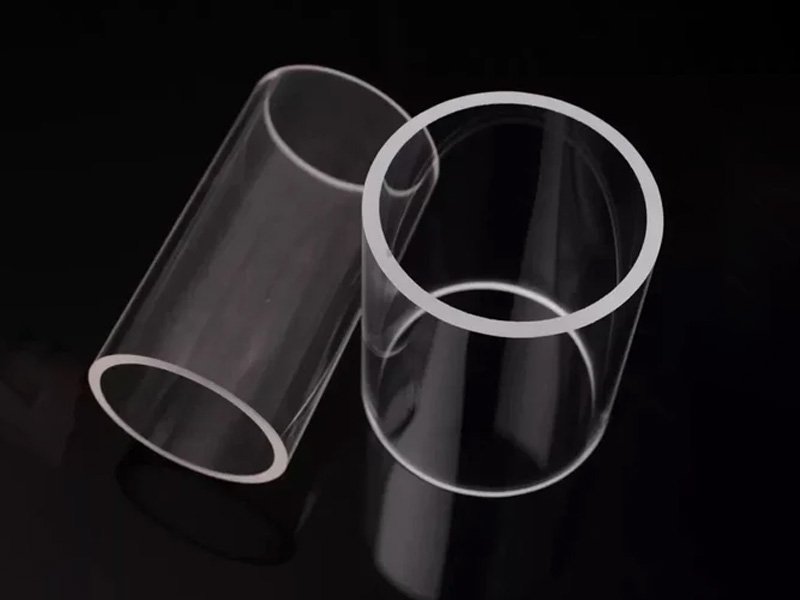
Borosilicate Tubes
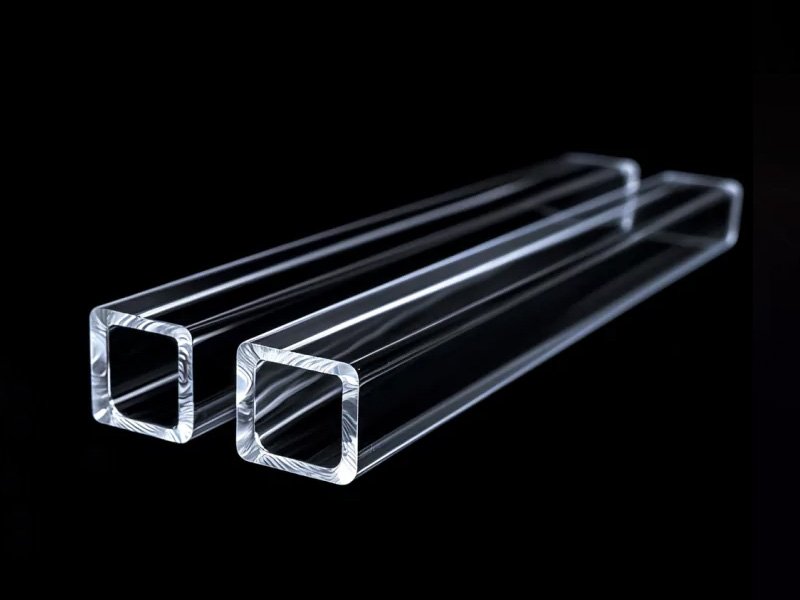
Quartz Tubes
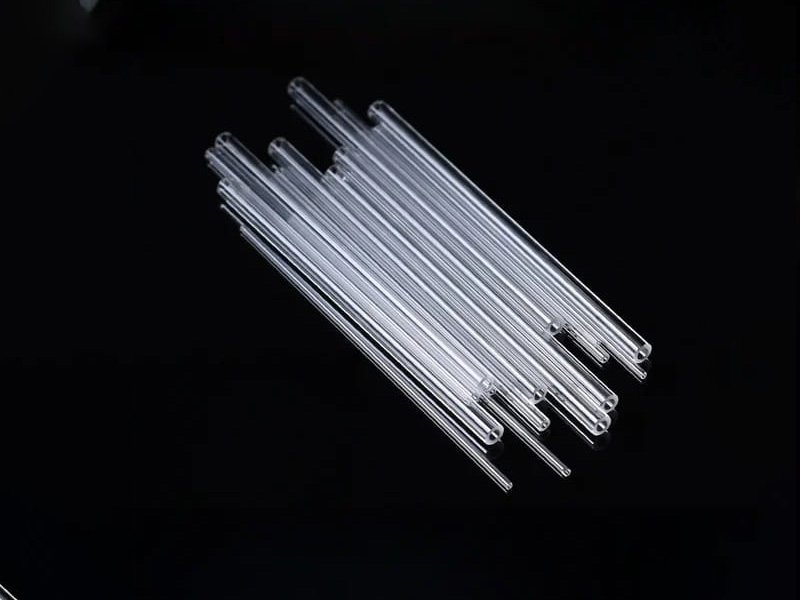
Capillary Tubes
Pharmaceutical Tubes
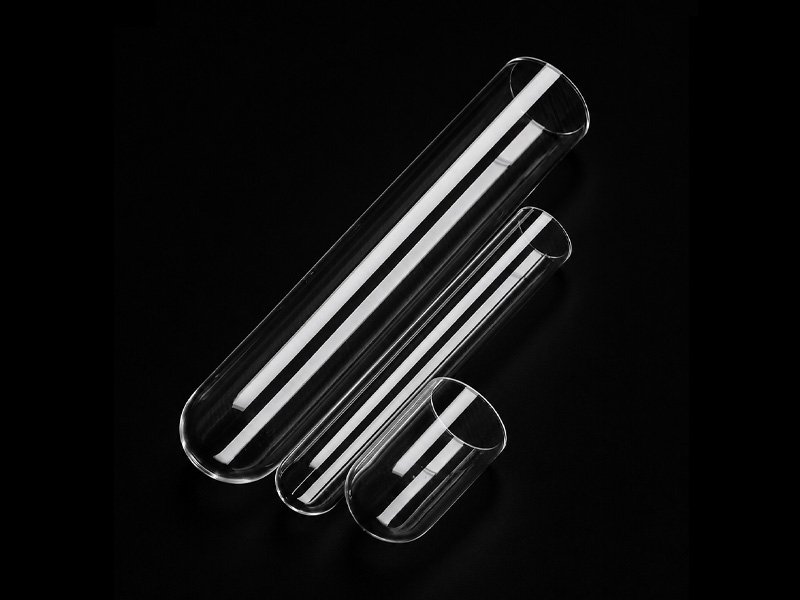
Quartz Sleeves
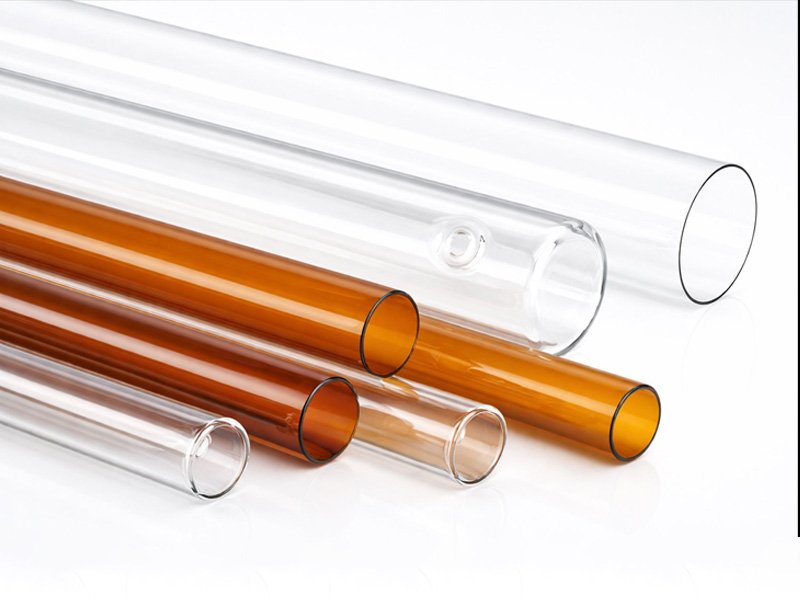
Custom Profile Tubes
Need Help?
Send your drawings, sizes, glass type, thickness, quantity, and application. Our team will help you choose the right material and processing solution.
Material & Technical Specifications
The material sets the ceiling on temperature, expansion, and chemical resistance, so it's the first thing to settle. The table below compares the three base glasses we draw most often.
| Property | Soda-lime | Borosilicate | Quartz |
|---|---|---|---|
| SiO₂ content | 60–75% | > 81% | > 90% |
| Density at 25 °C | 2.53 g/cm³ | 2.23 g/cm³ | 2.20 g/cm³ |
| Coefficient of thermal expansion | 8.6 × 10⁻⁶ /K | 3.3 × 10⁻⁶ /K | 5.5 × 10⁻⁷ /K |
| Softening point | 726 °C | 820 °C | 1780 °C |
| Continuous service temperature | 350 °C | 450 °C | 1200 °C |
After material comes the bore. We group tubing into three accuracy classes so you can match cost to what the application really needs.
| Class | Inside diameter | ID tolerance |
|---|---|---|
| Normal glass tube | 5–500 mm | ±0.5 mm |
| Precision glass tube | 5–500 mm | ±0.005 mm |
| Heavy-wall capillary tube | 0.025–0.508 mm | ±0.02 mm
|
For optical-fiber and analytical capillaries, we hold the inner diameter to ±0.002 mm, with bores starting at 0.005 mm. On the pharmaceutical side, our neutral borosilicate stock meets USP Type I and ISO 719 HGB1, with a transformation temperature of 515 °C and a density of 2.32 g/cm³. Quartz tubing carries a Mohs hardness of 5.5–6.5, a compressive strength near 1150 MPa, and transmittance up to 92%.
Custom Glass Tubes
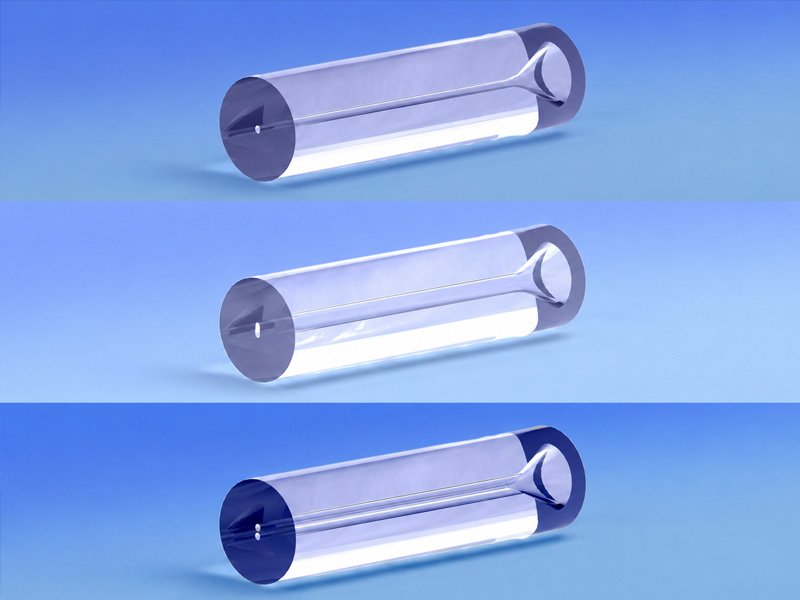
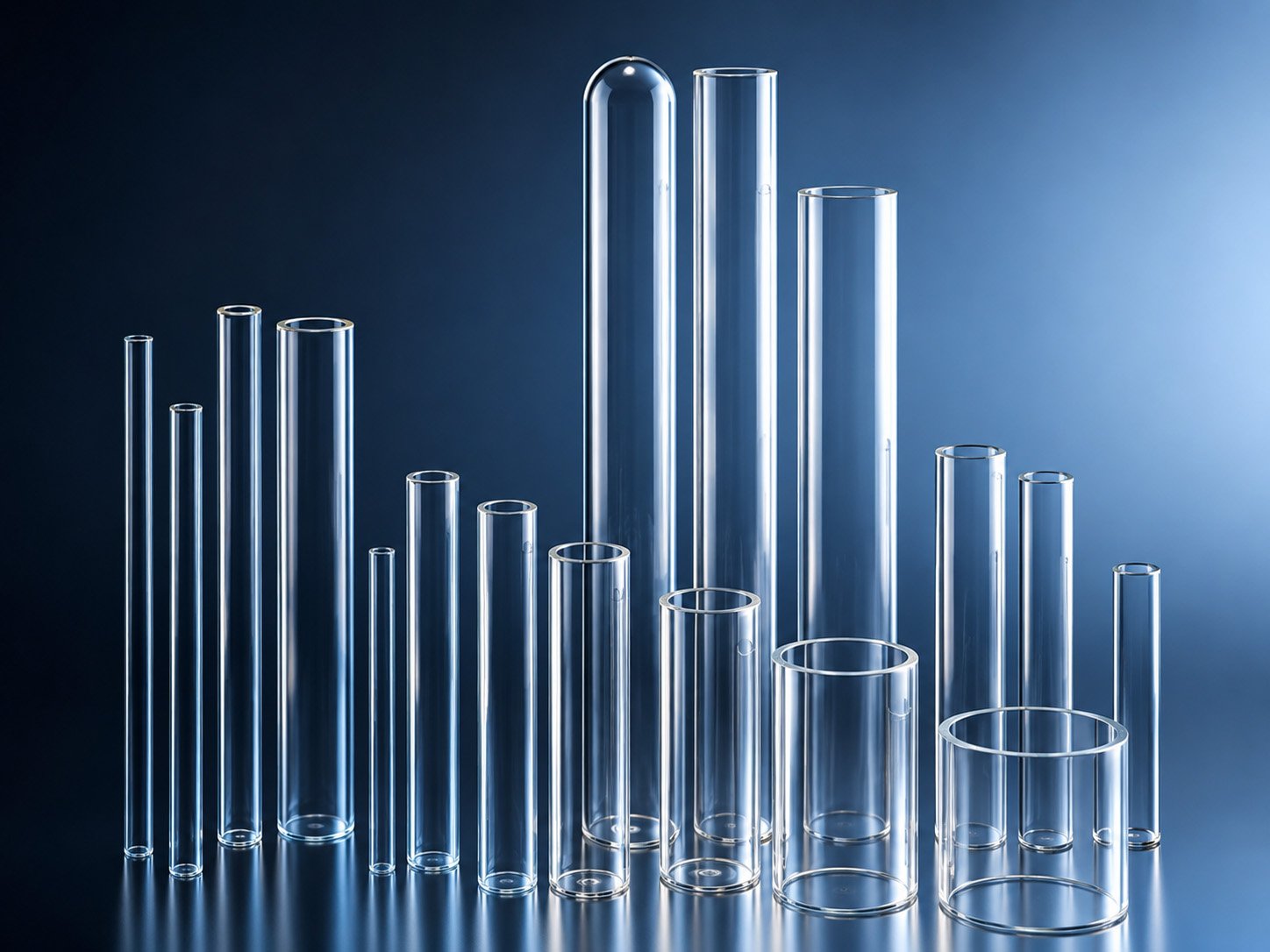
Most of what we ship is made to a drawing. Catalog sizes rarely match a sensor housing, a fiber collimator, or a vial-forming line exactly, so we cut, bore, and shape tubing to your specification instead of forcing a standard part to fit. Send us a drawing or a sample, and we'll match the bore, wall, length, end finish, and color. Multi-bore, heavy-wall, square, and D-type geometries are routine, and so are sterilization-ready materials for medical and analytical work.
How We Make Them
Every tube follows the same controlled path, scaled from a single prototype to a production run:
- Material selection. We choose soda-lime, borosilicate, quartz, based on the chemical, thermal, and purity demands of your application.
- Tube drawing. The glass is drawn to the target outside diameter and wall, with the bore set during forming.
- Precision boring and sizing. For precision and capillary work, the bore is brought to tolerance — down to 0.005 mm, with ID held to ±0.002 mm.
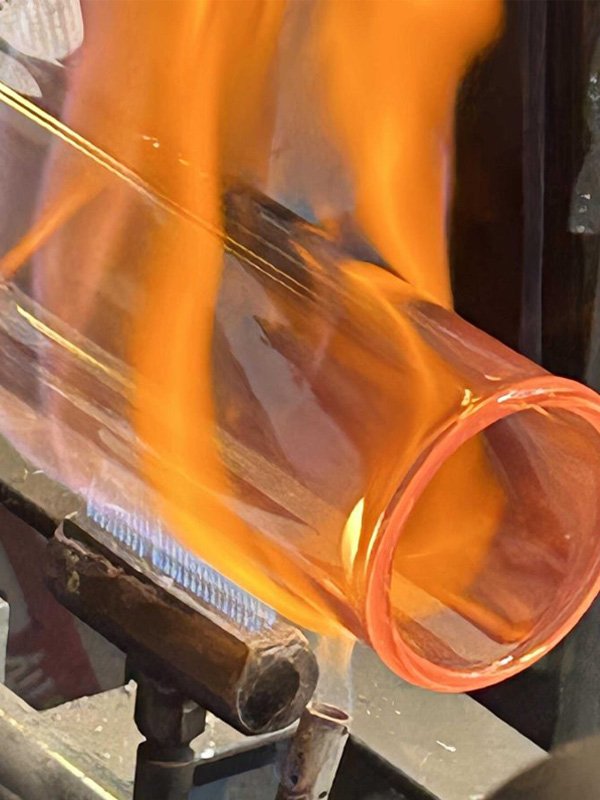
- Cutting and end finishing. Laser cutting leaves clean, crack-free ends, and surfaces and edges are polished so the tube performs and seats correctly.
- Inspection. We measure outside diameter, wall thickness, length, and bore on every batch, and check material-specific properties such as hydrolytic resistance or transmittance before packing.
Selection System
Use the operating requirement first, then confirm the glass family, processing route and inspection method.
Start with inside diameter, bore tolerance and concentricity when the tube controls flow or alignment.
Use operating temperature, thermal cycle and atmosphere to select borosilicate or quartz.
Define OD, end preparation, length and mating condition for sleeves and housings.
Engineering Data System
OD
Outside diameter and ovality control external fit.
ID
Bore size and concentricity control flow or alignment.
Wall
Wall thickness affects strength, heat response and mass.
Ends
Fire-polished, ground, cut or custom ends are specified separately.
Related Technical Pages
Borosilicate Glass
Low-expansion material for technical tubing.
Quartz Glass
High-purity and high-temperature tube tubing.
Cutting
Length cutting and end preparation.
Glass Rods
Solid glass forms by diameter and profile.
Selection FAQ
What information should I send for a quotation?
Send the drawing, glass type if known, dimensions, thickness, tolerance, quantity, application and any edge, hole, printing, coating or strengthening requirement.
Can Specialglass help select the material?
Yes. Provide the operating temperature, optical requirement, chemical exposure, mechanical load and installation method. The engineering team can narrow the suitable glass families before quoting.
Are custom shapes available?
Custom discs, plates, windows, holes, slots, steps and CNC profiles can be reviewed against the selected material and process route.
Saving your time and cost is our common pursuit.
Tell us the material, size, thickness, tolerance, quantity, application, and any holes, slots, edges, coating, printing, or polishing requirements. We can manufacture custom glass components from your drawing, CAD file, sketch, or sample.
- Address
- Yunpu Industrial Zone, Nangang, Huangpu District, Guangzhou
- Call Us
- +86 19860070065
- Email Address
- info@specialglass.net
- +86 19860070065
- +86 19860070065