Your Reliable Partner For Custom Special Glass In China
Technical Overview

Design the Image and the Glass Stack Together

Printed laminated glass is not one printing process. Ceramic frit is fired into a glass surface; digital ceramic printing creates high-resolution durable graphics; decorative films and colored interlayers place the visual layer inside the laminate.

The selected route controls opacity, color gamut, viewed-side appearance, heat-treatment sequence, edge condition and sample approval.

Print routesCeramic screen print, digital ceramic print, decorative interlayer
GlassClear, low-iron, tinted, heat-strengthened or tempered
InterlayerClear / colored PVB or structural ionoplast
Glass ply3-19 mm per ply; two-ply and multi-ply
ArtworkSolid, dots, lines, gradient, logo, image and texture
GeometryRectangular or custom profiles with holes and notches
FinishingGround / polished edges, IGU integration and compatible coatings
ApprovalPhysical sample, viewed side, light source and glass build-up
Glass Stack Viewer

Place the Graphic on the Correct Surface

Surface numbering prevents a correct image from appearing mirrored, over-glossy or exposed to the wrong environment.

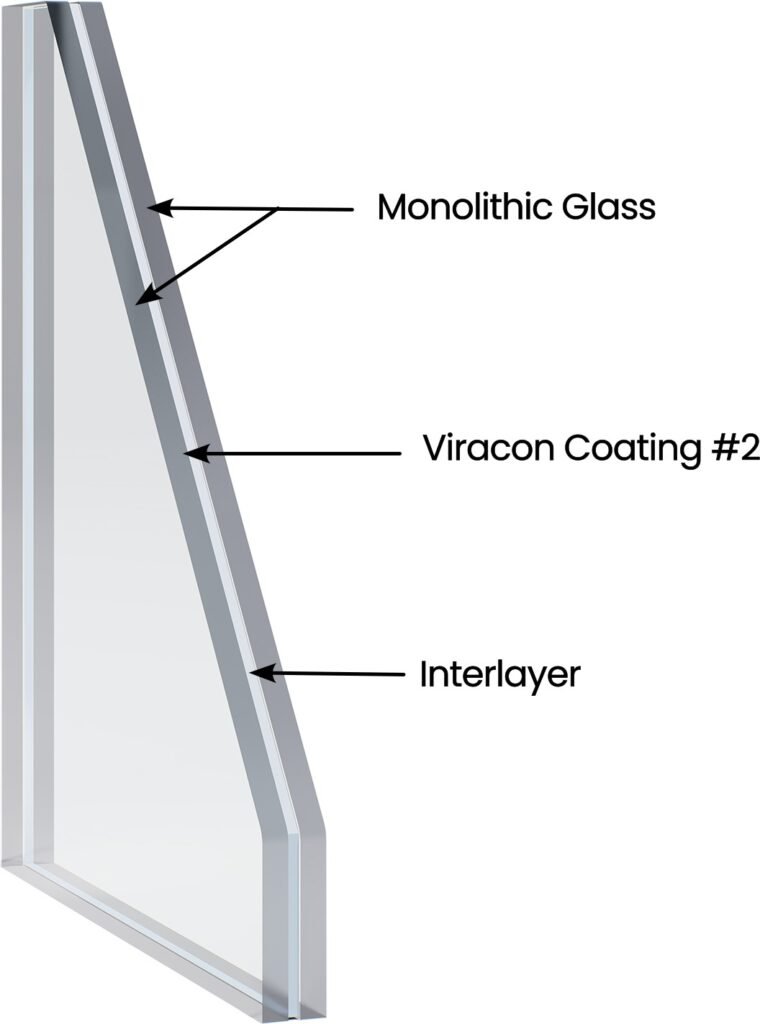
Viewer / ExteriorGlass Ply APrinted SurfaceInterlayerGlass Ply BInterior / Back

Print faces the laminate

The graphic is protected inside the assembly. Confirm whether the artwork is supplied as viewed from the exterior or from the interior.

Always mark viewed side, print side and coating side on the drawing.
Color & Pattern Approval

A Screen Color Is Not a Glass Color Standard

The substrate, iron content, print opacity, interlayer and light behind the panel all change the finished appearance. Low-iron glass reduces green edge color and improves the neutrality of whites and light artwork.

  • Approve a physical glass sample in the final build-up
  • State the viewing side and normal viewing distance
  • Evaluate under transmitted and reflected light
  • Define whether pinholes, banding or print registration are critical
Clear glassReference color
Low-iron glassCleaner light tones
Colored interlayerCombined color
Conceptual appearance only. Production approval uses a physical sample.
Geometry & Registration

Tie the Print to Mechanical Datums

For facades, doors and panels with fittings, the artwork must register to the finished outline, holes and visible opening rather than an untrimmed glass blank.

Visible aperturePrinted borderHole datum
Overall size
L x W after edge processing
Print origin
Datum corner and X/Y direction
Clear opening
Dimension and position tolerance
Repeat pattern
Pitch, line weight and panel-to-panel alignment
Artwork file
Vector or approved high-resolution raster
Orientation
Viewed side, print side and coating side
01

Why Ceramic Printing Comes Before Tempering

Ceramic frit must be fired so the inorganic pigment bonds to the glass surface. The printed ply is therefore fabricated and printed before the tempering furnace, then washed and laminated afterward. A late artwork change can require remaking the tempered ply, which is why print approval belongs before production release.

Printed laminated decorative glass samples
Manufacturing Routes

Three Print Paths, One Controlled Laminate

  1. ACeramic frit: cut -> edge / CNC -> print -> heat treat -> laminate
  2. BDigital ceramic: artwork RIP -> print -> fire / temper -> laminate
  3. CDecorative interlayer: prepare glass -> align film -> de-air -> autoclave

Coatings, print and interlayer must use a compatible surface order. Where a laminate becomes one lite of an IGU, spacer and edge-seal compatibility are added to the review.

Application Matrix

Match Print Technology to Viewing Distance

A dense facade frit, a retail image and a translucent partition are different print problems.

Printed laminated architectural glass application
ApplicationStarting RouteApproval Focus
Facade shadingCeramic frit dots, lines or gradientCoverage, alignment and exterior color
Retail / museum graphicDigital ceramic or decorative interlayerImage resolution, white point and lighting
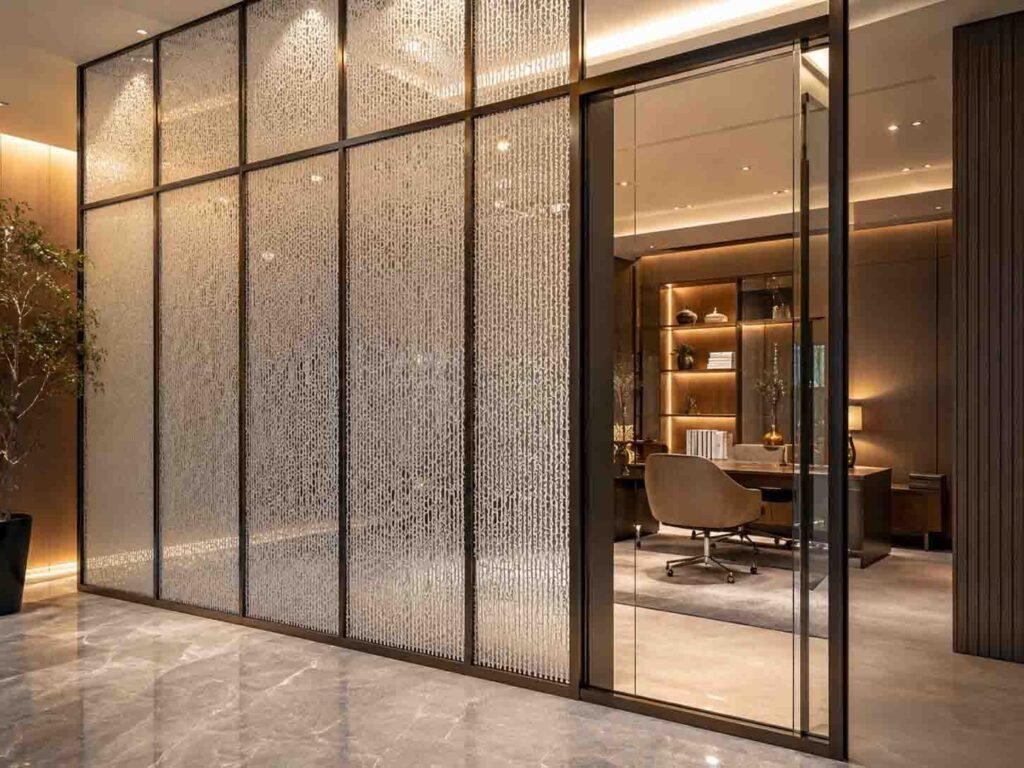
Privacy partitionFrit pattern or translucent interlayerOpacity, silhouette and both viewed sides
Branded entranceLogo with clear and printed zonesRegistration to holes and door hardware
Balustrade / canopyHeat-treated printed laminateStructural build-up and print coverage
Quality Control

Inspect Appearance Under Defined Conditions

Printed glass needs visual acceptance criteria in addition to dimensional and lamination checks.

Artwork releaseVersion, scale, bleed, orientation and color reference
Print inspectionCoverage, pinholes, banding and registration
Heat treatmentColor development, bow and glass quality
Lay-upPrint side, interlayer and coating orientation
LaminationBubbles, contamination, edge and optical appearance
Final approvalDefined light, viewing distance and agreed sample
Procurement FAQ

Printed Laminated Glass Questions

Answers for artwork, color and manufacturing sequence.

What printing methods are available?

Ceramic screen printing, digital ceramic printing and decorative interlayer routes are available. The best route depends on durability, image detail, opacity and production quantity.

Is the printed layer protected?

The print can face the inside of the laminate so it is protected from handling and weather. The exact surface order must be stated.

Can printed glass be tempered?

Yes. Ceramic ink is normally applied before heat treatment and fired during the tempering cycle; the finished tempered ply is laminated afterward.

Why use low-iron glass?

Low-iron glass reduces the green tint of standard clear glass, improving light colors, whites and edge appearance.

Can logos and photographic images be printed?

Yes. Digital printing provides detailed graphics, while screen printing suits repeated patterns and solid coverage. Supply production artwork and approve a glass sample.

What information is needed for quotation?

Send the full glass build-up, artwork, color reference, viewed side, print surface, opacity or coverage, finished drawing, quantity, application and required sample process.

RFQ Preparation

Send the Artwork and Glass Drawing Together

We will check the print route, surface order, mechanical registration and laminated construction before sample production.

Include these details:
  • Glass and interlayer build-up
  • Finished drawing with datums
  • Vector / high-resolution artwork
  • Color reference and opacity
  • Viewed side and print surface
  • Coating and exposed-edge condition
  • Quantity and sample approval plan
Request a Quote
Contact Our Glass Engineers

We're Here To Help

Send the glass build-up, artwork, drawing, quantity and required viewing conditions. We will review the route before quotation.

Saving your time and cost is our common pursuit.

Tell us the material, size, thickness, tolerance, quantity, application, and any holes, slots, edges, coating, printing, or polishing requirements. We can manufacture custom glass components from your drawing, CAD file, sketch, or sample.

Address
Yunpu Industrial Zone, Nangang, Huangpu District, Guangzhou
Wechat
+86 19860070065