
Your Reliable Partner For Custom Special Glass In China
Technical Overview

Ionoplast Is One Part of a Structural Assembly

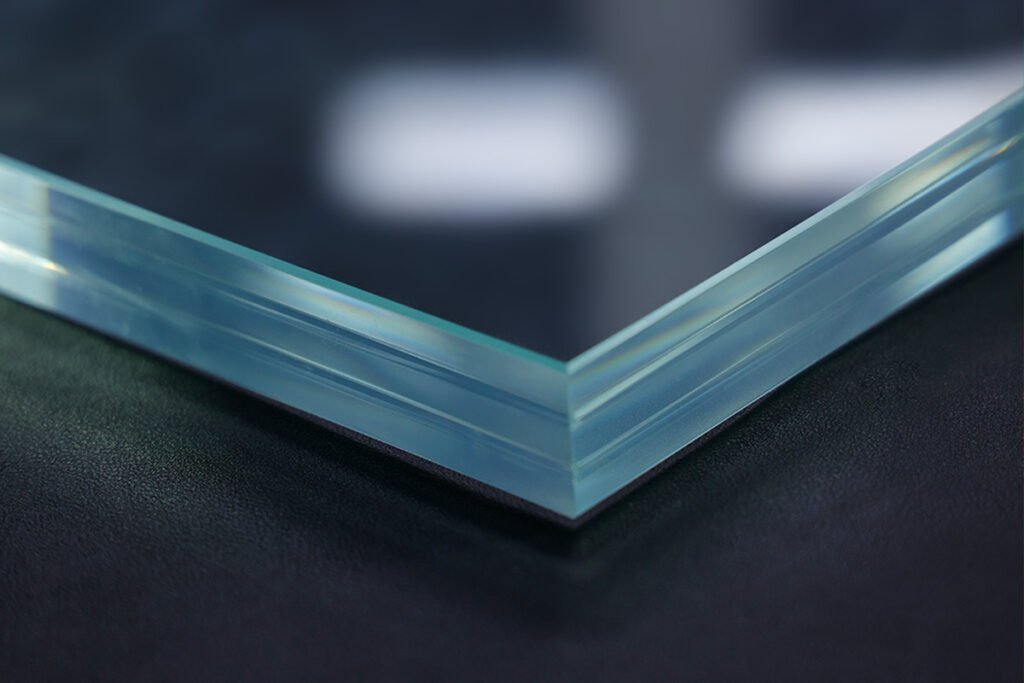
SGP is common industry shorthand for a high-stiffness ionoplast laminate. We manufacture flat, curved and multi-ply constructions using the specified SentryGlas® grade with clear, low-iron, heat-strengthened or fully tempered glass.

Panel behavior changes with load duration, temperature, ply thickness, support, holes and post-breakage condition. The final build-up should come from the project engineer or a documented calculation using the selected interlayer data.

Trademark and specification.SentryGlas® is a Kuraray brand. State the actual interlayer product, grade and caliper on the drawing instead of relying only on “SGP”.
InterlayerSpecified SentryGlas® ionoplast
Common calipers0.89 / 1.52 / 2.28 mm
Glass ply4-19 mm; symmetrical, asymmetrical or multi-ply
Heat treatmentHeat-strengthened or fully tempered
GeometryFlat, curved, holes, countersinks, notches and custom profiles
Size classUp to approx. 2500 x 6000 mm; larger formats depend on route
FinishingPolished exposed edges, printing, compatible coatings and IGU integration
Design inputsLoad, duration, temperature, support, edge condition and required residual capacity
Condition Explorer

Load Duration and Temperature Change Composite Action

This qualitative tool shows why one stiffness value cannot be used for every project. It does not calculate glass thickness or certify a build-up.

GlassIonoplastGlass
Higher composite action potential

Use Grade-Specific Design Data

Short-duration loading at moderate temperature is the condition in which structural coupling is generally most effective. Verify with the selected interlayer design values.

Proceed to engineering calculation with panel size and support.
Reference Build-Ups

Common Two-Ply and Multi-Ply Configurations

These are manufacturing reference combinations, not automatic load ratings.

8.894 + 0.89 + 4 mm
12.896 + 0.89 + 6 mm
13.526 + 1.52 + 6 mm
17.528 + 1.52 + 8 mm
21.5210 + 1.52 + 10 mm
26.2812 + 2.28 + 12 mm
Multi-ply option.Three or more glass plies can be laminated for thicker structural assemblies, but ply count, support and post-breakage intent must be engineered together.
Technical Education

Post-Breakage Performance Is a Load Path

After one glass ply breaks, the surviving ply, interlayer, fixings and supports redistribute load. The interlayer must bridge cracked fragments, but it cannot be assessed separately from panel size, temperature, edge restraint, hole geometry and the time before replacement.

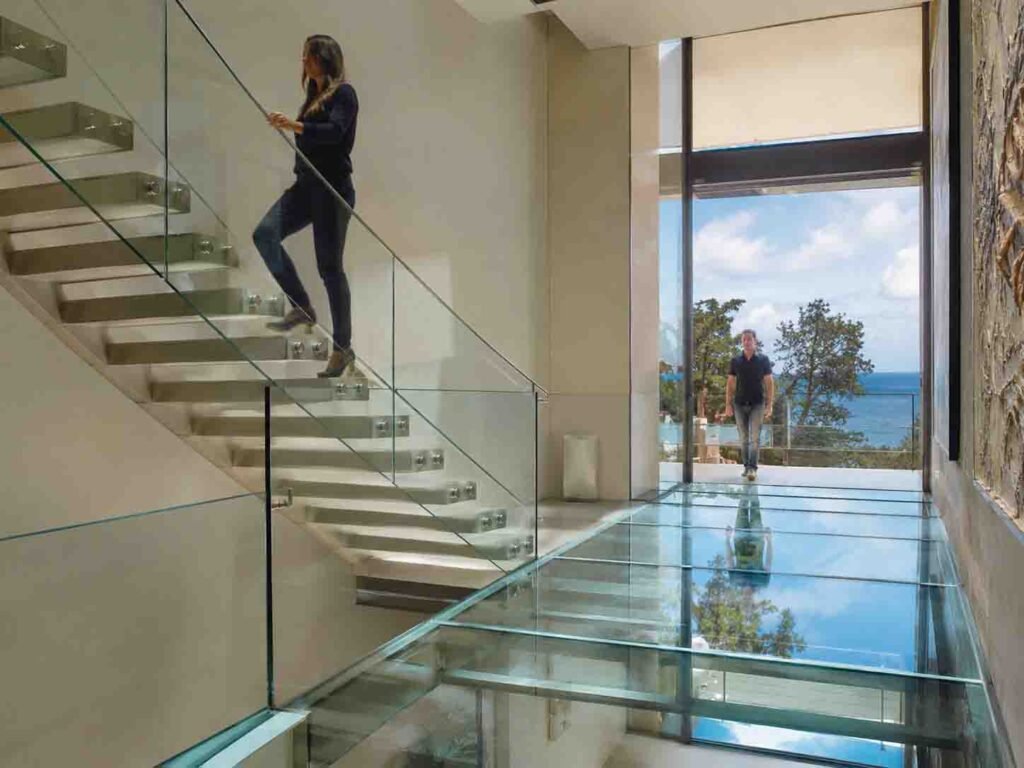
For railings, canopies and floors, define the required residual condition: which ply is assumed broken, what load remains, how long the panel must stay in place and what deflection is acceptable.

IntactShared action
One ply brokenResidual path to supports
SGP structural laminated glass edges and panels
Exposed Edge Detailing

Polished Edges Need Lamination Discipline

Frameless railings and canopies often expose the laminated edge. The two plies must be processed as a matched set, then aligned during lay-up so step, offset and interlayer trim stay within the approved visual and dimensional requirement.

Glass stepControl ply-to-ply offset
Interlayer trimFlush, recessed or project-defined
Hole alignmentInspect both plies from common datums
WeatheringConfirm edge exposure and compatible sealants
Manufacturing & QC Dashboard

Heat Treat the Geometry Before Lamination

All cutting, holes, countersinks, notches and edge polishing are completed before heat treatment. Matched plies then move through washing, controlled lay-up, de-airing and autoclave bonding.

Matched fabricationCommon datums, hole and edge alignment
Heat treatmentBow, roller wave and stress state
Clean lay-upCorrect grade, caliper and orientation
Autoclave bondCycle trace and visual lamination quality
Exposed edgeStep, trim and contamination check
Final geometrySize, holes, flatness and packing
Application Decision

Where Ionoplast Earns Its Place

Choose ionoplast where the engineering model benefits from a stiffer interlayer or where residual behavior and exposed edges drive the design. Do not specify it solely as a prestige upgrade.

SGP laminated glass railing and structural glazing
ApplicationEngineering QuestionTypical Detail
Frameless balustradeResidual barrier after one-ply breakageBase support, exposed edge, heat-treated plies
Canopy / skylightOverhead retention and durationPoint or line support, drainage, edge cover
Glass floor / stairRedundancy, wear and post-breakage accessMulti-ply build-up with protective surface
Glass fin / facadeLong-duration load and design temperatureStructural silicone, fittings and calculated coupling
Point-fixed panelHole stress and local bearingMachined holes, hardware interface and alignment
Procurement FAQ

SGP Laminated Glass Questions

Engineering-focused answers for ionoplast projects.

What is SGP laminated glass?

It is laminated glass made with a structural ionoplast interlayer. SGP is a common market term; the order should identify the actual SentryGlas® grade and caliper.

What interlayer thicknesses are commonly used?

0.89, 1.52 and 2.28 mm are common SentryGlas® sheet calipers. The required value depends on the engineered build-up.

Is SGP always stronger than PVB?

Ionoplast is generally stiffer, but project behavior depends on temperature, load duration, glass plies, size and support. Compare both using grade-specific design data.

Can SGP glass have polished exposed edges?

Yes. State the permitted glass step, edge finish, interlayer trim, exposure and sealant condition on the drawing.

Is SGP glass automatically hurricane or bullet resistant?

No. Those claims require a complete build-up and system tested to the specified standard and threat level.

What should be sent for quotation?

Send each ply, heat treatment, interlayer grade and caliper, support detail, load requirement, dimensions, holes, edges, coating or print side, quantity and required reports.

RFQ Preparation

Send the Structural Assumptions with the Drawing

We can manufacture the specified laminate and review fabrication risks. Structural adequacy remains tied to the final glazing system and project calculation.

Include these details:
  • Every glass ply and heat treatment
  • SentryGlas® grade and caliper
  • Panel dimensions and quantity
  • Support, fixing and hole geometry
  • Design temperature and load duration
  • Required post-breakage condition
  • Edge exposure and inspection plan
Request a Quote
Contact Our Glass Engineers

We're Here To Help

Send the complete build-up, support detail, load basis, drawing and quantity. We will review manufacturability before quotation.

Saving your time and cost is our common pursuit.

Tell us the material, size, thickness, tolerance, quantity, application, and any holes, slots, edges, coating, printing, or polishing requirements. We can manufacture custom glass components from your drawing, CAD file, sketch, or sample.

Address
Yunpu Industrial Zone, Nangang, Huangpu District, Guangzhou
Wechat
+86 19860070065