
Clear PVB
General safety glazing where neutral appearance and fragment retention are the starting requirements.
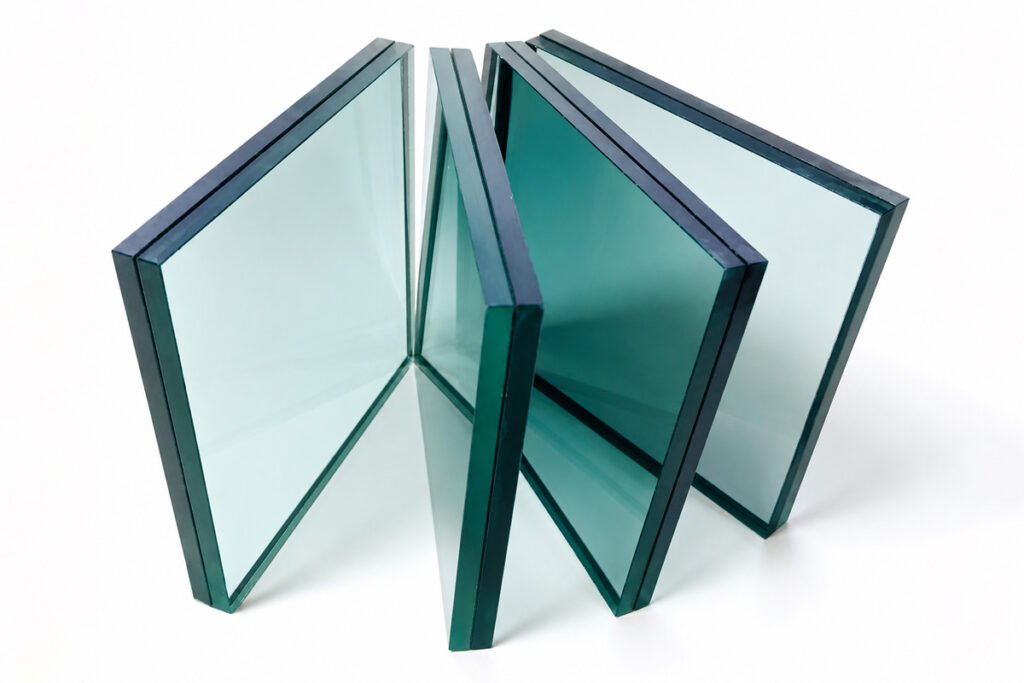
Windows / doors / facadesPVB laminated glass permanently bonds two or more glass plies with polyvinyl butyral. The glass type, heat treatment, PVB grade, interlayer thickness, edge exposure and support condition together determine whether a build-up suits the project.
| Glass ply | 3-19 mm; symmetrical or mixed thickness |
|---|---|
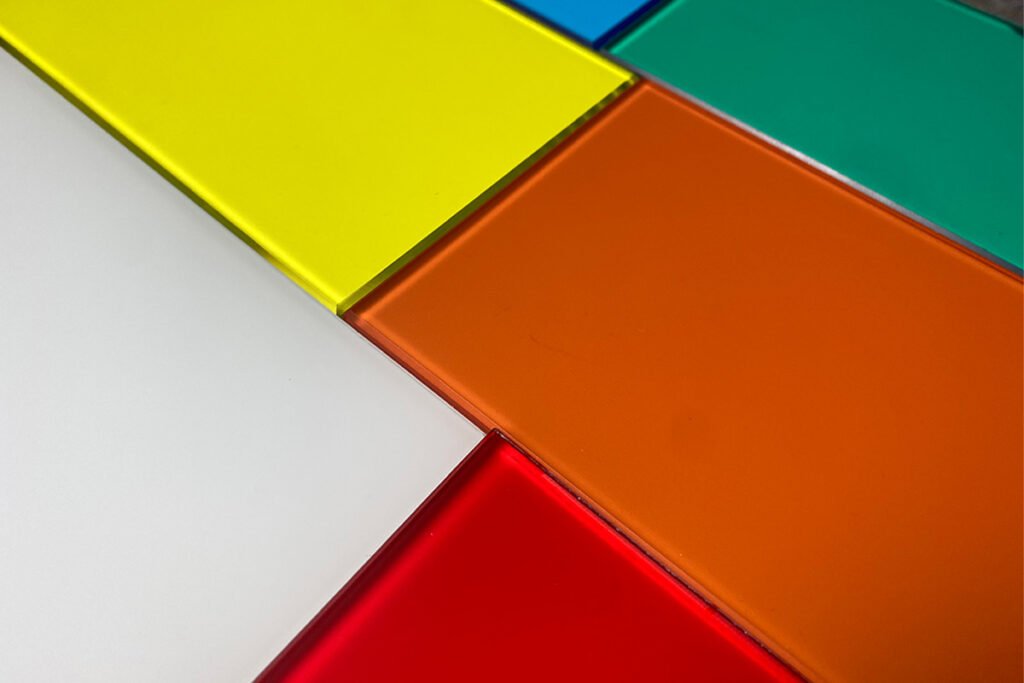
| PVB options | Clear, colored, acoustic, white and project-specific UV-control grades |
| PVB caliper | 0.38 / 0.76 / 1.14 / 1.52 / 2.28 mm |
| Heat treatment | Annealed, heat-strengthened or fully tempered |
| Size class | Up to approx. 2440 x 3660 mm; jumbo routes reviewed up to approx. 3300 x 6000 mm |
| Geometry | Flat panels, custom profiles, holes, notches and cut-outs |
| Finishing | Ground or polished edges, printing, compatible coatings and IGU integration |
| Inspection | Dimensions, glass surface, edge, interlayer alignment, bubbles and optical appearance |
Select the two glass plies and conventional PVB layer count. The result is a nominal planning value, not a structural calculation.
Common shorthand records the glass plies and number of 0.38 mm PVB layers. Procurement drawings should still state the full construction.
Common notation varies by market. Always issue the ply thickness, heat treatment and PVB type in words on the purchase order.
Color, acoustic behavior and edge condition require different interlayer decisions. These options are not interchangeable labels.
General safety glazing where neutral appearance and fragment retention are the starting requirements.
Windows / doors / facadesViscoelastic acoustic grades are selected as part of the complete glazing build-up and target sound spectrum.
Traffic / rail / equipment noiseTransparent, translucent or opaque color requires approved samples under the intended light and glass substrate.
Partitions / decorative glazingUse a named interlayer datasheet where ultraviolet transmission or conservation performance is a decision factor.
Displays / selected interiorsGlass is washed and inspected before the PVB is assembled in a controlled lay-up area. Pre-lamination removes most trapped air and creates an edge seal; autoclave pressure and temperature then complete the bond.
PVB is hygroscopic. Long-term edge condition can be influenced by water, cleaning chemicals, sealants, frame drainage and the quality of the laminated edge. An exposed polished edge may look simple in a rendering but creates a compatibility and durability question.
Define whether the edge is enclosed, structurally sealed or permanently exposed. Sealant compatibility and the intended climate should be confirmed before the edge detail is approved.
A visually clear laminate can still fail the drawing. Inspection links optical quality to the mechanical interfaces.
The right laminate differs for an acoustic window, an overhead lite and a balustrade. Send the support condition and governing performance requirement with the drawing.
| Application | Starting Route | Must Be Confirmed |
|---|---|---|
| Windows and doors | Clear or Low-E PVB laminate | Impact zone, IGU make-up, edge cover |
| Acoustic glazing | Acoustic PVB with asymmetrical plies | Target spectrum and full frame |
| Skylights / canopies | Heat-treated laminated glass | Overhead load and post-breakage design |
| Balustrades | Tempered PVB or ionoplast alternative | Support, load, fall protection and code |
| Decorative partitions | Colored or printed PVB laminate | Viewed side, light source and sample |
Short answers for build-up, processing and specification.
It commonly means 4 mm glass + two 0.38 mm PVB layers + 4 mm glass, for an approximate nominal total of 8.76 mm.
Yes. Each ply is fully fabricated and tempered before lamination; tempered glass cannot be cut or drilled afterward.
No. Security performance depends on the entire tested assembly, including all plies, interlayers, size, support and framing.
Yes. Send hole diameter, position, edge distance, notches, radii, datums and tolerances. All fabrication is completed before heat treatment and lamination.
Yes. The laminate can form one lite of an insulated glass unit when coating placement, spacer, sealants and edge deletion are compatible.
Provide every glass ply, heat treatment, PVB grade and thickness, overall size, edge condition, holes, coating or print side, quantity, application and required test evidence.
A line such as “12 mm laminated glass” is not enough to manufacture the right product. Define every layer and the service requirement.
Send the build-up, drawing, quantity, application and required test evidence. We will review the laminate and processing route before quotation.
Tell us the material, size, thickness, tolerance, quantity, application, and any holes, slots, edges, coating, printing, or polishing requirements. We can manufacture custom glass components from your drawing, CAD file, sketch, or sample.