
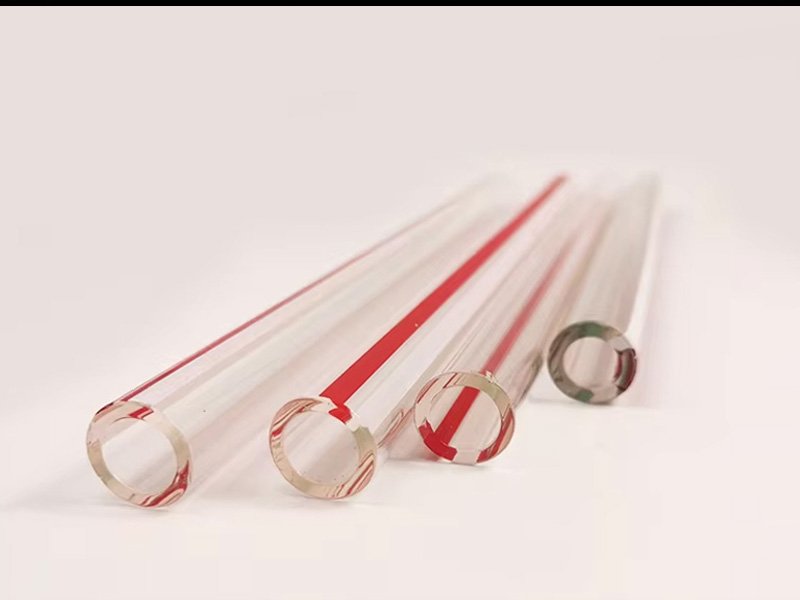
Bright / Dark Level
Reflex Gauge Glass
Prismatic wetted face creates strong contrast for direct level indication in approved steam and process gauges.
Boiler gauge glass is the transparent pressure boundary through which an operator reads water level. Reflex glass uses molded or ground prisms so the gas zone appears bright and the liquid zone dark. Transparent gauges use smooth glass on both sides of the chamber and can show liquid color, interfaces and the condition of protective mica shields, often with an illuminator behind the gauge.
A replacement must match the gauge construction, not only its length. The drawing or existing marking should identify reflex or transparent form, DIN size/type, length, width, thickness, groove orientation, visible length and gasket set. Steam pressure, saturation temperature, boiler-water pH and treatment chemicals determine whether a shielded transparent route is required.
| Gauge type | Reflex prism glass or transparent smooth glass pair |
|---|---|
| Reference form | DIN 7081 type/size or customer-approved replacement drawing |
| Dimensions | Length, width, thickness, visible length, corner/edge profile and tolerance |
| Optical face | Grooved wetted face for reflex; smooth viewing faces for transparent |
| Steam/process data | Pressure-temperature pair, saturated/superheated condition and duty cycle |
| Water chemistry | pH, conductivity/treatment chemistry, blowdown and expected glass exposure |
| Protection | Mica or approved transparent shield where the gauge design requires it |
| Assembly | Gauge body, cover, gasket, cushion, illuminator, torque and replacement procedure |
| Inspection | Material, dimensions, groove/surface quality, edge, thermal prestress, marking and traceability |
Quotation framework only. Values and acceptance methods are locked to the approved drawing, named material, and assembly.
These are not styling variants. Each form changes how the level is seen or how the glass is protected.
Prismatic wetted face creates strong contrast for direct level indication in approved steam and process gauges.
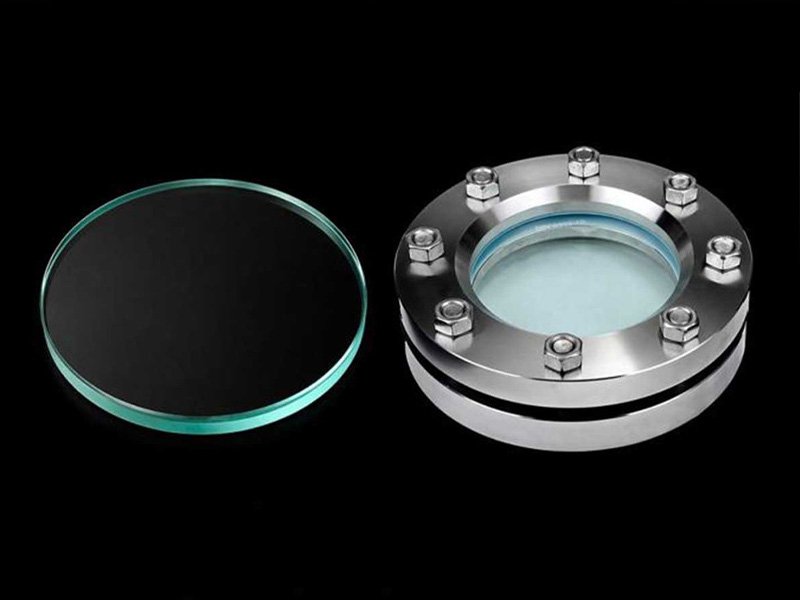
Smooth plates on both sides of the chamber support illumination, fluid-color viewing and interface observation.
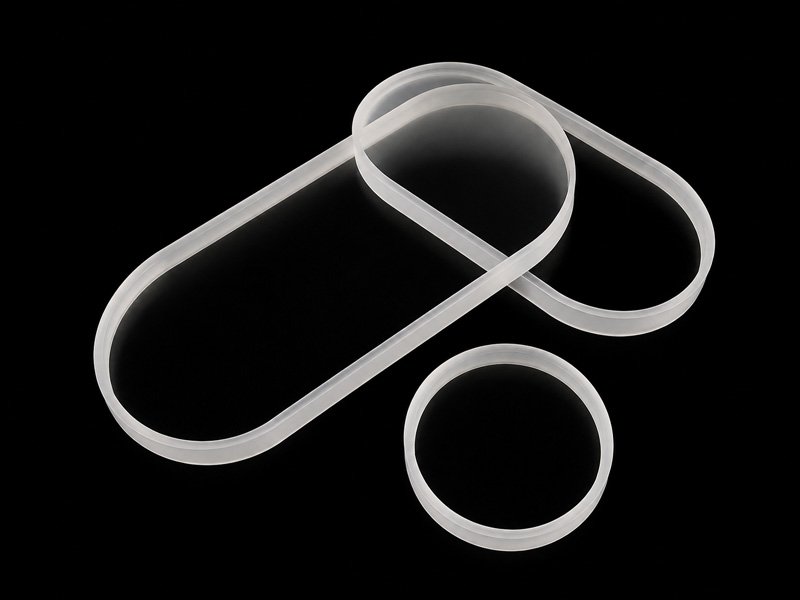
A transparent protective layer separates hot steam/water from the gauge glass where the approved design requires shielding.
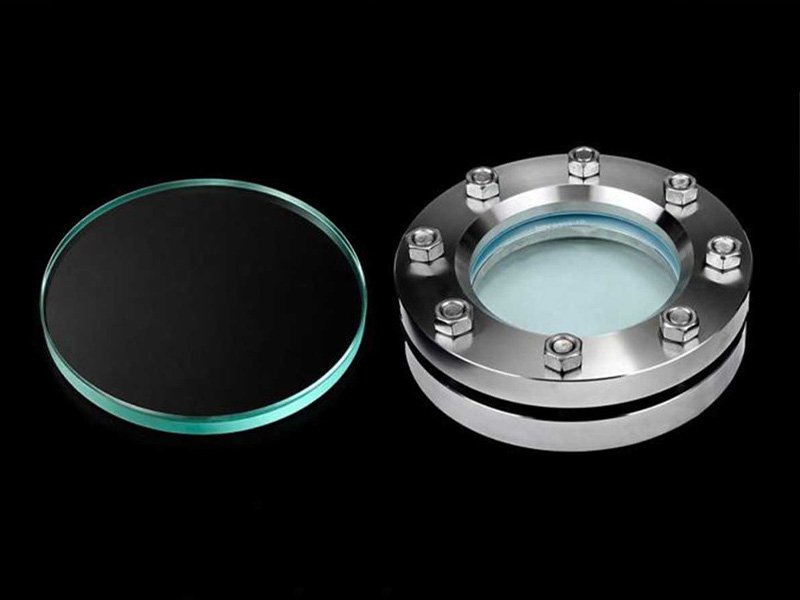
Replacement plates produced from a verified size code or drawing, with groove, edge, marking and inspection requirements locked.
Select the condition that controls the level indication. The gauge manufacturer and applicable boiler rules retain final design authority.
Reflex prisms provide an economical direct reading when fluid color and an interface between two transparent liquids are not required.
Two smooth gauge glasses with rear illumination allow direct viewing through the chamber and are suited to fluid-color or interface tasks.
Specialist gauge suppliers commonly route more demanding steam service to transparent gauges with mica or another approved protective shield.
Corrosive media may attack glass and dark or viscous media can defeat the reflex optical effect. Material, shield and cleaning need review.
The choice begins with the visual task and service environment, then moves to exact size and assembly.
| Decision factor | Reflex gauge glass | Transparent gauge glass | Shielded transparent gauge |
|---|---|---|---|
| Optical principle | Prisms make gas bright and liquid dark | Direct through-view through two smooth plates | Direct view with a replaceable protective interface |
| Useful for | Simple level of a clear liquid | Color, interface, illumination and direct chamber view | Demanding steam or chemical exposure where approved |
| Primary limitation | Poor for dark/viscous liquid, color or two-liquid interface | Needs rear viewing/illumination and two glass faces | Shield condition becomes a maintenance item |
| RFQ essentials | DIN type, grooves, steam/process envelope | Pair dimensions, clear view and illuminator | Gauge model, shield material, chemistry and replacement method |
Use this table to choose a development route. Final suitability depends on the complete pressure, temperature, medium, geometry, mounting, and test specification.
On the grooved side of a reflex gauge glass, the gas phase produces internal reflection and appears silvery bright. Where liquid wets the prisms, the refractive relationship changes and light passes into the liquid, so that zone appears dark. The observer reads the boundary without a float or electronic sensor.
This optical advantage also creates limits. A dark liquid may hide the contrast; a viscous film may coat the prisms; and the reflex arrangement does not show true liquid color or an interface between two similarly transparent liquids. Those duties belong on a transparent gauge route.
Hot boiler water and steam can progressively attack an unprotected gauge-glass surface, and the rate changes with pressure, temperature and water chemistry. A thin transparent mica shield can isolate the structural gauge glass from direct exposure in an approved transparent-gauge design.
The shield is not a universal add-on. It changes the stack and must match the gauge maker's chamber, gasket, thickness and maintenance procedure. Record shield condition during inspection and replace the complete approved set when clouding, erosion or leakage affects reliable reading.
Replacement drawings should show overall length, width and thickness together with visible length, corner form and any size/type marking. For reflex glass, identify which face carries the prisms and which direction faces the chamber. Do not infer equivalence from overall length alone.
Gauge-glass quality control must protect the sealing edge and verify the feature that creates or preserves the level indication.
Separate glass-only supply from a rated assembly and record pressure, temperature, medium, hazard, and optical task.
Lock dimensions, clear aperture, sealing face, edge profile, standard, datums, and documentation before cutting.
Cut or CNC the profile, grind edges, form grooves or features, and polish controlled faces in the qualified sequence.
Apply the specified thermal process, controlled cleaning, marking, and protective handling without damaging sealing faces.
Release identity, dimensions, surface condition, optical quality, stress, and project tests before protected packing.
Acceptance limits and records follow the approved drawing, material, applicable standard, and validation plan.
A safe replacement starts with the gauge design and service data, not a visual guess.
Reflex glass uses a prismatic wetted face to create a bright gas zone and dark liquid zone. Transparent gauges use smooth glass on both sides for a true through-view, often with illumination and protective shields.
Use it when liquid color, an interface, dark/viscous media or a protective mica shield must be observed. The gauge manufacturer should confirm the service envelope.
Not without an approved gauge conversion. The chamber, cover, gasket, lighting, thickness and optical arrangement differ.
Hot water and steam can attack glass. pH and treatment chemistry affect surface loss and service life, which is why protective shields and inspection intervals may be specified.
Dimensions narrow the size, but type, standard, groove orientation, maker/model, material and service conditions are still needed. Photos of markings and the gauge body help.
Follow the gauge maker's instructions. Gaskets, cushions and mica shields are commonly treated as matched replacement items, and the body/contact surfaces must be inspected.
No. Permissible pressure changes with glass form, size, temperature, medium, shield and the complete gauge assembly.
A marked old glass, equipment manual or dimensioned sketch helps us verify the replacement before tooling or production.
We return a proposed glass and process route, open assembly questions, sample plan, inspection points, and the claims that require validation.
Prepare the RFQSend the drawing, operating envelope, medium, assembly details, quantity, and required documentation.
Tell us the material, size, thickness, tolerance, quantity, application, and any holes, slots, edges, coating, printing, or polishing requirements. We can manufacture custom glass components from your drawing, CAD file, sketch, or sample.