
Review Borosilicate or Glass-Ceramic
Borosilicate can suit moderate duty; glass-ceramic is preferred when steep gradients or abrupt cooling dominate.
- Hot-face and edge temperature
- Clear aperture and frame
- Combustion atmosphere and cleaning
A process window lets an operator, camera, pyrometer or sensor observe a hot environment without opening the equipment. The glass may face radiant heat, rapid cycling, deposition, cleaning chemicals, vacuum or a pressure differential while still preserving the required wavelength.
Material selection begins with borosilicate, glass-ceramic or fused silica, then moves to aperture, support, surface quality, coating and seal. If the duty is pressure-vessel level indication or a certified pressure assembly, continue to the Industrial Sight & Process Glass collection for assembly-specific engineering.
| Observation task | Direct viewing, camera, pyrometer, UV source or IR sensing |
|---|---|
| Thermal profile | Hot-face, cold-edge, continuous, peak, dwell and cooling event |
| Material | Borosilicate, glass-ceramic or fused silica by duty |
| Optical band | Visible, UV, NIR or application-specific wavelength |
| Atmosphere | Air, combustion gas, steam, vacuum, chemical vapor or deposition |
| Geometry | Clear aperture, outer size, thickness, unsupported span and edge |
| Assembly | Flange, frame, gasket/seal, pressure differential and restraint |
| Validation | Thermal cycle, leak/pressure if applicable and optical inspection |
Reference framework for quotation. Controlled values and test methods are stated in the approved specification.
Choose the observation problem that most strongly limits the window.
Borosilicate can suit moderate duty; glass-ceramic is preferred when steep gradients or abrupt cooling dominate.
Near-zero-expansion glass-ceramic reduces thermal mismatch and is available in transparent variants for process viewing.
Select a grade with a thickness-specific transmission curve and suitable surface quality for the sensor path.
Material purity, OH, outgassing-adjacent assembly materials, cleaning and seal temperature become part of the specification.
A window cannot be pressure-rated from thickness alone. The housing, seal, aperture, support and applicable code must be engineered together.
Pressure creates bending stress across the unsupported aperture. The same thickness behaves differently when the clear diameter, edge support, seal width, material flaws, temperature and pressure direction change. A chipped edge or uneven gasket can further concentrate stress.
For pressure duty, provide design pressure and temperature, medium, clear aperture, housing drawing, seal material, code and safety factor. Glass fabrication data can then be connected to the assembly calculation and test plan.
The optical task changes the material grade, finish and validation method.

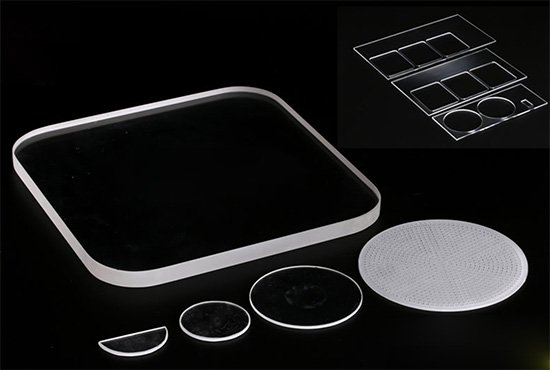
Visible observation panels for firing, melting, heat treatment and combustion processes.
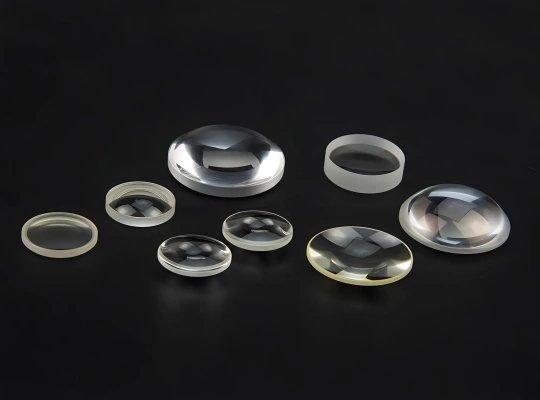
Protective optical paths for cameras, inspection systems and process monitoring.
Windows controlled at the instrument wavelength, angle and surface condition.
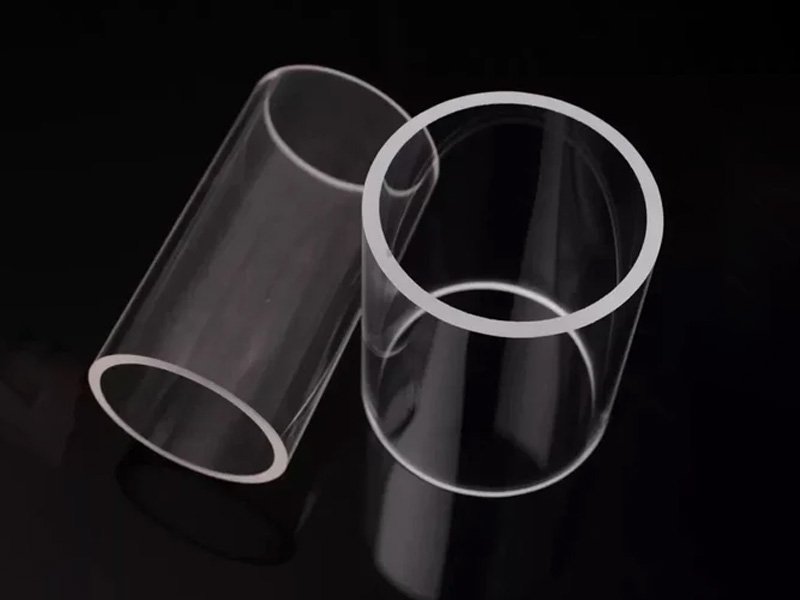
UV-grade fused silica parts for short-wavelength sources and sensors.
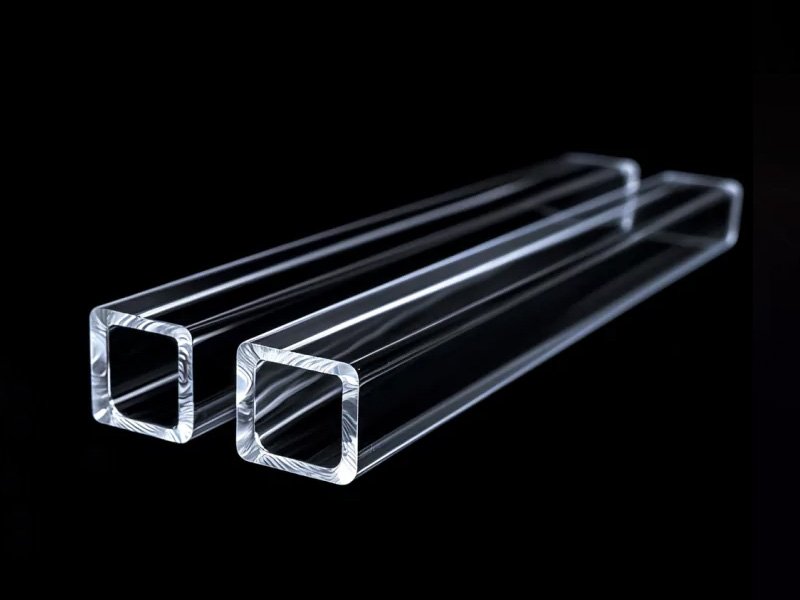
Grade and surface selected for atmosphere, contamination and seal-adjacent temperature.
No single material wins every window application.
| Window Duty | First Material to Review | Why | Main Caveat |
|---|---|---|---|
| Moderate visible viewing | Borosilicate 3.3 | Practical thermal/chemical balance | Gradient, support and pressure |
| Severe gradient | Transparent glass-ceramic | Near-zero expansion | Variant spectrum and frame restraint |
| UV viewing | UV-grade fused silica | Short-wavelength transmission | Grade, OH and surface quality |
| High-purity process | Synthetic fused silica | Contamination and optical control | Cleaning, seal and cost |
| Pressure containment | Engineered assembly | Housing and seal control load | Code, calculation and test required |
Typical family-level data for initial selection. Use the named grade data sheet and project conditions for final design.
A pane that looks clear to the eye can attenuate the wavelength used by a UV sensor or pyrometer. Substrate grade, thickness, coating, contamination and angle all affect the signal reaching the instrument.
State the sensor wavelength or band and minimum system transmission. For quantitative measurements, validate the finished window in the optical path and account for coating drift or surface deposition.
The inspection plan follows the observation task, controlled aperture and mounting interface.
Confirm material grade, thermal profile, atmosphere, optical task, geometry and assembly constraints.
Lock datums, edge profiles, holes, critical zones and the named substrate before fabrication.
Cut or CNC the part, grind edges and complete holes or slots before any incompatible downstream process.
Apply printing, strengthening, coating, polishing or cleaning in the validated sequence.
Release dimensions, surface quality and functional tests, then protect critical faces for shipment.
Inspection conditions and acceptance limits follow the approved drawing, material grade and validation plan.
A complete answer needs both the glass and its installed boundary conditions.
Borosilicate, transparent glass-ceramic or fused silica may be suitable. Choose from the temperature gradient, wavelength, atmosphere, aperture and mounting.
Some fused quartz/silica grades have high published temperature capability, but duration, contamination, support, gradient and devitrification risk must be reviewed.
Provide the measurement wavelength/band, angle, working distance, minimum transmission, hot-face temperature, coating and contamination conditions.
For pressure duty, provide the housing, pressure, temperature, medium, code and test requirements so the glass and complete viewport assembly can be reviewed together.
It can improve signal or viewing in a defined band, but temperature, atmosphere, coating side and cleanability must be compatible.
Review window angle, purge/air curtain, distance from the process, surface temperature and cleaning method. A coating alone may not solve deposition.
Include: Glass-only or complete assembly scope | Hot-face, edge and ambient temperature | Pressure/vacuum and process medium | Clear aperture and housing drawing | Visible, UV or IR wavelength | Surface quality, coating and cleaning | Code, test, quantity and documentation.
The correct window is selected from the environment, wavelength, aperture and assembly together. We return a proposed material and process route, open technical questions, sample plan and inspection points for approval.
Tell us the material, size, thickness, tolerance, quantity, application, and any holes, slots, edges, coating, printing, or polishing requirements. We can manufacture custom glass components from your drawing, CAD file, sketch, or sample.