
Outer Decorative Pane
The user-facing pane controls touch safety, appearance, printing, edge finish and impact exposure.
Confirm exterior temperature target, color, graphics, cleaning and touch zone.An oven door is a thermal system with inner, middle and outer panes, air spaces, seals and ventilation. The inner pane sees the harshest heat and cleaning condition. A middle Low-E or TCO surface can reflect long-wave infrared energy, while the outer pane controls user contact, appearance and graphics.
Radiant-heater covers are a separate route. Their glass-ceramic variant is selected by IR transmission, visible glare, surface temperature and thermal shock. This page covers heat-management glass; interface icons and touch-control panels remain on the Appliance Control Panel Glass page.
| Product route | Oven inner/middle/outer pane or radiant-heater cover |
|---|---|
| Material | Tempered float/low-iron, temperable Low-E/TCO or glass-ceramic |
| Thickness | Drawing and stack-specific; commonly selected by pane position |
| Thermal inputs | Cavity temperature, pyrolysis cycle, exterior target and air flow |
| Coating | Emissivity, visible appearance, temperability and side orientation |
| Printing | Ceramic border, mask, logo or instruction graphics by firing plan |
| Geometry | Flat/curved outline, holes, slots, edge and assembly datums |
| Validation | Fragmentation, thermal cycle, exterior temperature and stack test |
Reference framework for quotation. Controlled values and test methods are stated in the approved specification.
Select each layer to see its thermal role and the data required for quotation.
The user-facing pane controls touch safety, appearance, printing, edge finish and impact exposure.
Confirm exterior temperature target, color, graphics, cleaning and touch zone.Spacing and air movement reduce conductive and convective heat transfer through the door.
Provide cavity depth, vents, seals and fan conditions.A transparent conductive oxide surface reflects long-wave infrared energy back toward the cavity while preserving the view.
Specify emissivity, transmission, coating side and tempering sequence.The second gap works with the Low-E surface and pane temperatures to control the outer door.
Assembly spacing is part of the validation, not a glass-only property.The inner pane sees high radiant heat, food soil and cleaning exposure. Material and surface treatment follow the real cycle.
State cavity and pyrolysis temperature, duration and cleaner.These are separate engineering products even when the outline appears similar.
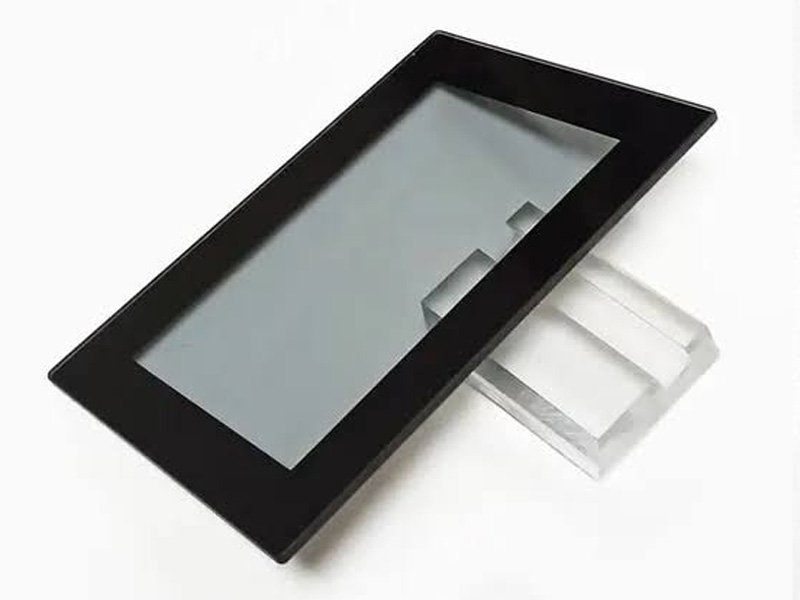
Tempered or specialty heat-resistant glass reviewed for cavity heat, cleaning and edge support.
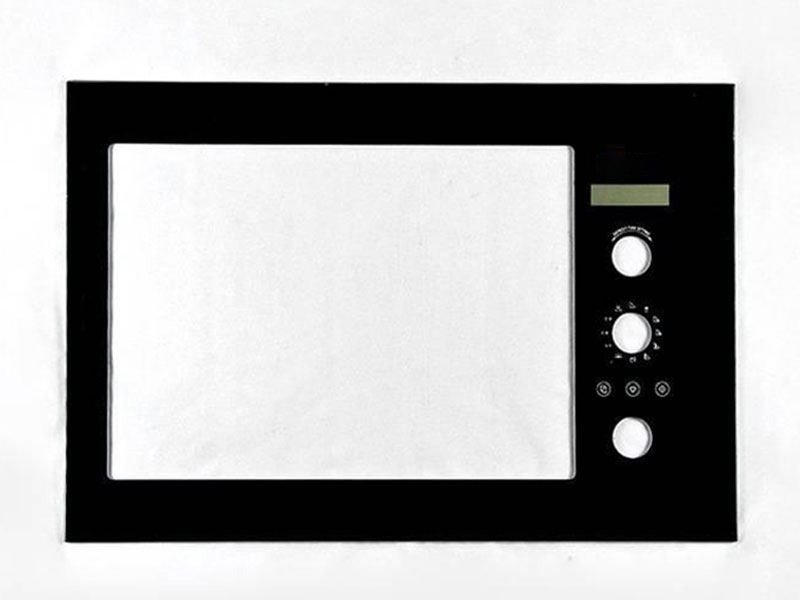
Durable coated and temperable glass specified by emissivity, coating side and visible appearance.
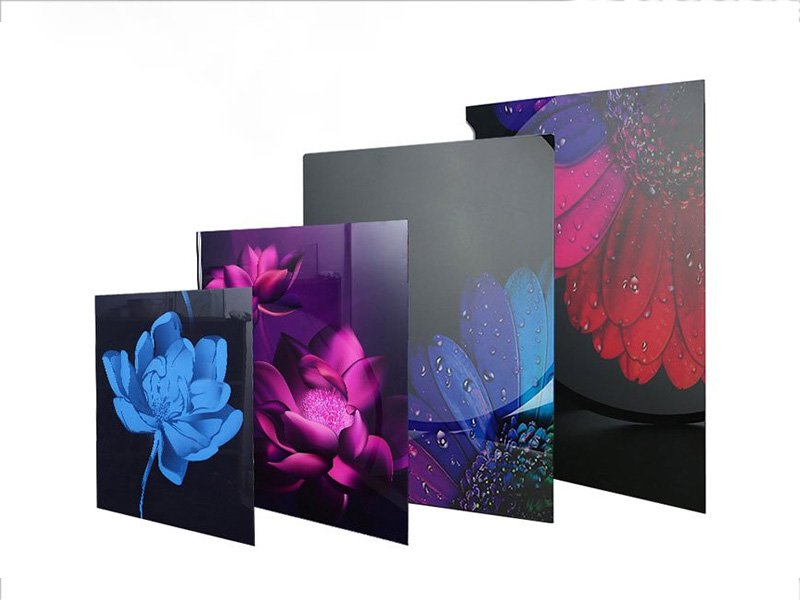
Decorative/safety pane with ceramic printing, edge finishing and assembly datums.
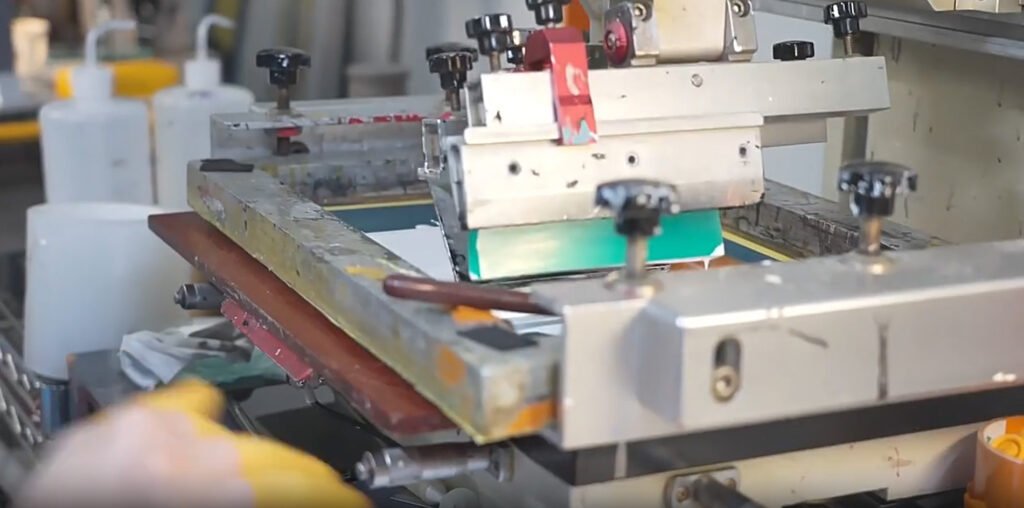
Matched inner, middle and outer panes supplied to one stack and inspection drawing.
Transparent, tinted or translucent covers selected by emitter spectrum and visible glare.
A Low-E surface reduces radiant heat transfer by reflecting long-wave infrared energy. Its position in the cavity and orientation relative to the hot side affect which surfaces heat up and how the pane is cleaned or handled.
The drawing must label the coated face. Emissivity alone is not a complete door claim: pane spacing, air flow, cavity temperature, seals and exterior convection determine the assembled result.
The correct material and coating are different for a heat-facing pane, radiant barrier and user-facing decorative pane.
| Position | Primary Job | Key Controls |
|---|---|---|
| Inner pane | Heat and cleaning resistance | Temperature cycle, thermal shock, soil and edge support |
| Middle Low-E pane | Reflect long-wave IR | Emissivity, coating side, temperability and spacing |
| Outer pane | Touch safety and appearance | Exterior temperature, impact, printing and cleaning |
| Heater cover | Transmit selected IR / manage glare | Emitter spectrum, glass-ceramic variant and surface temperature |
Typical family-level data for initial selection. Use the named grade data sheet and project conditions for final design.
A heater cover can appear similar in visible light while transmitting a different amount of useful infrared energy. The wrong variant may reduce heater efficiency or allow unwanted visible glare.
Provide the emitter type, wavelength range, power, distance, air flow and surface-temperature limit. We can then review transparent, tinted or translucent glass-ceramic options and the required sample test.
Oven and heater parts are released by their installed position, with orientation marking and stack-critical dimensions.
Confirm material grade, thermal profile, atmosphere, optical task, geometry and assembly constraints.
Lock datums, edge profiles, holes, critical zones and the named substrate before fabrication.
Cut or CNC the part, grind edges and complete holes or slots before any incompatible downstream process.
Apply printing, strengthening, coating, polishing or cleaning in the validated sequence.
Release dimensions, surface quality and functional tests, then protect critical faces for shipment.
Inspection conditions and acceptance limits follow the approved drawing, material grade and validation plan.
These answers keep the thermal stack separate from decorative control-panel glass.
No. Many insulated oven doors use multiple tempered float or Low-E coated panes. Glass-ceramic is used where the direct heat, gradient or heater function requires it.
It reflects long-wave infrared energy and helps reduce radiant heat transfer. The complete door stack determines exterior temperature and efficiency.
Selected durable/temperable coating systems can be processed in defined sequences. Coating source, print zone, firing and side orientation must be approved.
It depends on the design, heat exposure and desired depth effect. Mark the printed side, viewing window and stack position on the drawing.
Yes, subject to drawing review. Each pane should have a unique part number, orientation and inspection plan.
Provide emitter spectrum, power, distance, operating temperatures, air flow, visible appearance and mechanical support.
Include: Assembly cross-section and pane part numbers | Cavity, peak and pyrolysis cycle | Exterior touch-temperature target | Low-E/emissivity and coating side | Printing artwork and color reference | Pane spacing, vents and seals | Heater spectrum where applicable.
A useful oven or heater RFQ shows the thermal stack, not only one glass outline. We return a proposed material and process route, open technical questions, sample plan and inspection points for approval.
Tell us the material, size, thickness, tolerance, quantity, application, and any holes, slots, edges, coating, printing, or polishing requirements. We can manufacture custom glass components from your drawing, CAD file, sketch, or sample.