

Visible Viewing
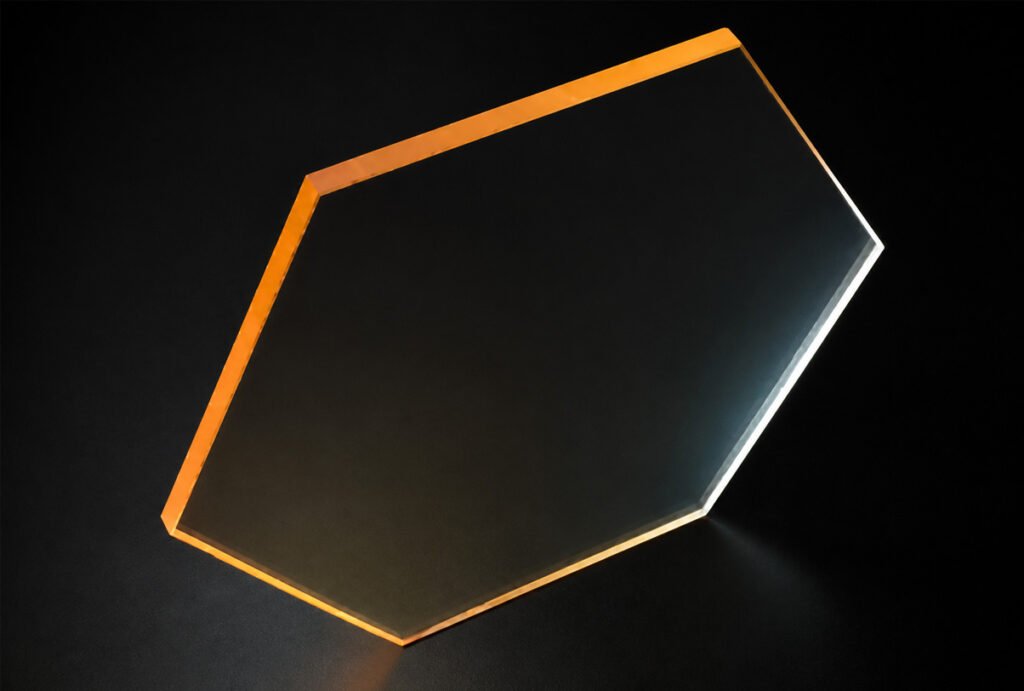
Transparent Glass-Ceramic
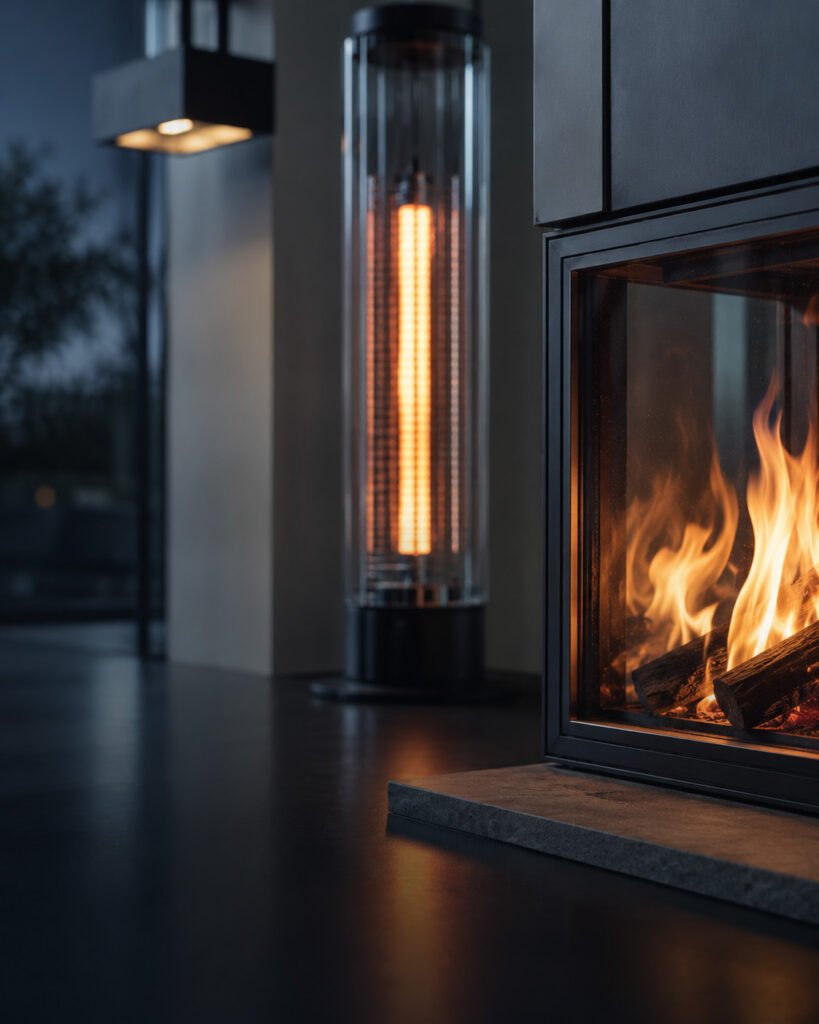
For flame viewing, process observation and heater covers where clear through-vision matters.
Controlled crystallization gives technical glass-ceramic a very low expansion response and strong resistance to temperature differences. The family includes transparent, tinted, translucent and opaque variants, each with a different visible and infrared transmission profile.
The correct variant depends on whether the part must show a flame, pass infrared energy, diffuse visible light, hide internal components or act as a process plate. We cut, edge, drill, print and finish parts to drawing after the material and feature risks are reviewed.
| Material family | Low-expansion glass-ceramic; named grade confirmed in quotation |
|---|---|
| Appearance | Transparent, tinted, translucent or opaque options by availability |
| CTE | Near-zero family-level reference; grade-specific data sheet required |
| Temperature duty | Continuous, peak, gradient and shock conditions reviewed separately |
| Thickness | Common technical sheet ranges reviewed by grade and stock |
| Geometry | Rectangular, round, shaped, holes, slots and cut-outs to drawing |
| Approval | Material certificate, dimensional report and production-intent sample |
Reference framework for quotation. Controlled values and test methods are stated in the approved specification.
These routes describe buyer decisions. Exact grade names and curves are confirmed during engineering review.
For flame viewing, process observation and heater covers where clear through-vision matters.
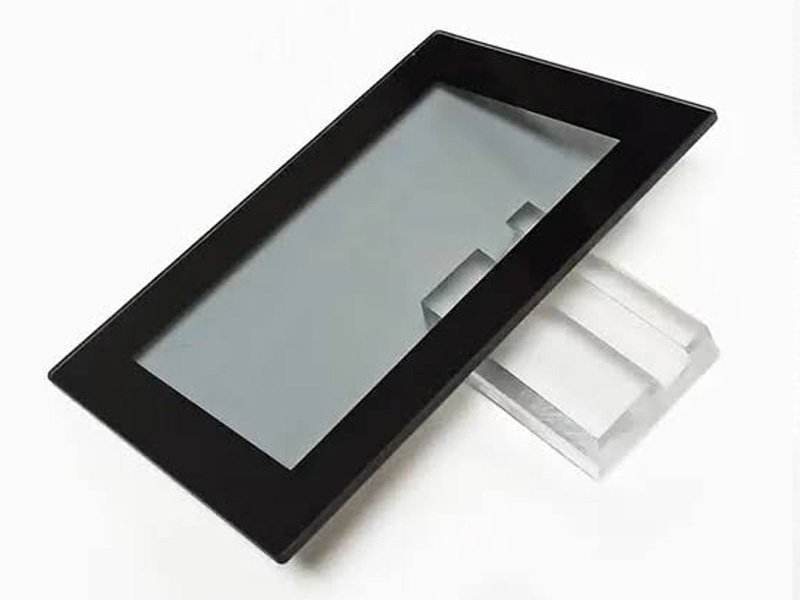
Reduces the view of internal parts when off while preserving selected visible or IR transmission.
Diffuses visible light while supporting selected infrared heater or lighting functions.
Used where blocking visible light, high heat or an easy-clean technical surface drives selection.
Select the dominant optical and thermal task before choosing a color or appearance sample.
Start with a transparent low-expansion grade and confirm visible transmission, reflection, tint, temperature difference and frame design.
Review the heater wavelength and desired visible appearance together. A cover can transmit useful IR while reducing visible glare.
Use a grade with the required concealment and heat stability, then validate icons, windows or printing in the complete stack.
Prioritize temperature/time load, chemical environment, flatness and cleanability rather than optical clarity.
The low expansion response is the main reason glass-ceramic tolerates steep thermal differences.
| Property | Glass-Ceramic | Borosilicate 3.3 | Soda-Lime Float |
|---|---|---|---|
| Reference CTE | Near zero to about 1.0 x 10^-6/K | About 3.3 x 10^-6/K | About 9 x 10^-6/K |
| Thermal-gradient starting point | Severe | Moderate | Limited without system controls |
| Optical variants | Clear, tinted, translucent, opaque | Primarily clear | Clear, tinted and coated |
| Strengthening | Usually selected by inherent grade behavior | Grade/process dependent | Thermal or chemical strengthening routes |
| Key risk | Wrong variant or rigid mounting | Grade confusion and edge stress | Thermal mismatch and heat exposure |
Typical family-level data for initial selection. Use the named grade data sheet and project conditions for final design.
When one area heats faster than another, the hot zone tries to expand while the colder area restrains it. Lower CTE means less dimensional change for the same temperature difference, so the internally generated thermal stress is reduced.
This does not make every glass-ceramic part unbreakable. Edge damage, holes, large unsupported spans, rigid clamps and the exact grade still matter. The drawing should show the hot zone, cooled frame and all contact points.
A hole near an edge, a sharp internal corner or a hard point clamp concentrates stress. These features can control the usable part geometry even when the base material has excellent thermal-shock resistance.
Provide the fastener size, washer/gasket, edge distance and allowed movement. All machining is completed before final inspection, and critical edges should be protected during assembly.
Rounded transitions and compliant support reduce local stress.
A correct material label is only the start. The finished part must preserve edge and surface condition through processing, cleaning and packing.
Confirm material grade, thermal profile, atmosphere, optical task, geometry and assembly constraints.
Lock datums, edge profiles, holes, critical zones and the named substrate before fabrication.
Cut or CNC the part, grind edges and complete holes or slots before any incompatible downstream process.
Apply printing, strengthening, coating, polishing or cleaning in the validated sequence.
Release dimensions, surface quality and functional tests, then protect critical faces for shipment.
Inspection conditions and acceptance limits follow the approved drawing, material grade and validation plan.
Resolve the grade and installed duty before approving dimensions alone.
No. Glass-ceramic obtains its low-expansion thermal behavior from its material structure. Tempered float glass gains surface compression but retains a different expansion and temperature profile.
No. Technical glass-ceramic families include transparent, tinted, translucent and opaque variants with different visible and IR behavior.
Many grades can be cut, ground, drilled or CNC processed. Feature size, edge distance, thickness and grade must be reviewed before production.
Many glass-ceramic products rely on their inherent material behavior rather than conventional tempering. The exact grade and process route must be confirmed.
Provide emitter spectrum, operating and surface temperatures, airflow, size, support points, desired visible appearance and any coating or printing.
Include: Drawing with holes, slots and datums | Transparent, tinted, translucent or opaque goal | Continuous and peak temperature | Hot-zone and edge temperature | Frame, gasket and clamp detail | Printing/coating and treated side | Quantity and inspection requirements.
The best ceramic-glass review includes the installed hot zone, edge condition and what the panel must transmit or conceal. We return a proposed material and process route, open technical questions, sample plan and inspection points for approval.
Tell us the material, size, thickness, tolerance, quantity, application, and any holes, slots, edges, coating, printing, or polishing requirements. We can manufacture custom glass components from your drawing, CAD file, sketch, or sample.